
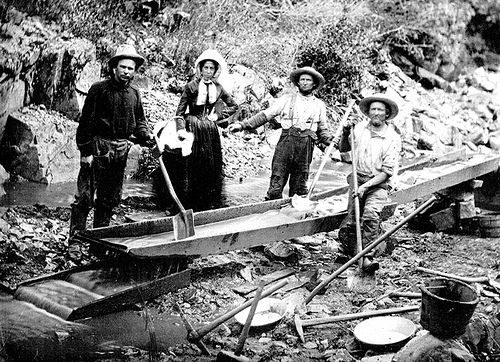
On 24 January 1848, a routine construction project in northern California triggered one of the most transformative economic events of the nineteenth century, when gold was discovered at Sutter’s Mill, setting off what would become known as the California Gold Rush.
A chance finding at Sutter’s Mill
The discovery was made by James W. Marshall, who was overseeing the construction of a sawmill for landowner John Sutter along the American River near present-day Coloma. Marshall noticed shiny metal fragments in the millrace and soon confirmed they were gold. Initially, efforts were made to keep the find secret, but word spread rapidly through the region.
Confirmation and rapid spread of the news
Although the discovery occurred in early 1848, it was not until later that year that the news reached the eastern United States and Europe. In December 1848, US President James K. Polk confirmed the discovery in an address to Congress, lending official credibility to the reports. This endorsement triggered mass migration as prospectors, investors, and labourers prepared to head west.

The birth of the California Gold Rush
By 1849, tens of thousands of fortune-seekers—later known as the “Forty-Niners”—were arriving by land and sea. The influx transformed California almost overnight. Small settlements expanded rapidly, while ports such as San Francisco evolved from modest towns into booming commercial hubs within a few years.
Economic and social impact
The Gold Rush reshaped the US economy by accelerating westward expansion and stimulating infrastructure development, including roads, ports, and financial institutions. California’s population surged, paving the way for its admission as a US state in 1850. At the same time, the period brought severe consequences for Indigenous populations, including displacement, violence, and loss of land.
A lasting historical legacy
While most prospectors failed to strike it rich, the gold discovery at Sutter’s Mill had enduring effects. It helped establish California as a centre of economic opportunity and set the foundations for its long-term role in global trade, finance, and innovation. More than a century later, the events of 1848 remain a defining chapter in American and economic history.
Newshub Editorial in North America – 24 January 2026

If you have an account with ChatGPT you get deeper explanations,
background and context related to what you are reading.
Open an account:
Open an account
Recent Comments