
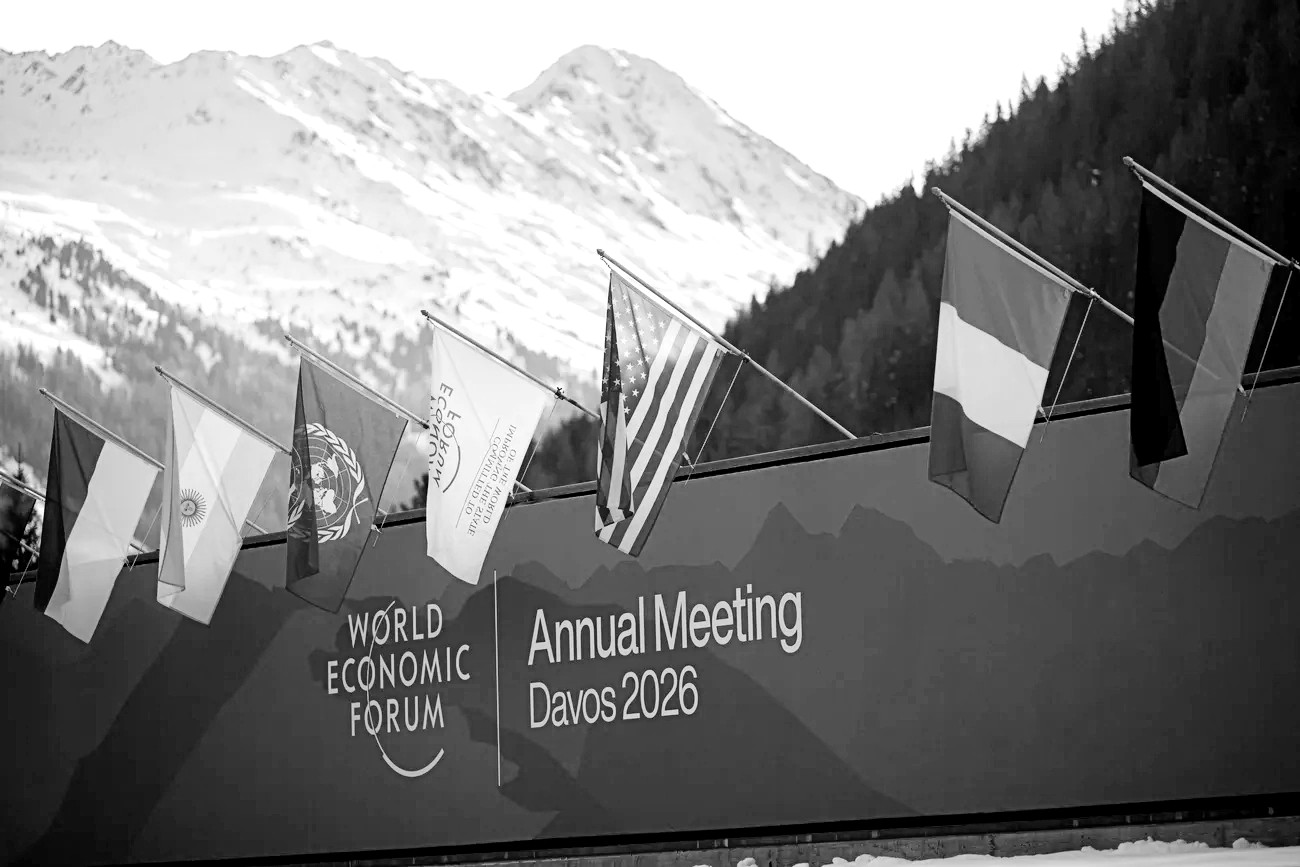
Donald Trump’s confrontational speech at the World Economic Forum in Davos has prompted immediate and sharply divided reactions across Europe, the United States, China, and global markets, underscoring how profoundly his worldview continues to polarise international opinion.
The remarks—ranging from Nato burden-sharing and Greenland negotiations to criticism of the Federal Reserve—were closely watched not only for their content, but for what they signal about a possible return to Trump-style governance and global disruption.
Europe: concern, irritation, and strategic unease

In Europe, the reaction was largely defensive and uneasy. Officials and diplomats expressed concern over Trump’s repeated claims that Europe is “not heading in the right direction” and his assertion that the US gains little from Nato. The comments were widely seen as dismissive of Europe’s security contributions and politically tone-deaf, particularly given Nato’s collective defence response after the 11 September 2001 attacks.
Trump’s renewed push to acquire Greenland—despite Denmark’s clear rejection—revived fears of transatlantic friction and raised questions about respect for European sovereignty. While his assurance that he would not use force offered limited reassurance, European leaders privately noted that the rhetoric alone risks destabilising sensitive Arctic and security dynamics.
Financial and policy circles in Europe also reacted cautiously to Trump’s promise to soon name a new Federal Reserve chair, interpreting it as a signal of potential volatility in global monetary coordination.
United States: partisan divide and market alertness
In the US, reactions followed familiar partisan lines. Trump supporters praised his speech as “straight talk” and welcomed his criticism of Nato, the Federal Reserve, and what they see as European free-riding. His emphasis on US leverage, strength, and transactional diplomacy resonated strongly with his political base.
Critics, however, described the speech as reckless and historically inaccurate, particularly his claim that the US has gained “nothing” from Nato. Economists and former officials expressed alarm at his public attack on Federal Reserve chair Jerome Powell, warning that politicising monetary policy could undermine central bank credibility and market stability.
Financial markets reacted cautiously rather than dramatically, but analysts noted heightened sensitivity to any signals that US monetary leadership could shift abruptly.
China: quiet satisfaction and strategic opportunity
In Beijing, the reaction was notably restrained but analytically focused. Chinese commentators highlighted Trump’s criticism of Nato and Europe as evidence of weakening Western cohesion. State-linked analysts portrayed the speech as confirmation that internal divisions within the US-led alliance system are deepening.
Trump’s transactional approach to alliances and his dismissive tone towards multilateral structures were seen in China as strategically advantageous. While Beijing avoided direct commentary on Greenland or Nato, Chinese policy circles emphasised that instability within Western alliances creates openings for China to expand diplomatic and economic influence, particularly in Europe, the Arctic, and the Global South.
Global reaction: uncertainty over direction and rules
Globally, Trump’s Davos appearance reinforced uncertainty about the future of international cooperation. In emerging markets, reactions were mixed. Some leaders welcomed his scepticism towards established institutions, while others worried about renewed unpredictability in trade, security guarantees, and financial conditions.
At Davos itself, the speech stood in stark contrast to the forum’s traditional emphasis on multilateralism and consensus. For many delegates, Trump’s remarks were less about specific policies and more about tone: a reminder that power politics, national interest, and unilateral leverage could once again dominate global affairs.
Whether viewed as warning, provocation, or political theatre, Trump’s speech succeeded in one respect—it ensured that questions about alliance loyalty, monetary stability, and geopolitical norms are once again at the centre of the global debate.
Newshub Editorial in Europe – 21 January 2026

If you have an account with ChatGPT you get deeper explanations,
background and context related to what you are reading.
Open an account:
Open an account
Recent Comments