
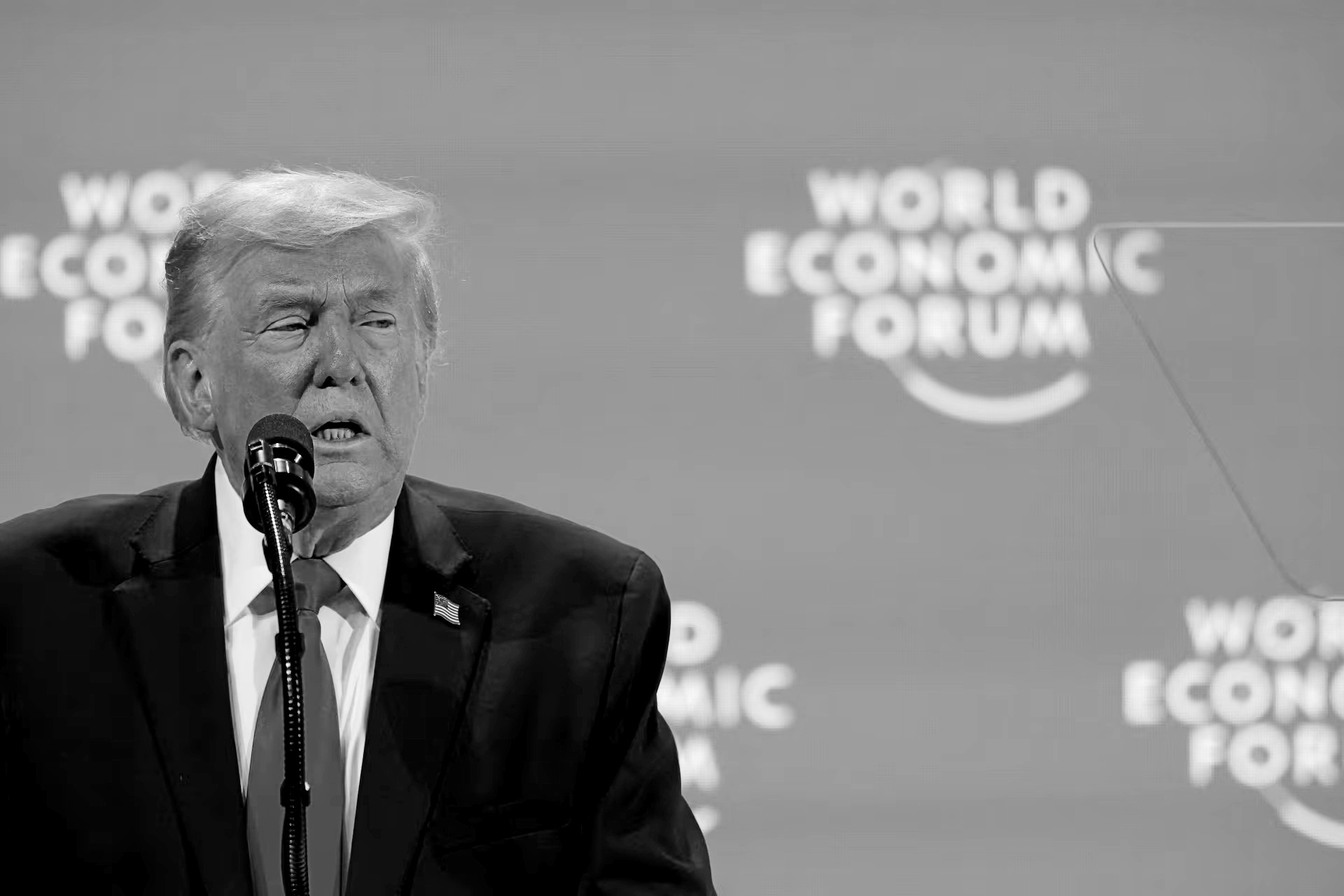
Donald Trump used his appearance at the World Economic Forum in Davos to deliver a blunt assessment of Europe’s trajectory, arguing that the continent is losing its sense of direction and identity while the United States is experiencing renewed economic strength.
Speaking to political and business leaders gathered at the annual forum, Trump wasted little time in turning his focus across the Atlantic. He said Europe was facing deep-rooted structural and social challenges and claimed that parts of the continent had changed so dramatically that they were “not even recognisable”.
According to Trump, this was not a matter of cultural difference or political taste, but of observable decline. He said Americans returning from Europe often describe places they once knew well as unfamiliar in a negative sense, suggesting that Europe’s current path is eroding stability rather than strengthening it.

A contrast with the US economic narrative
Trump framed his remarks by contrasting Europe’s situation with what he described as US success. He said he wanted to share what he called America’s “recipe” for economic growth, competitiveness, and national confidence, implying that European policymakers had moved away from policies that promote prosperity and cohesion.
Without going into detailed prescriptions, Trump linked US performance to a focus on domestic industry, economic self-interest, and clear national priorities. The implicit message was that Europe, in his view, has overcomplicated its policy framework and lost sight of fundamentals that drive growth and social order.
Identity, governance, and political direction
A central theme of Trump’s comments was identity. He suggested that Europe’s challenges are not only economic but also cultural and political, tied to governance choices that have reshaped societies at a pace many citizens struggle to recognise or accept.
“I love Europe and I want to see Europe do well,” Trump said, stressing that his remarks were not intended as an insult. However, he added that the continent is “not heading in the right direction”, a judgement likely to resonate with some audiences while provoking strong resistance from others.
Reactions and implications
Trump’s Davos remarks are consistent with a broader pattern in his rhetoric, where Europe is portrayed as a cautionary example rather than a peer model. For European leaders, the comments underline a growing transatlantic divergence in political tone and policy philosophy, even as economic and security ties remain deeply intertwined.
At Davos, where consensus-driven global cooperation is often emphasised, Trump’s direct and confrontational language stood out. Whether viewed as provocation or warning, his message reinforced the idea that debates about Europe’s future—its competitiveness, cohesion, and identity—are now firmly part of the global political conversation.
Newshub Editorial in Europe – 21 January 2026

If you have an account with ChatGPT you get deeper explanations,
background and context related to what you are reading.
Open an account:
Open an account
Recent Comments