
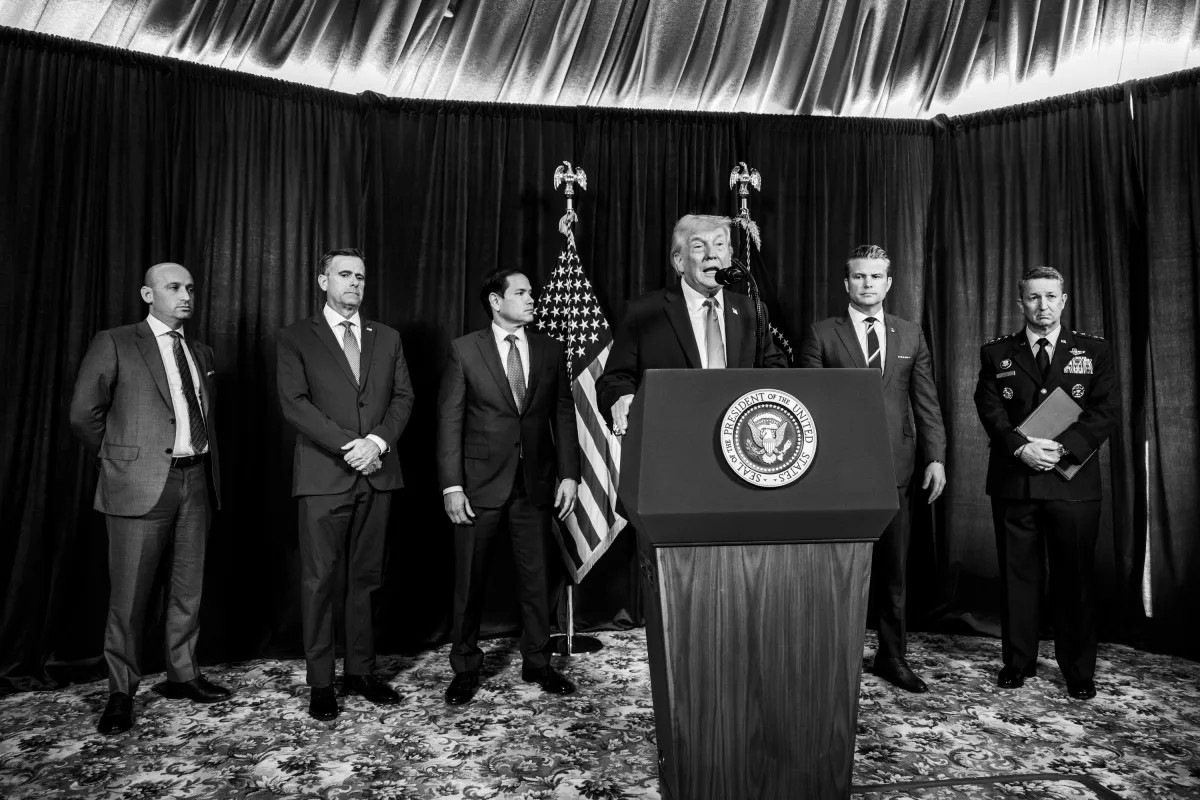
US President Donald Trump has escalated tensions with European allies by threatening punitive tariffs against countries involved in military deployments to Greenland, a move that has drawn sharp criticism, unsettled financial markets and raised new concerns about Washington’s approach to alliances and trade.
Greenland as a geopolitical flashpoint
Greenland’s strategic importance has grown steadily due to its Arctic location, proximity to North America and emerging access to critical minerals. The island, an autonomous territory within the Kingdom of Denmark, has become central to US security thinking in the Arctic. Trump has repeatedly argued that Greenland is vital to American national security and has voiced strong opposition to any increased European military presence not aligned with US interests.
Tariffs as a political instrument
In response to reports of expanded European troop rotations and joint exercises linked to Arctic security, Trump has signalled that countries participating could face new trade penalties. These measures, framed as “defensive tariffs”, would target selected European exports to the United States. The president has portrayed the approach as leverage, arguing that economic pressure is justified to deter what he describes as “provocative” military actions near US strategic zones.

European reaction and alliance strain
European governments have reacted with alarm, stressing that their deployments are defensive, transparent and conducted within existing NATO frameworks. Several EU leaders have warned that linking security cooperation to trade sanctions undermines alliance trust and risks fragmenting transatlantic relations. Brussels has also indicated that retaliatory tariffs could follow if US measures are implemented, raising the prospect of a renewed trade confrontation.
Market and investor response
Financial markets have responded cautiously. European equities with significant US exposure have faced increased volatility, while defence and energy stocks have seen mixed movements as investors reassess geopolitical risk. Currency markets have reflected heightened uncertainty, with safe-haven assets attracting inflows amid fears that political escalation could spill over into broader economic disruption.
Global diplomatic backlash
Beyond Europe, Trump’s rhetoric has drawn concern from other US partners, who view the use of tariffs as a coercive foreign-policy tool as destabilising. Analysts warn that normalising trade sanctions over military and diplomatic disagreements could weaken multilateral institutions and encourage tit-for-tat responses. China and Russia have both criticised the approach, presenting it as evidence of declining US commitment to predictable global leadership.
Trump’s leadership style under scrutiny
The episode reinforces a broader pattern in Trump’s foreign policy, where economic instruments are deployed aggressively to pursue strategic objectives. Supporters argue that this confrontational style forces allies to take US concerns seriously. Critics counter that it erodes trust, damages long-term partnerships and injects unnecessary risk into the global economy.
An uncertain path ahead
Whether the threatened tariffs are implemented remains unclear, but the reaction alone has highlighted the sensitivity of Arctic security and the fragility of transatlantic relations. As Greenland grows in strategic importance, the balance between security cooperation and economic stability is likely to face further tests under Trump’s assertive approach.
Newshub Editorial in North America – 18 January 2026

If you have an account with ChatGPT you get deeper explanations,
background and context related to what you are reading.
Open an account:
Open an account
Recent Comments