
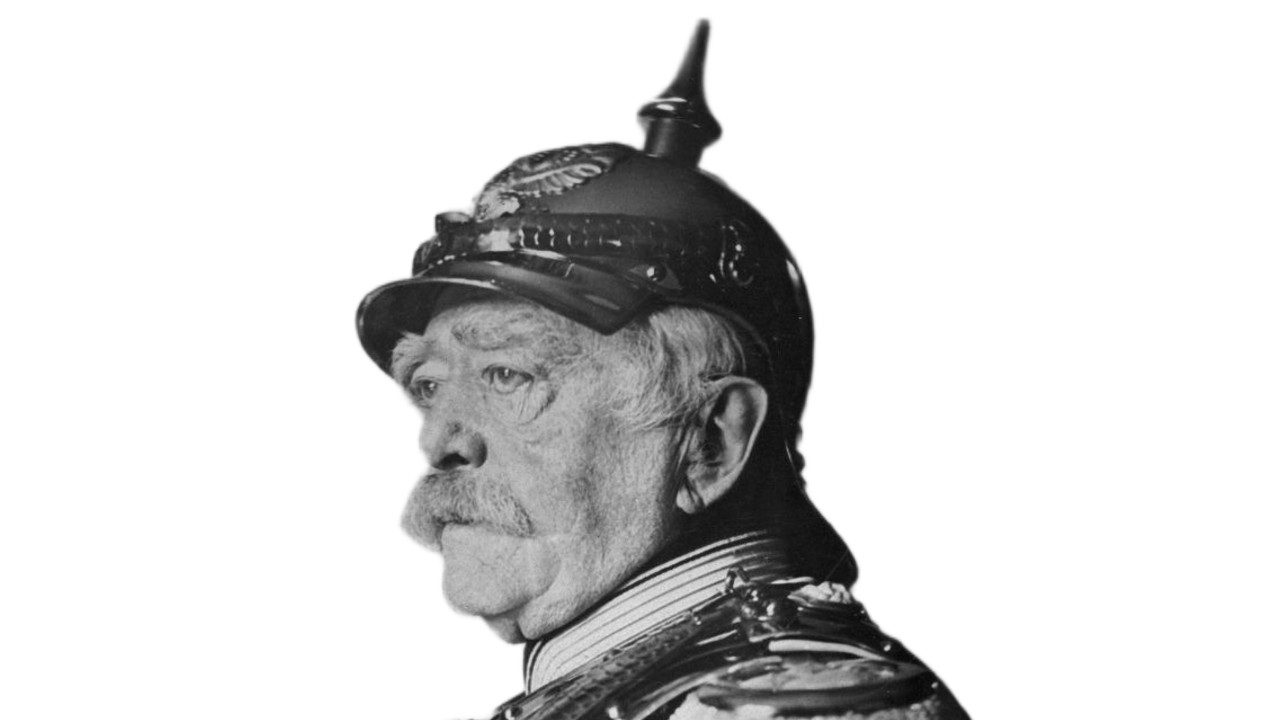
The German Empire was formally proclaimed in January 1871, marking the culmination of decades of political manoeuvring, warfare and diplomacy led by Prussian statesman Otto von Bismarck, whose calculated strategy reshaped the political map of Europe and established Germany as a unified nation-state for the first time.
A fragmented German landscape
Before unification, the German lands were divided into dozens of kingdoms, duchies and free cities loosely connected through the German Confederation. Prussia and Austria were the dominant powers, often competing for influence. Liberal nationalists sought unity through constitutional reform, while conservative elites feared losing sovereignty. It was within this divided environment that Otto von Bismarck, appointed Prussian minister-president in 1862, began pursuing unification on Prussia’s terms.
Realpolitik and power politics
Bismarck rejected idealistic nationalism in favour of Realpolitik — a pragmatic approach based on power, military strength and diplomacy. His famous assertion that the great questions of the age would be decided by “iron and blood” reflected his belief that unification would be achieved through conflict rather than parliamentary debate. Yet his approach was not reckless. Each step was carefully calculated to isolate opponents and secure Prussia’s dominance.

Wars of unification
Three wars proved decisive. First, the Danish War of 1864, fought alongside Austria, allowed Prussia to assert leadership within the German states. The Austro-Prussian War of 1866 followed, swiftly defeating Austria and excluding it from German affairs. This resulted in the creation of the North German Confederation under Prussian control. The final catalyst was the Franco-Prussian War of 1870–71, triggered by diplomatic provocation and French fears of a rising Prussia. French defeat rallied the southern German states to the Prussian cause.
Proclamation of the empire
In January 1871, amid the aftermath of victory over France, the German princes gathered at Versailles to proclaim King Wilhelm I of Prussia as German Emperor. The setting was symbolically powerful, underscoring Prussia’s triumph over France. The new state, the German Empire, unified Germany under Prussian leadership, with Wilhelm I as Kaiser and Bismarck as Imperial Chancellor.
Political structure and consequences
The empire combined federal elements with strong central authority. While individual states retained some autonomy, real power rested with the emperor and the Prussian-dominated government. Bismarck aimed to preserve stability by balancing conservative authority with limited social reforms. Internationally, Germany emerged as Europe’s leading industrial and military power, altering the continental balance and unsettling long-standing rivalries.
A lasting legacy
Bismarck’s achievement transformed Germany into a unified nation-state, but it also embedded authoritarian tendencies and power politics at the heart of its political system. His success redefined European diplomacy and set precedents that would shape international relations well into the twentieth century. The founding of the German Empire remains one of the most significant political transformations in modern European history.
Newshub Editorial in Europe – 18 January 2026

If you have an account with ChatGPT you get deeper explanations,
background and context related to what you are reading.
Open an account:
Open an account
Recent Comments