
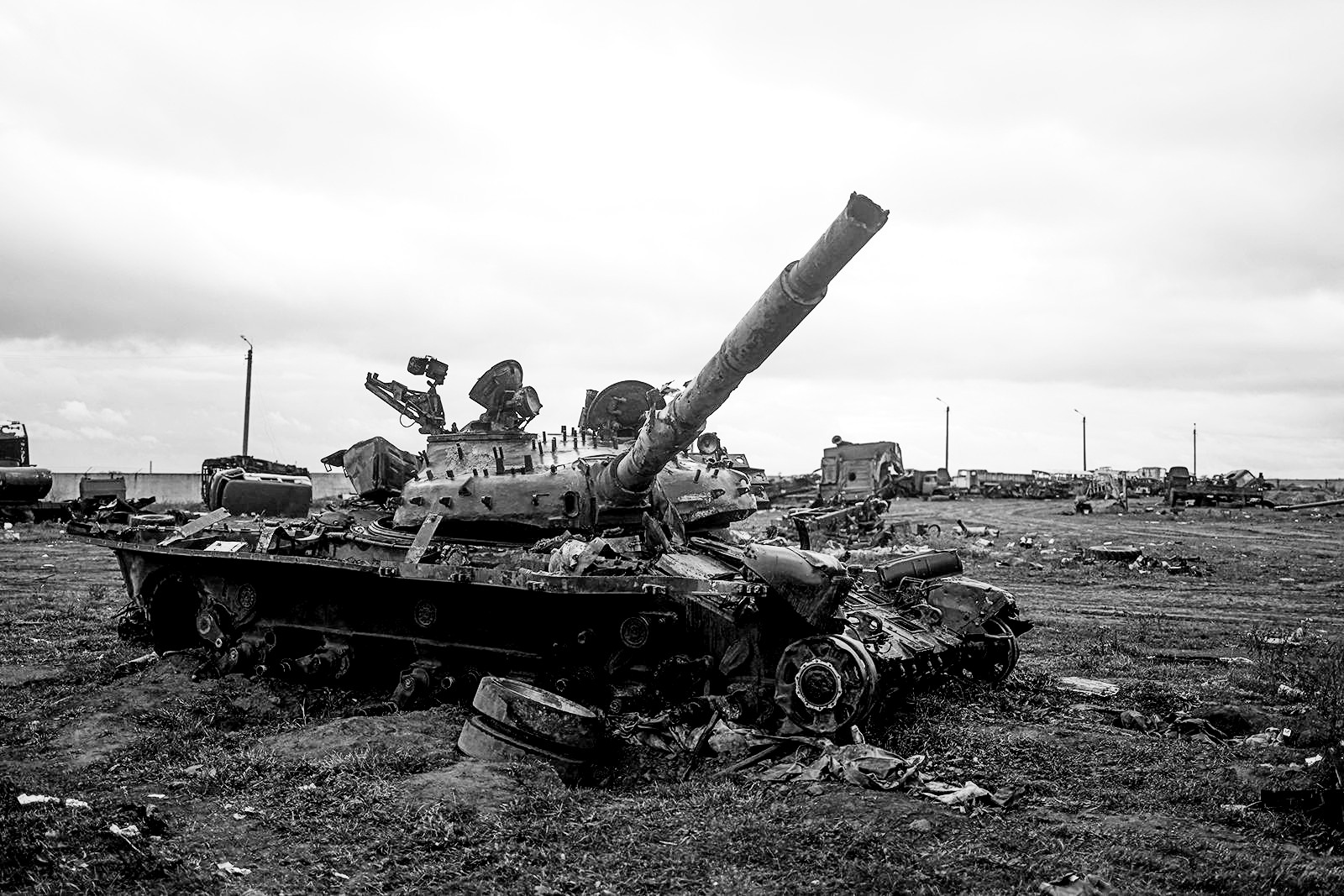
Russia’s full-scale invasion of Ukraine has become one of the most thoroughly documented wars in modern history, with open-source intelligence (OSINT) providing an unusually detailed and transparent picture of battlefield attrition. While official Russian casualty figures remain tightly controlled, independently verified visual evidence allows analysts to establish a credible minimum baseline for equipment destruction and personnel losses, revealing the true scale of the conflict’s cost to Russia’s armed forces.
Equipment and materiel losses — the cumulative picture
OSINT aggregators compiling geolocated photographs, drone footage and video evidence show that Russian materiel losses since February 2022 are exceptionally high. These losses include frontline combat systems as well as logistics and support assets, reflecting not only combat destruction but also abandonment, capture and breakdown under sustained operational pressure. Importantly, OSINT figures represent confirmed minimum losses; the true totals are widely assumed to be higher.
How OSINT verification works
Independent tracking groups such as Oryx apply strict evidentiary standards before recording a loss. Each item must be visually confirmed and cross-checked to avoid duplication. Assets are categorised as destroyed, damaged, abandoned or captured, offering insight into both battlefield lethality and systemic weaknesses in logistics, recovery and command cohesion. This methodology has made OSINT loss tracking a key reference point for defence analysts and policymakers.


Personnel casualties — broad but converging estimates
Human losses are far harder to quantify than destroyed equipment, yet multiple independent assessments point to extraordinary attrition. Aggregated open-source casualty databases, combined with Western intelligence disclosures during 2025, indicate that Russian military casualties — including killed, wounded and missing — exceed one million. Although exact figures remain contested, there is broad consensus that Russia has suffered one of the highest sustained casualty rates of any major conflict since the Second World War.
Why losses have been so large
Several structural dynamics explain the scale of attrition. Drone warfare has fundamentally reshaped the battlefield, enabling persistent surveillance and precision strikes at low cost. Enhanced intelligence, surveillance and reconnaissance support has increased targeting accuracy against armour and supply lines. At the same time, prolonged attritional fighting in heavily contested sectors such as Avdiivka and Kupiansk has produced continuous losses without decisive territorial breakthroughs, compounding material and personnel depletion.
Verified losses snapshot — OSINT minimums (to early January 2026)
Based on visually confirmed open-source data, estimated Russian losses include:
– Tanks: approximately 11,480+
– Armoured fighting vehicles: approximately 23,850+
– Artillery systems: approximately 35,700+
– Other vehicles and logistics units: approximately 72,000+
– Fixed-wing aircraft: approximately 430+
– Helicopters: approximately 347
– Unmanned aerial vehicles: approximately 99,000+
– Cruise missiles: approximately 4,100+
– Military personnel casualties: approximately 1.2 million+
These figures reflect only losses that can be independently verified and documented through imagery and corroborated reporting.
Operational and strategic implications
The destruction of vast quantities of armour and artillery has eroded Russia’s conventional firepower advantage and forced tactical adaptation, including increased reliance on infantry assaults and older equipment stocks. High personnel losses continue to strain recruitment, training and unit cohesion. Strategically, the need to replace losses has accelerated dependence on foreign ammunition supplies, rapid industrial output and improvised force structures, often at the expense of quality and long-term readiness.
Outlook for the conflict
OSINT trend analysis suggests that unless attrition rates fall sharply, Russia’s force quality will continue to degrade relative to Ukraine’s increasingly drone-centric and networked defence. Even with sustained production, replacing modern platforms and experienced personnel remains a long-term challenge. In this context, equipment and manpower losses are not merely statistics, but central drivers shaping the war’s trajectory and Russia’s strategic options.
Newshub Editorial in Europe – 13 January 2026

If you have an account with ChatGPT you get deeper explanations,
background and context related to what you are reading.
Open an account:
Open an accountRussia’s full-scale invasion of Ukraine has become one of the most thoroughly documented wars in modern history, with open-source intelligence (OSINT) providing an unusually detailed and transparent picture of battlefield attrition. While official Russian casualty figures remain tightly controlled, independently verified visual evidence allows analysts to establish a credible minimum baseline for equipment destruction and personnel losses, revealing the true scale of the conflict’s cost to Russia’s armed forces.
Recent Comments