
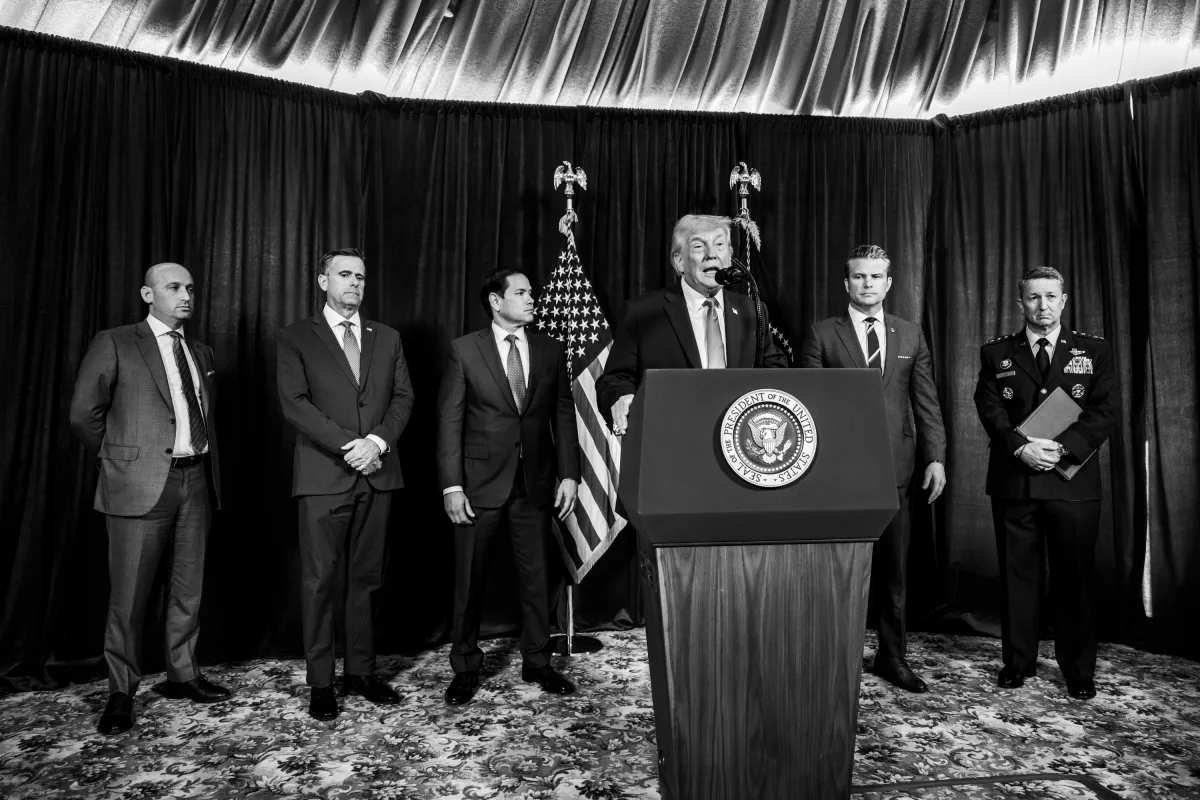
US President Donald Trump said he is considering “very strong” military options against Iran, as reports from human rights organisations indicate that hundreds of protesters have been killed during a widening crackdown by Iranian security forces. The remarks mark a sharp escalation in rhetoric at a moment of heightened internal unrest in Iran, increasing geopolitical risk across the Middle East and injecting fresh uncertainty into global markets.
Escalating rhetoric from Washington
Speaking to reporters, Trump claimed that Iran “wants to negotiate” but warned that the United States has a range of military options under active consideration. While stopping short of announcing any immediate action, the president’s language signalled a willingness to apply extreme pressure should Tehran fail to meet US demands.
The comments follow weeks of mounting protests inside Iran, triggered by economic hardship, political repression and longstanding grievances against the ruling establishment. Washington has repeatedly accused Tehran of violent repression, while Iranian authorities have blamed foreign interference for fuelling unrest.


Rising death toll and international concern
Human rights organisations report that hundreds of protesters have been killed as Iranian security forces move to suppress demonstrations across multiple cities. Arrests are said to number in the thousands, with reports of internet shutdowns and restrictions on media coverage further complicating independent verification.
The situation has drawn condemnation from Western governments and renewed calls for international accountability. The Iranian leadership has dismissed the reports as exaggerated, insisting that it is responding to what it describes as organised unrest aimed at destabilising the state.
Iran rejects pressure but signals openness to talks
Tehran has formally rejected US threats, warning that any military action would be met with a strong response. At the same time, Iranian officials have suggested that diplomacy remains possible if sanctions pressure is eased. Trump’s assertion that Iran “wants to negotiate” reflects Washington’s belief that economic strain and domestic unrest are weakening the regime’s position.
This dual-track dynamic—public defiance paired with limited diplomatic signalling—has defined US-Iran relations in recent years, creating repeated cycles of escalation followed by partial de-escalation without a comprehensive breakthrough.
Regional and market implications
The renewed threat of military confrontation has implications far beyond Iran’s borders. Tensions in the Gulf region raise the risk of disruptions to global energy supplies, particularly if shipping routes or infrastructure become targets. Oil markets have historically reacted sharply to similar episodes, with even the perception of conflict contributing to price volatility.
Financial markets globally are also sensitive to the prospect of military escalation, particularly in an environment already shaped by geopolitical uncertainty and fragile investor confidence. Defence stocks typically benefit from such rhetoric, while broader equity markets tend to react cautiously.
Strategic uncertainty ahead
Despite the forceful language, it remains unclear whether the White House intends to move beyond pressure and deterrence. Analysts note that Trump has frequently used aggressive rhetoric as leverage, while avoiding large-scale military engagements.
Nevertheless, the combination of rising internal violence in Iran and increasingly confrontational messaging from Washington raises the risk of miscalculation. Any direct confrontation would mark a major turning point for the region and for global diplomatic stability.
For now, markets and policymakers alike are watching closely, as the situation evolves at the intersection of domestic unrest in Iran and hardening strategic postures from the United States.
Newshub Editorial in North America – 12 January 2026

If you have an account with ChatGPT you get deeper explanations,
background and context related to what you are reading.
Open an account:
Open an accountUS President Donald Trump said he is considering “very strong” military options against Iran, as reports from human rights organisations indicate that hundreds of protesters have been killed during a widening crackdown by Iranian security forces. The remarks mark a sharp escalation in rhetoric at a moment of heightened internal unrest in Iran, increasing geopolitical risk across the Middle East and injecting fresh uncertainty into global markets.
Recent Comments