
January 3, 2026 — Caracas / Washington / Global capitals
Global leaders reacted with shock, alarm, and deep division on Saturday after former US president Donald Trump claimed that American forces had carried out a “large-scale strike” against Venezuela, resulting in the capture of President Nicolás Maduro and his wife and their removal from the country. If confirmed, the operation would mark one of the most dramatic and controversial foreign interventions in the Western Hemisphere in decades.
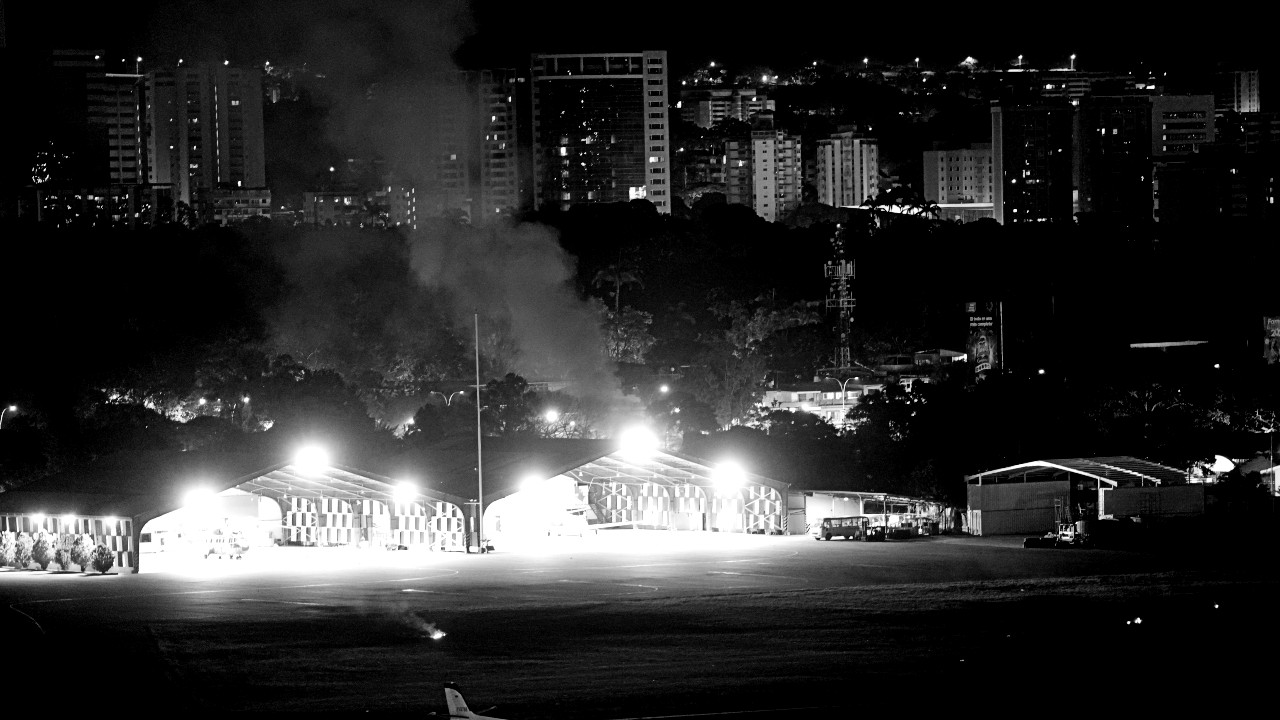
According to Trump’s statement, the operation involved coordinated air and ground actions aimed at dismantling what he described as narcotrafficking networks and authoritarian command structures within the Venezuelan state. Explosions were reported across Caracas, with residents describing low-flying aircraft, heavy detonations, and widespread panic as military targets were struck in and around the capital. Venezuelan authorities have not confirmed Maduro’s detention, deepening uncertainty and fuelling speculation over the true scope of the operation.

Outrage and defiance in Caracas
The Venezuelan government swiftly rejected Washington’s account, condemning the operation as an illegal act of aggression and a violation of national sovereignty. Vice President Delcy Rodríguez demanded proof of life for Maduro and his wife, stating that the country had received no official confirmation of their location or status.
Caracas declared a nationwide state of emergency, suspending civil liberties and calling on citizens and loyalist forces to mobilise. State media described the events as the most severe foreign attack on Venezuela in modern history, while pro-government groups staged demonstrations accusing the United States of imperialism and regime change under the guise of counternarcotics operations.
Latin America divided and on edge
Across Latin America, the announcement triggered sharp divisions and immediate security concerns. Colombia, which shares a long and porous border with Venezuela, condemned the strikes and deployed additional troops amid fears of mass displacement. President Gustavo Petro called for an emergency UN Security Council meeting, warning that unilateral military action risked destabilising the entire Andean and Caribbean regions.
By contrast, Argentina’s President Javier Milei publicly praised the operation, framing it as a decisive blow against authoritarianism. His stance highlighted the ideological fractures running through the region, where governments remain deeply split over relations with Washington and the legitimacy of external intervention.
Global powers condemn as narratives collide
Major global powers responded with unusually blunt language, underscoring the geopolitical stakes. Russia’s Foreign Ministry described the strikes as armed aggression and demanded an urgent UN response, warning that the precedent could undermine international stability. Iran labelled the operation a flagrant breach of international law, while Cuba denounced what it called a criminal attack on a sovereign state and urged global resistance.
China, while more measured, called for restraint and respect for sovereignty, signalling concern over the erosion of established diplomatic norms.
Europe urges restraint and protection of civilians
European governments adopted a cautious but critical tone, focusing on de-escalation and civilian safety. Spain offered to mediate dialogue between Washington and Caracas, citing historic ties to the region. Germany and Italy emphasised the primacy of international law and the protection of European nationals and assets in Venezuela.
The European Union reiterated that all parties must adhere to the UN Charter, warning that escalation could have far-reaching humanitarian and economic consequences.
Political firestorm inside the United States
Within the United States, the announcement ignited an immediate constitutional and political backlash. Lawmakers from both major parties questioned the legal basis for military action without explicit congressional authorisation. Several senators warned that the operation, if conducted as described, could violate the War Powers Resolution and set a dangerous precedent for executive overreach.
Supporters, however, argued that decisive action was long overdue, reflecting a deeply polarised domestic debate over America’s role in confronting authoritarian regimes abroad.
A turning point for the hemisphere
The episode may represent a defining moment in post–Cold War US–Latin American relations. The operation follows months of heightened military activity in the Caribbean and targeted strikes on alleged trafficking networks under what critics describe as a hybrid strategy blurring counternarcotics enforcement and regime change.
Whether the crisis escalates into prolonged regional conflict or forces a negotiated settlement remains unclear. What is certain is that Trump’s announcement has already sent shockwaves through global diplomacy, reopening unresolved questions about sovereignty, intervention, and the limits of power in an increasingly volatile world.
Newshub Editorial in North America – January 3, 2026

If you have an account with ChatGPT you get deeper explanations,
background and context related to what you are reading.
Open an account:
Open an account
Recent Comments