
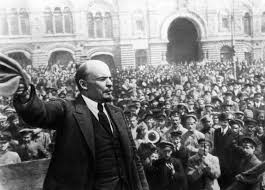
The Union of Soviet Socialist Republics (USSR) was formally established on 30 December 1922, marking a decisive moment in 20th-century history that would profoundly influence global politics, economics, and ideology for nearly seven decades. Emerging from the turmoil of revolution and civil war, the new state represented the first successful attempt to build a socialist federation on a continental scale.
From empire to federation
The collapse of the Russian Empire during the First World War created a political vacuum that revolutionary forces sought to fill. Following the Bolshevik seizure of power in October 1917, the former imperial territories descended into years of violent conflict. By the early 1920s, the Bolsheviks had consolidated control over much of the region through military victory and political centralisation, laying the groundwork for a new state structure.
A union of republics
The USSR was established as a federation of socialist republics, initially comprising Russia, Ukraine, Belarus, and the Transcaucasian republic. This structure was designed to recognise the multinational character of the former empire while maintaining firm central authority. In theory, each republic had the right to self-determination; in practice, real power was concentrated in Moscow, within the Communist Party leadership.

Ideology at the core
Marxist-Leninist ideology formed the foundation of the new state. The Soviet leadership aimed to abolish private ownership of the means of production, replace market mechanisms with central planning, and create a classless society. These ambitions were unprecedented in scale, and the USSR quickly became both a model and a warning for political movements worldwide.
International repercussions
The creation of the Soviet Union sent shockwaves far beyond its borders. Western governments viewed the new socialist state with suspicion, fearing the spread of revolutionary ideas. At the same time, socialist and anti-colonial movements across Europe, Asia, and Africa drew inspiration from the Soviet experiment. The ideological divide that began in the early 1920s would later harden into the Cold War, defining international relations for much of the century.
A state that defined an era
Over its lifetime, the USSR transformed from a war-ravaged federation into a global superpower, playing a central role in the Second World War, the nuclear arms race, and the shaping of post-war Europe. While the Soviet Union dissolved in 1991, its establishment in 1922 remains a pivotal historical milestone, signalling the start of a new political and ideological era whose effects are still felt today.

If you have an account with ChatGPT you get deeper explanations,
background and context related to what you are reading.
Open an account:
Open an account
Recent Comments