
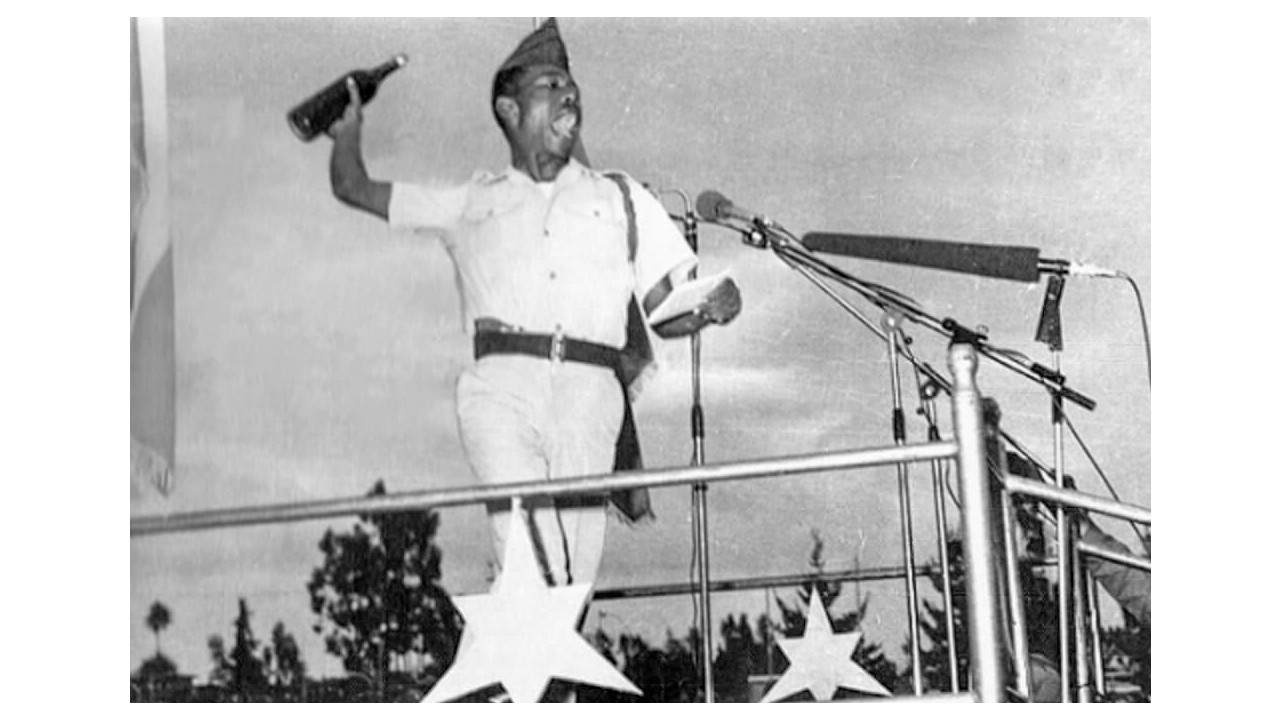
Ethiopia formally declared itself a socialist state in the late 1970s under the leadership of Mengistu Haile Mariam, marking one of the most radical political transformations in the country’s long modern history. The declaration followed years of upheaval after the fall of Emperor Haile Selassie and placed Ethiopia firmly within the Cold War orbit of Marxist-Leninist states, with profound consequences for governance, the economy, and society.
From imperial collapse to revolutionary rule
The roots of Ethiopia’s socialist turn lie in the 1974 revolution, when a military committee known as the Derg overthrew the centuries-old monarchy. Initially presenting itself as a reformist force, the Derg soon consolidated power through purges and internal struggles. By 1977, Mengistu Haile Mariam emerged as the dominant figure, sidelining rivals and positioning himself as the revolutionary leader capable of imposing ideological discipline on the state. His rise coincided with growing alignment with the Soviet Union and other Eastern Bloc countries.
The declaration of a socialist state
In 1975–1977, the Derg issued sweeping proclamations that nationalised land, banks, insurance companies, and major industries. Land reform, encapsulated in the slogan “land to the tiller”, abolished private ownership of rural land and dismantled the feudal landlord system. In 1987, the ideological shift was formalised with the creation of the People’s Democratic Republic of Ethiopia, a one-party socialist state led by the Workers’ Party of Ethiopia, with Mengistu as president. Marxism-Leninism became the official state ideology, embedded in law, education, and governance.


Economic and social transformation
The socialist programme aimed to modernise Ethiopia through central planning, collectivisation, and state-led industrialisation. In practice, results were mixed and often damaging. Agricultural collectivisation and villagisation disrupted traditional farming systems and reduced incentives for production. Combined with drought and conflict, these policies contributed to severe food shortages, culminating in the catastrophic famine of 1983–1985. While the state expanded literacy campaigns and public health initiatives, economic inefficiency and resource misallocation undermined long-term development.
Repression and the Red Terror
Mengistu’s socialist project was enforced through extreme political repression. The late 1970s witnessed the “Red Terror”, a campaign targeting perceived opponents, particularly urban youth movements. Tens of thousands were killed or imprisoned, creating a climate of fear that crushed dissent. This violence, justified by the regime as revolutionary necessity, remains one of the darkest chapters in Ethiopia’s modern history and deeply shaped public memory of the socialist period.
Cold War alliances and regional conflict
Ethiopia’s declaration as a socialist state reshaped its foreign relations. The country became a key Soviet ally in Africa, receiving substantial military and economic support. This backing was decisive during the Ogaden War against Somalia in 1977–1978. However, prolonged civil wars against insurgent movements in Eritrea and Tigray drained resources and eroded the regime’s legitimacy, even as Cold War patronage continued.
The end of the socialist era
By the late 1980s, economic crisis, military setbacks, and the collapse of the Soviet Union weakened Mengistu’s government. In 1991, rebel forces entered Addis Ababa, ending 17 years of socialist rule. Mengistu fled into exile, and Ethiopia embarked on a new political path, abandoning Marxism-Leninism in favour of a federal system and market-oriented reforms.
Newshub Editorial in Africa – 21 December 2025
Ethiopia formally declared itself a socialist state in the late 1970s under the leadership of Mengistu Haile Mariam, marking one of the most radical political transformations in the country’s long modern history. The declaration followed years of upheaval after the fall of Emperor Haile Selassie and placed Ethiopia firmly within the Cold War orbit of Marxist-Leninist states, with profound consequences for governance, the economy, and society.
Recent Comments