
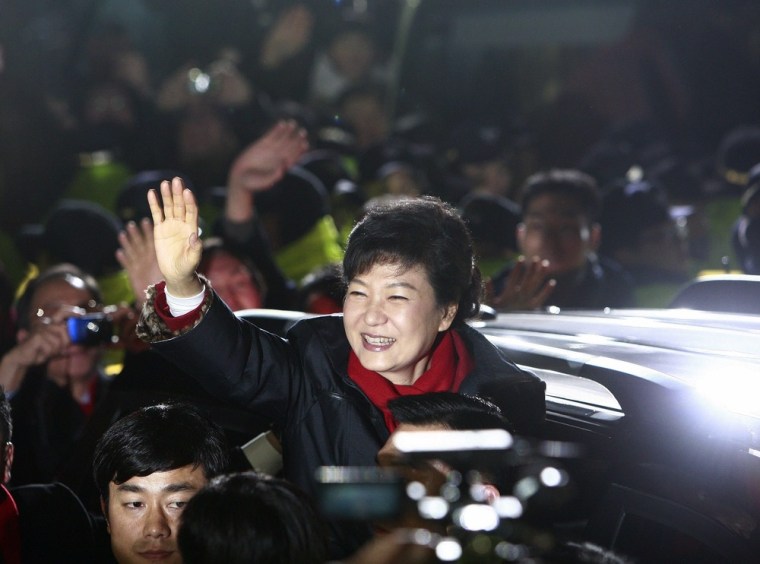
Park Geun-hye’s election in December 2012 marked a defining moment in South Korea’s modern political history, as she became the country’s first woman to be elected president, breaking a long-standing gender barrier in one of Asia’s most influential democracies. Her victory was widely seen as both symbolic and consequential, reflecting shifting social attitudes while also underscoring the persistence of deep political divisions within the country.
A landmark election victory
Park, the candidate of the conservative Saenuri Party, won the presidency with just over 51 per cent of the vote, defeating her liberal rival Moon Jae-in. The election took place against a backdrop of economic uncertainty, concerns over inequality, and heightened tensions with North Korea. Turnout was high, particularly among older voters, who strongly backed Park and proved decisive in securing her narrow but clear win.
A powerful and controversial political legacy
Park Geun-hye was no stranger to the public eye. She is the daughter of Park Chung-hee, the former military strongman who ruled South Korea from 1961 until his assassination in 1979. Her father is credited by supporters with laying the foundations for South Korea’s rapid industrialisation, while critics remember his rule as authoritarian and repressive. Park’s family legacy remained a central and often polarising feature of her political identity throughout the campaign.


Campaign themes and voter appeal
During the election, Park positioned herself as a steady and experienced leader capable of delivering economic stability and social welfare reform. She promised what she termed the “democratisation of the economy”, aiming to curb the power of South Korea’s dominant conglomerates while expanding support for lower-income households and the elderly. Her message resonated with voters seeking continuity and reassurance amid global and regional uncertainty.
Gender barriers and symbolic significance
Park’s election was widely celebrated as a milestone for gender equality in South Korea, a society where women have historically been underrepresented in senior political and corporate roles. International observers highlighted the achievement as a signal of social progress, even as domestic critics cautioned that symbolic breakthroughs alone would not address structural inequalities faced by women in the workforce and public life.
From historic first to troubled presidency
Park was inaugurated in February 2013 and became South Korea’s 11th president. However, her time in office would later be overshadowed by a major corruption scandal, leading to her impeachment and removal from office in 2017. While these events dramatically reshaped public perceptions of her leadership, they do not diminish the historical significance of her election as the first woman to reach South Korea’s highest political office.
A defining moment in South Korean democracy
Park Geun-hye’s election remains a pivotal chapter in South Korea’s democratic evolution. It highlighted the electorate’s willingness to embrace change while also revealing enduring tensions over history, power, and accountability. As such, her rise to the presidency continues to be studied as both a breakthrough for representation and a cautionary tale about leadership and governance in a rapidly changing society.
Newshub Editorial in Asia – 19 December 2025
Park Geun-hye’s election in December 2012 marked a defining moment in South Korea’s modern political history, as she became the country’s first woman to be elected president, breaking a long-standing gender barrier in one of Asia’s most influential democracies. Her victory was widely seen as both symbolic and consequential, reflecting shifting social attitudes while also underscoring the persistence of deep political divisions within the country.
Recent Comments