
Kim Dae-jung’s election as president of South Korea marked a historic milestone for the country, representing the first peaceful transfer of power to an opposition leader and signalling a decisive break from decades of authoritarian rule and military-backed governments.
From dissident to democratic leader
Kim Dae-jung’s path to the presidency was long, perilous and emblematic of South Korea’s turbulent modern history. Born in 1924 during Japanese colonial rule, Kim emerged as a vocal advocate for democracy in the post-war era. His political career was repeatedly interrupted by imprisonment, exile and even a near-fatal kidnapping in 1973, widely believed to have been orchestrated by South Korea’s intelligence services at the time. Despite these threats, Kim remained a persistent critic of authoritarian governments and became an enduring symbol of democratic resistance.
The 1997 election backdrop
Kim’s victory came in December 1997, at a moment of profound national crisis. South Korea was reeling from the Asian financial crisis, which had triggered a sharp economic contraction, mass layoffs and a humiliating International Monetary Fund bailout. Public frustration with the ruling establishment ran deep, creating an opening for change. Kim campaigned on promises of economic reform, transparency and social protection, forging an unprecedented alliance with regional rival Kim Jong-pil to broaden his electoral appeal.


A historic victory
Winning the presidency at the age of 73, Kim Dae-jung became the first opposition candidate to assume South Korea’s highest office through democratic elections. His victory was widely hailed domestically and internationally as a consolidation of South Korea’s democratic transition, which had begun a decade earlier with the end of direct military rule. It also demonstrated the resilience of democratic institutions in a society that had endured decades of political repression.
Economic reform and social change
As president, Kim moved swiftly to stabilise the economy, implementing painful but far-reaching reforms demanded by the IMF. His administration restructured the powerful chaebol conglomerates, strengthened financial regulation and promoted greater corporate accountability. While controversial, these measures laid the groundwork for South Korea’s eventual recovery and long-term economic resilience. Domestically, Kim also expanded social welfare programmes, recognising the human cost of rapid industrialisation and economic crisis.
The Sunshine Policy and legacy
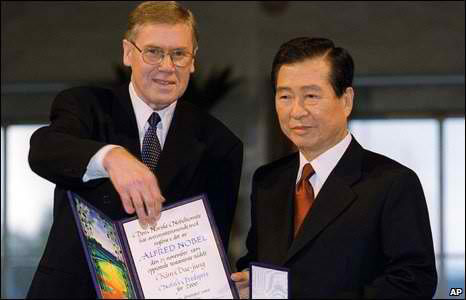
Internationally, Kim Dae-jung is perhaps best remembered for his “Sunshine Policy” towards North Korea, aimed at reducing tensions through dialogue, economic cooperation and humanitarian engagement. This approach culminated in the landmark inter-Korean summit in 2000, earning Kim the Nobel Peace Prize the same year. Although later criticised amid shifting geopolitical realities, the policy represented a bold attempt to reshape relations on the Korean peninsula.
Kim Dae-jung’s election remains a defining moment in South Korea’s political history. It symbolised the triumph of democratic perseverance over repression and underscored the possibility of reconciliation in one of the world’s most enduring geopolitical conflicts. His presidency continues to shape debates about democracy, economic justice and peace in East Asia.
Newshub Editorial in Asia – 18 December 2025
Kim Dae-jung’s election as president of South Korea marked a historic milestone for the country, representing the first peaceful transfer of power to an opposition leader and signalling a decisive break from decades of authoritarian rule and military-backed governments.
Recent Comments