
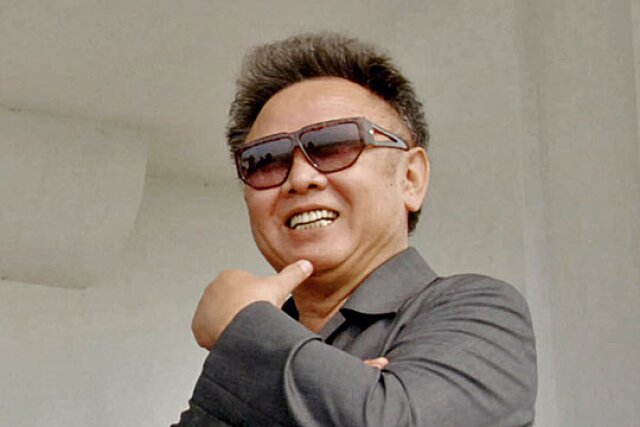
Kim Jong Il ruled North Korea for nearly two decades, presiding over a state defined by secrecy, militarisation and economic hardship, while entrenching a dynastic system that continues to shape global geopolitics today.
From revolutionary lineage to absolute power
Kim Jong Il was born in 1941 or 1942 — the exact date remains disputed — and was the eldest son of North Korea’s founding leader, Kim Il Sung. Raised within the revolutionary elite, Kim Jong Il was groomed for power from an early age, gradually consolidating influence within the ruling Workers’ Party of Korea. By the 1980s, he had become the de facto successor, formally assuming leadership after his father’s death in 1994.
His ascent marked the continuation of a unique hereditary communist regime, combining Marxist-Leninist structures with an intense personality cult centred on the Kim family. State propaganda portrayed Kim Jong Il as an omniscient leader, credited with artistic brilliance, military genius and near-mythical personal traits.


Military-first rule and nuclear ambitions
Kim Jong Il’s leadership was defined by Songun, or “military-first” politics. Under this doctrine, the armed forces became the core institution of the state, absorbing vast resources despite chronic civilian shortages. This approach stabilised the regime internally while heightening external tensions.
North Korea’s nuclear programme advanced significantly under Kim Jong Il. The country conducted its first nuclear test in 2006, followed by a second in 2009, triggering international condemnation and sweeping sanctions. For Pyongyang, nuclear weapons were framed as essential to regime survival, particularly after the US-led invasion of Iraq.
Famine, isolation and economic collapse
The 1990s were catastrophic for North Korea’s population. Following the collapse of the Soviet Union, foreign aid and trade evaporated, exposing deep structural weaknesses. A devastating famine — euphemistically called the “Arduous March” — is estimated to have killed hundreds of thousands, possibly more than a million people.
Despite the crisis, Kim Jong Il resisted meaningful economic reform. Limited market activity was tolerated intermittently, but central planning and political control remained paramount. Information was tightly controlled, borders sealed, and dissent ruthlessly suppressed.
Diplomacy, deception and spectacle
Kim Jong Il was rarely seen in public and almost never travelled abroad, adding to his mystique. Yet he proved adept at high-stakes diplomacy. Summits with South Korea in 2000 and 2007 briefly raised hopes of détente, while negotiations with the United States oscillated between engagement and hostility.
His regime frequently used provocation — missile tests, military incidents and nuclear brinkmanship — as leverage in negotiations, extracting aid or concessions while avoiding fundamental change.
Death and legacy
Kim Jong Il died in December 2011, reportedly from a heart attack while travelling by train. He was succeeded by his youngest son, Kim Jong Un, marking the third generation of dynastic rule.
Kim Jong Il’s legacy is one of contradiction: he preserved regime stability against extraordinary odds but at immense human cost. His rule entrenched North Korea’s isolation, militarised its society, and set the foundations for the nuclear-armed state that continues to challenge the international order today.
Newshub Editorial in Asia – 17 December 2025
Kim Jong Il ruled North Korea for nearly two decades, presiding over a state defined by secrecy, militarisation and economic hardship, while entrenching a dynastic system that continues to shape global geopolitics today.
Recent Comments