
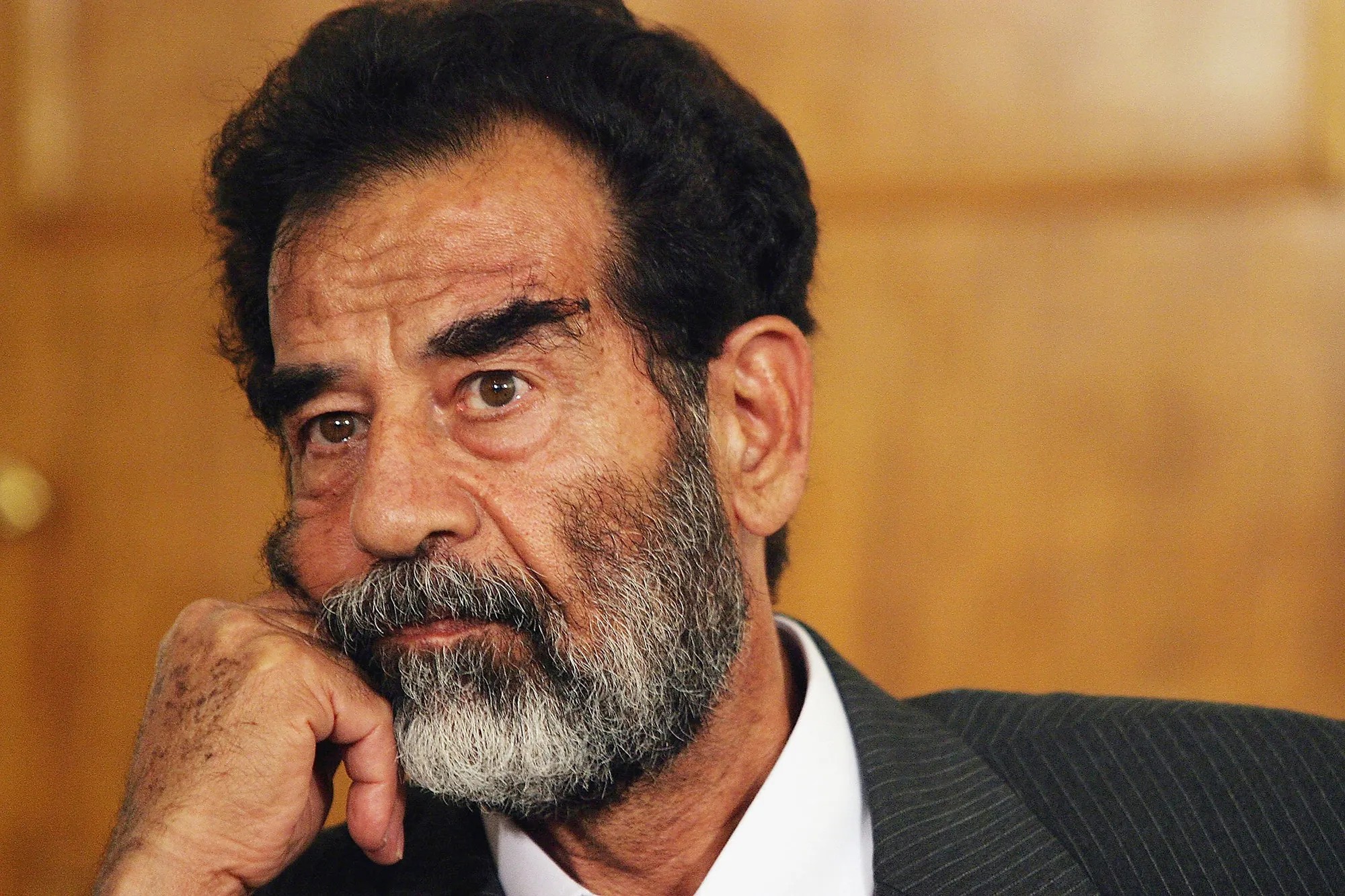
raqi President Saddam Hussein was captured by U.S. forces in December 2003, marking the definitive end of one of the Middle East’s most authoritarian and consequential regimes. His rise, rule, and downfall shaped Iraq and regional geopolitics for more than three decades.
Early life and rise within the Ba’ath party
Saddam Hussein was born in 1937 near Tikrit, in northern Iraq, into a poor rural family. His early years were marked by instability and violence, experiences that would later inform his political worldview. Drawn to Arab nationalism, Saddam joined the Arab Socialist Ba’ath Party as a young man. The party advocated pan-Arab unity, secularism, and socialism, positioning itself against Western influence and traditional monarchies.
Saddam quickly proved himself as an organiser and enforcer. After a series of coups and counter-coups in the 1950s and 1960s, the Ba’ath Party seized power definitively in 1968. Saddam became vice-president, operating behind the scenes as the regime’s chief strategist and security overseer.


Consolidation of power and authoritarian rule
In 1979, Saddam forced President Ahmed Hassan al-Bakr to resign and assumed the presidency. Within weeks, he orchestrated a dramatic purge of the Ba’ath leadership, executing or imprisoning perceived rivals. This event signalled the beginning of Saddam’s absolute rule.
Throughout the 1980s, Saddam built a highly centralised police state. Political dissent was crushed, media tightly controlled, and loyalty enforced through fear. At the same time, oil revenues were used to fund infrastructure, education, and healthcare, giving many Iraqis a higher standard of living during the early years of his rule.
War, repression, and international isolation
Saddam’s ambitions led Iraq into devastating conflicts. The Iran–Iraq War (1980–1988) cost hundreds of thousands of lives and drained the economy. During this period, Saddam authorised chemical weapons attacks, most notoriously against Kurdish civilians in Halabja in 1988.
In 1990, Iraq’s invasion of Kuwait triggered the Gulf War and brought U.S.-led coalition forces into direct conflict with Baghdad. Iraq’s defeat resulted in harsh international sanctions, crippling the economy throughout the 1990s and isolating Saddam diplomatically, even as he remained firmly in power domestically.
The 2003 invasion and Saddam’s capture
In March 2003, the United States and its allies invaded Iraq, citing concerns over weapons of mass destruction and links to terrorism. Saddam’s regime collapsed within weeks, but he himself evaded capture for months.
On 13 December 2003, U.S. forces located Saddam near his hometown of Tikrit during Operation Red Dawn. He was found hiding in a concealed underground bunker, often described as a “spider hole”. Dishevelled and unarmed, Saddam was taken into custody without resistance, an image that quickly became symbolic of his fall from power.
Trial, execution, and legacy
Saddam was tried by an Iraqi tribunal for crimes against humanity, including the killing of 148 Shi’ite villagers in Dujail in 1982. He was found guilty and executed by hanging on 30 December 2006.
His legacy remains deeply polarising. To some, Saddam embodied Iraqi sovereignty and resistance to foreign interference. To others, he was a brutal dictator responsible for mass repression, war, and suffering. His capture and execution closed one chapter of Iraq’s history, but the instability that followed demonstrated how profoundly his rule had shaped the country he left behind.
Newshub Editorial in the Middle East – 13 December 2025
raqi President Saddam Hussein was captured by U.S. forces in December 2003, marking the definitive end of one of the Middle East’s most authoritarian and consequential regimes. His rise, rule, and downfall shaped Iraq and regional geopolitics for more than three decades.
Recent Comments