
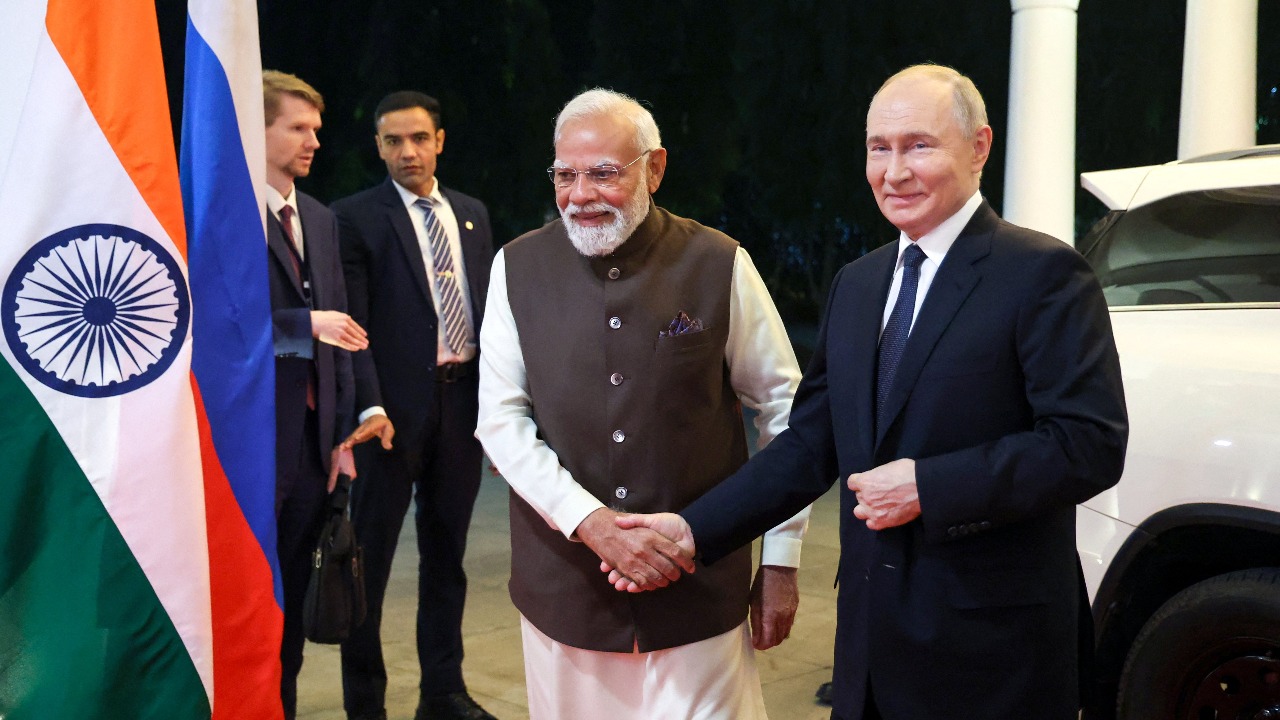
ndia hosts Russian President Vladimir Putin for a high-stakes summit with Prime Minister Narendra Modi, aiming to reinforce long-standing bilateral ties while navigating widening pressure from the United States over trade flows, energy cooperation, and defence procurement. The meeting comes at a sensitive geopolitical moment, with New Delhi balancing strategic autonomy against competing global expectations.
Diplomatic priorities centre on energy and defence
At the core of the talks is India’s expanding reliance on Russian crude, now a critical component of its energy security strategy. Despite US concerns over discounted oil purchases, Indian officials argue that diversified supplies protect national interests. Defence cooperation remains another anchor of the relationship. India continues to operate a large fleet of Russian-origin military hardware, prompting renewed discussions on maintenance, upgrades, and technology transfers. The summit aims to stabilise these pillars while exploring limited diversification to reduce long-term vulnerability.
US trade pressure shapes the backdrop of negotiations
Washington’s unease with India–Russia cooperation has grown sharper in recent months, with American officials signalling that expanded energy and technology trade with Moscow could complicate India’s economic and defence ties with the US. New Delhi, however, maintains that its foreign policy is non-aligned, rejecting the notion that external actors should dictate its strategic partnerships. The summit therefore unfolds against a backdrop of delicate diplomatic balancing, where India seeks to uphold its autonomy without jeopardising its expanding US relationship.

Economic cooperation remains resilient despite global tensions
Trade between India and Russia has surged over the past two years, driven largely by energy flows but increasingly by fertilisers, machinery, and pharmaceuticals. Both governments intend to broaden this portfolio, with discussions expected on local currency settlements, digital payments infrastructure, and mutual investment in logistics corridors. India is also exploring deeper cooperation in nuclear energy and space technology, sectors long dominated by bilateral agreements.
A practical summit shaped by shifting global alignments
For Russia, the visit underscores its pivot toward non-Western partners as geopolitical isolation persists. For India, it represents continuity: the preservation of a relationship that has spanned decades, even as New Delhi deepens ties with the US, Europe, and the Indo-Pacific region. The summit does not signal a dramatic policy shift but rather a careful recalibration, reflecting India’s priority of maintaining multiple strategic options in an increasingly polarised world.
Newshub Editorial in Asia – 5 December 2025
Recent Comments