
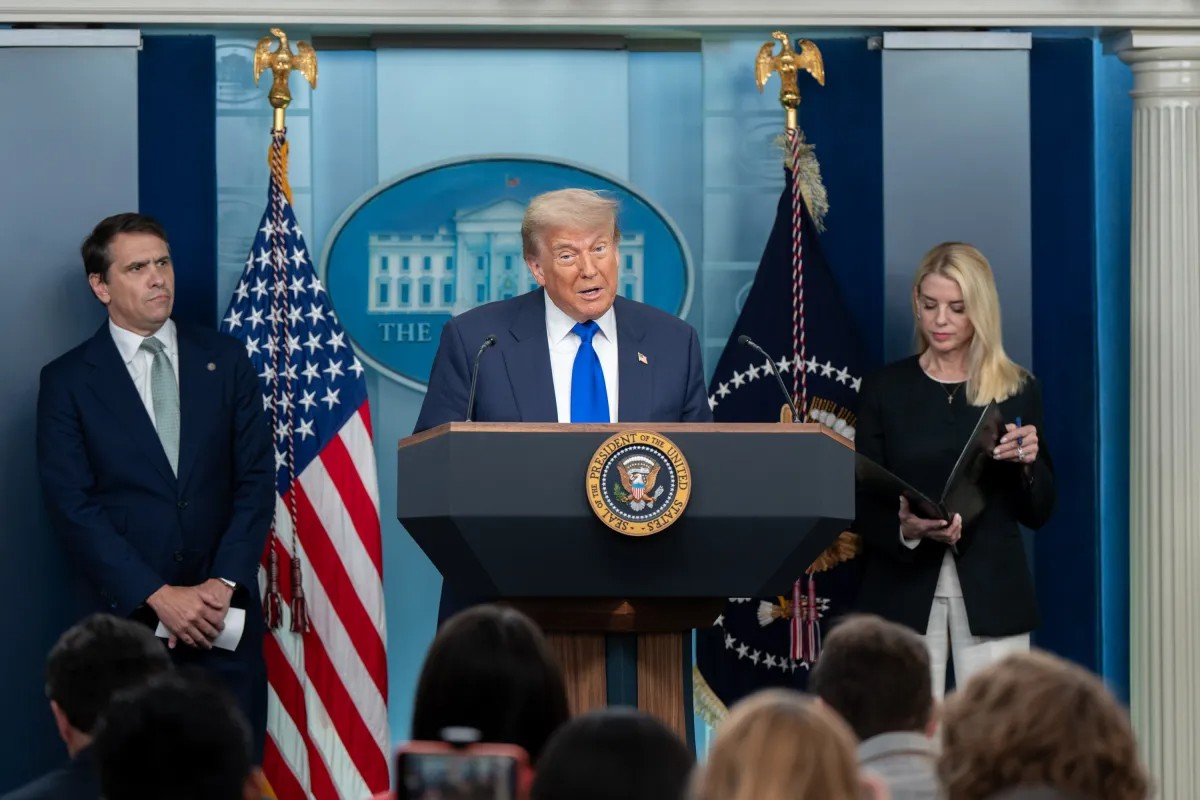
Former US President Donald Trump’s decision to release a Honduran leader previously convicted on major cocaine-trafficking charges has ignited a political storm in Washington, with Democratic lawmakers accusing him of undermining the rule of law and jeopardising long-standing US anti-narcotics efforts. The sudden move, announced late Tuesday, immediately drew national and international scrutiny as questions mounted over the legal and diplomatic implications.
A controversial release with global repercussions
Trump’s unilateral directive overturned a sentence that had been hailed by US prosecutors as a landmark victory against high-level corruption and transnational drug networks in Central America. The Honduran figure, whose conviction was part of a broader US strategy to disrupt cartels operating across the region, was unexpectedly freed after Trump argued that the case had been “politically motivated” and that the individual had been a “strategic ally” during his presidency. The move bypassed established review channels, prompting concern among federal officials involved in drug enforcement.
Democrats accuse Trump of eroding judicial independence
Democratic leaders responded swiftly and forcefully, warning that the decision set a dangerous precedent. Senior members of Congress criticised the intervention as a direct challenge to judicial integrity, stressing that narcotics convictions are typically handled with minimal political interference. They argued that releasing a figure implicated in large-scale cocaine distribution undermines years of coordinated efforts between US agencies and regional governments. Calls for formal investigations emerged within hours, with some Democrats demanding congressional oversight into how the release was authorised.

Central American reactions highlight diplomatic strain
The development also triggered immediate reactions across Central America, particularly in Honduras, where the conviction had been seen as a symbol of accountability at a time of intense scrutiny of political corruption. Local civil society groups expressed shock, noting that the release risks reinforcing public cynicism toward efforts to curb drug-related influence in government. Regional analysts warned that the episode could destabilise ongoing security cooperation programmes, as officials may question Washington’s commitment to long-term anti-narcotics partnerships.
Legal experts question the precedent
Legal scholars in the United States noted that while presidents retain broad authority to issue pardons or intervene in sentencing matters, such actions typically follow a structured recommendation process involving the Department of Justice. Bypassing these mechanisms, they argued, leaves open questions about potential political motivations and weakens the institutional safeguards designed to prevent misuse of executive power. The incident is expected to spark extensive debate about the scope of presidential clemency and whether new legislative constraints may be necessary.
A decision likely to reverberate into the 2026 campaign
As the political fallout continues, analysts predict that the controversy will feed into broader campaign dynamics ahead of the 2026 midterms. Democrats are expected to use the episode to highlight concerns about Trump’s approach to law enforcement and foreign policy, while Republicans have so far offered muted responses, with some defending the decision as a strategic geopolitical adjustment. With the public debate intensifying, the release is poised to remain a central talking point in national politics over the coming months.
Newshub Editorial in North America – 2025-12-03
Recent Comments