
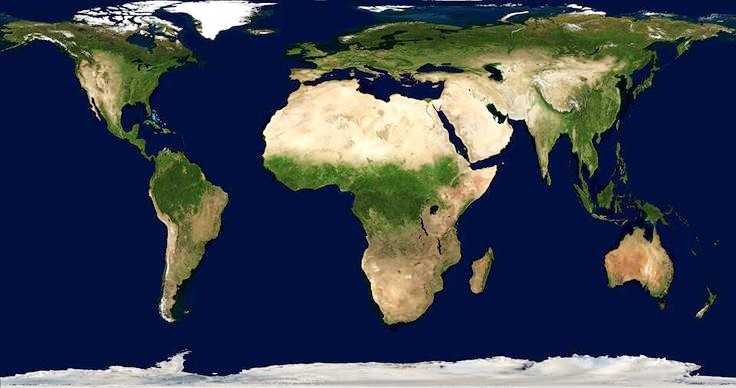
The African Union (AU) has endorsed the “Correct The Map” campaign, urging global institutions to replace the centuries-old Mercator projection with more accurate alternatives such as the Equal Earth projection. The move seeks to correct geographical distortions that minimise the size of Africa and other equatorial regions, while exaggerating the dimensions of countries in higher latitudes. The AU argues that these inaccuracies have long contributed to the continent’s marginalisation in global perception.
A call for representation and identity
Selma Malika Haddadi, deputy chairperson of the AU Commission, said that while maps may appear objective, the Mercator projection has entrenched a misleading worldview that diminishes Africa’s significance. Africa is the world’s second-largest continent, home to over one billion people and 54 sovereign nations, yet its true scale is often understated in educational materials and public displays.
The campaign for Equal Earth
Advocacy organisations Africa No Filter and Speak Up Africa are leading the campaign, promoting the Equal Earth projection as a fairer representation of global geography. Launched in 2018, Equal Earth preserves relative landmass proportions without the distortions of the Mercator map. Moky Makura, executive director of Africa No Filter, described the Mercator projection as “the world’s longest misinformation and disinformation campaign,” while Speak Up Africa’s Fara Ndiaye stressed the importance of accurate maps for shaping children’s understanding of their place in the world.

International response and institutional change
The AU’s backing is expected to add weight to global reform efforts. The World Bank has already adopted the Equal Earth or Winkel Tripel projections for many of its static maps and is phasing out Mercator in digital products. The United Nations has received the campaign’s proposal through its Committee of Experts on Global Geospatial Information Management and is conducting an expert review. The Caribbean Community (CARICOM) has also signalled support, framing the move as a rejection of colonial-era mapmaking biases.
Beyond geography: symbolism and influence
For the AU, the map reform is as much about symbolism as accuracy. Advocates say that visual representations shape political and cultural perceptions, influencing everything from economic narratives to international relations. By adopting a projection that accurately reflects Africa’s scale, they argue, the continent can reclaim a more prominent and rightful position in global consciousness.
Next steps in the campaign
The AU intends to work with its member states to promote the Equal Earth projection in schools, media, and government institutions. Campaign leaders hope that international adoption will follow, setting a new standard for cartographic fairness and challenging a centuries-old visual hierarchy.
REFH – Newshub, 15 August 2025
Recent Comments