
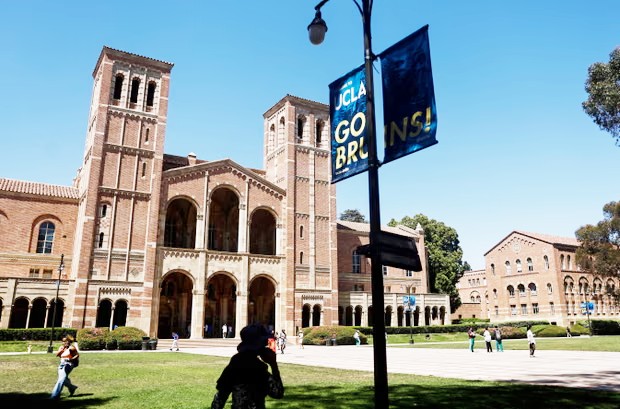
The Trump administration has issued a demand for the University of California, Los Angeles (UCLA) to pay a $1 billion settlement in order to reinstate frozen federal research funding. The move follows a federal investigation alleging that UCLA failed to protect Jewish and Israeli students during campus protests in 2024, in violation of civil rights laws.
Funding freeze and unprecedented settlement demand
Federal agencies, including the National Science Foundation, National Institutes of Health and the Department of Energy, suspended research grants worth around $584 million earlier this year. The administration has linked the restoration of these funds to a $1 billion payment—by far the largest settlement sought from a university over such allegations. Similar cases have recently seen Columbia University pay $221 million and Brown University $50 million.
University leaders warn of severe impact
James Milliken, the newly appointed president of the University of California system, described the demand as potentially “devastating” for one of the country’s leading public university systems. He warned that such a payment would compromise the institution’s ability to conduct world-class research and support students. UCLA has indicated it is open to “good faith dialogue” with the Department of Justice to resolve the dispute.

Political backlash in California
California Governor Gavin Newsom condemned the move as “politically motivated” and an attempt to undermine academic freedom. He pledged to challenge the settlement demand in court, a stance echoed by other state lawmakers who view the federal action as an abuse of power. State Senator Scott Wiener described it as “a mob boss-style tactic” designed to intimidate higher education institutions.
Part of a wider federal crackdown
The UCLA case forms part of a broader push by the Trump administration to tie university funding to compliance with federal interpretations of civil rights protections. While previous settlements have targeted private universities, this is the first high-profile instance involving a major public institution. Analysts say the approach could signal a long-term shift in how Washington leverages financial control over academic institutions.
Far-reaching implications
The outcome of this confrontation could shape the balance between state-level governance of universities and federal enforcement of civil rights law. Supporters of the administration’s position argue it is necessary to protect students from discrimination, while critics fear it could erode institutional independence and politicise campus policy.
REFH – Newshub, 9 August 2025
Recent Comments