
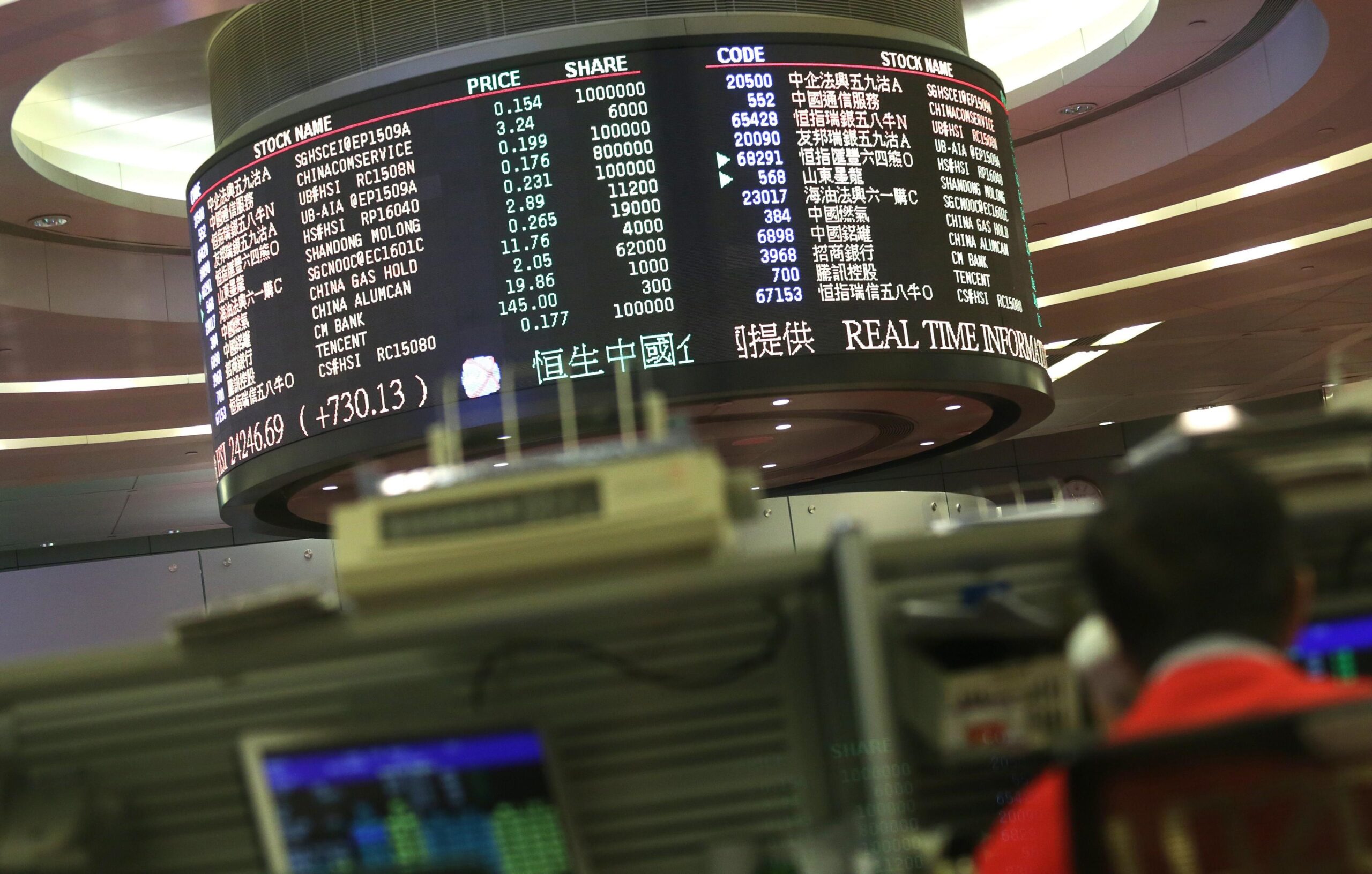
Asian equities traded cautiously on Monday, with gains in Chinese markets offset by losses in Japan, as investors awaited key inflation data and monitored the growing risk of trade friction between the United States and its major partners. European and US markets are expected to open lower, amid political uncertainty and macroeconomic cross-currents.
Asian divergence as China lifts while Japan lags
Japan’s Nikkei 225 fell by 0.3% in early trade, weighed down by a stronger yen and ongoing profit-taking in heavyweight tech shares. In contrast, South Korea’s Kospi rose by 0.8%, driven by continued strength in chip stocks, while China’s Shanghai Composite and Hong Kong’s Hang Seng each gained around 0.5% following better-than-expected export data released over the weekend.
The figures from Beijing showed a surprise year-on-year rise in outbound shipments, suggesting pockets of resilience in global demand despite a sluggish domestic recovery. The data helped soothe some market nerves ahead of an uncertain week marked by geopolitical posturing and data risk.

Europe prepares for fragile session
European markets are poised for a softer open, with futures indicating a decline of around 0.6–0.7% for the Euro Stoxx 50 and Germany’s DAX. The mood reflects investor sensitivity to recent remarks from Donald Trump suggesting a potential 30% tariff on EU and Mexican goods if re-elected, a scenario that has reignited concerns over a broader retreat from globalisation.
German officials signalled that the EU would respond decisively to any unilateral measures, adding another layer of complexity to the continent’s near-term trade outlook. Meanwhile, attention will also turn to expected speeches from European Central Bank officials, including Piero Cipollone, who may offer updated views on the eurozone’s disinflation trajectory and interest rate path.
US markets face triple test of data, earnings, and trade
US equity futures pointed to a 0.5% decline at the opening bell, reflecting market caution ahead of June’s inflation release. Analysts expect core consumer prices to ease marginally, but any upside surprise could dampen hopes for a September rate cut, particularly after recent labour market strength.
The second-quarter earnings season also begins this week, with major banks including JPMorgan and Citigroup set to report. Investors will be watching closely for signals on credit quality, consumer spending, and corporate lending trends — all potential indicators of underlying economic resilience or strain.
Volatility risks remain elevated
With thin summer liquidity and increased geopolitical noise, markets are vulnerable to abrupt shifts in sentiment. Gold and oil prices have edged higher as a modest hedge against macro volatility, while the US dollar has gained ground against both the euro and yen.
Although Asian markets showed resilience at the start of the week, the broader tone remains defensive. The combination of political risk, sensitive inflation readings, and high equity valuations continues to cloud the global outlook.
REFH – Newshub, 14 July 2025
Recent Comments