
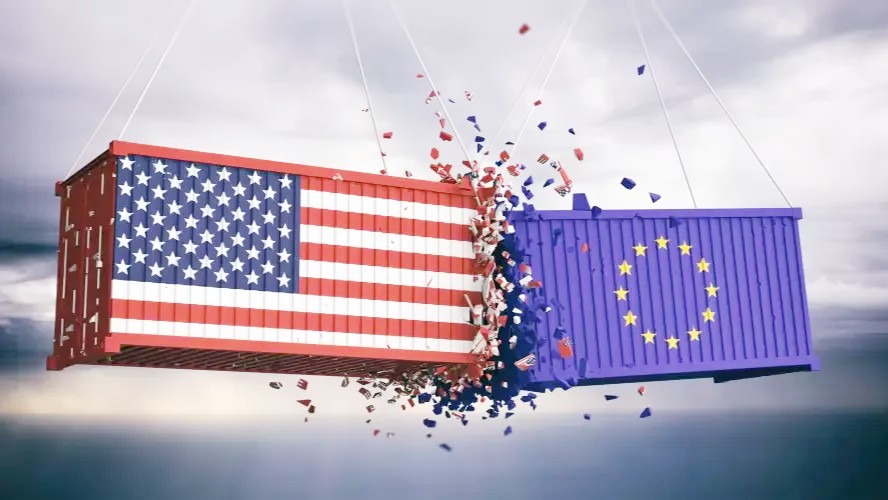
Donald Trump has once again thrust international trade into the spotlight with a fresh round of tariff threats, this time targeting European auto imports. In a sharply worded letter sent to European Commission President Ursula von der Leyen, the former president — and now Republican presidential nominee — outlined his grievances with the EU’s trade policies, accusing the bloc of “deliberately disadvantaging” American industry.
New tariffs on the table
Trump’s proposed measures include steep tariffs on European cars and components, which he claims are “flooding” the US market and undermining American manufacturing. The announcement comes amid mounting concerns in Brussels over the potential return of Trump to the White House, raising the spectre of a renewed transatlantic trade war.
The former president’s latest stance echoes the aggressive trade agenda of his first term, during which he imposed tariffs on steel, aluminium, and Chinese goods. His renewed focus on Europe, however, signals a widening of his economic nationalism — and a challenge to one of America’s closest traditional allies.

A confrontational message
In the letter to von der Leyen, Trump warned that unless the EU made “immediate and fair concessions,” his administration would act unilaterally to “rebalance the relationship.” While the exact contents of the letter have not been made public, sources familiar with its tone describe it as “blunt, transactional, and intentionally provocative.”
Von der Leyen, who is seeking a second term as Commission President, has yet to issue a formal response. However, senior EU officials have signalled deep concern over the prospect of reignited hostilities, particularly at a time when both blocs face shared geopolitical and economic pressures.
Business and political reaction
The automotive sector in Europe responded swiftly, with German carmakers voicing alarm at the implications of new US tariffs. Shares in BMW, Volkswagen, and Mercedes-Benz dipped following reports of Trump’s letter. Trade groups warned that retaliatory measures could disrupt supply chains, harm consumers, and jeopardise fragile post-pandemic growth.
In Washington, reactions split predictably along party lines. Republicans largely applauded Trump’s “America First” resolve, framing it as a defence of US workers. Democrats, meanwhile, accused him of risking global stability for political gain.
The 2024 undercurrent
With the US election drawing closer, Trump’s move is widely interpreted as part of his campaign strategy to contrast his economic vision with that of President Biden. His campaign has doubled down on populist rhetoric, promising voters a tougher stance on trade, immigration, and foreign entanglements.
For the EU, the episode serves as a stark reminder of how volatile transatlantic relations could become in a second Trump presidency. Behind the scenes, diplomats are already working to defuse tensions — but with nationalist sentiment rising across both continents, pragmatic compromise may prove elusive.
REFH – Newshub, 13 July 2025, 07:15 CET
Recent Comments