
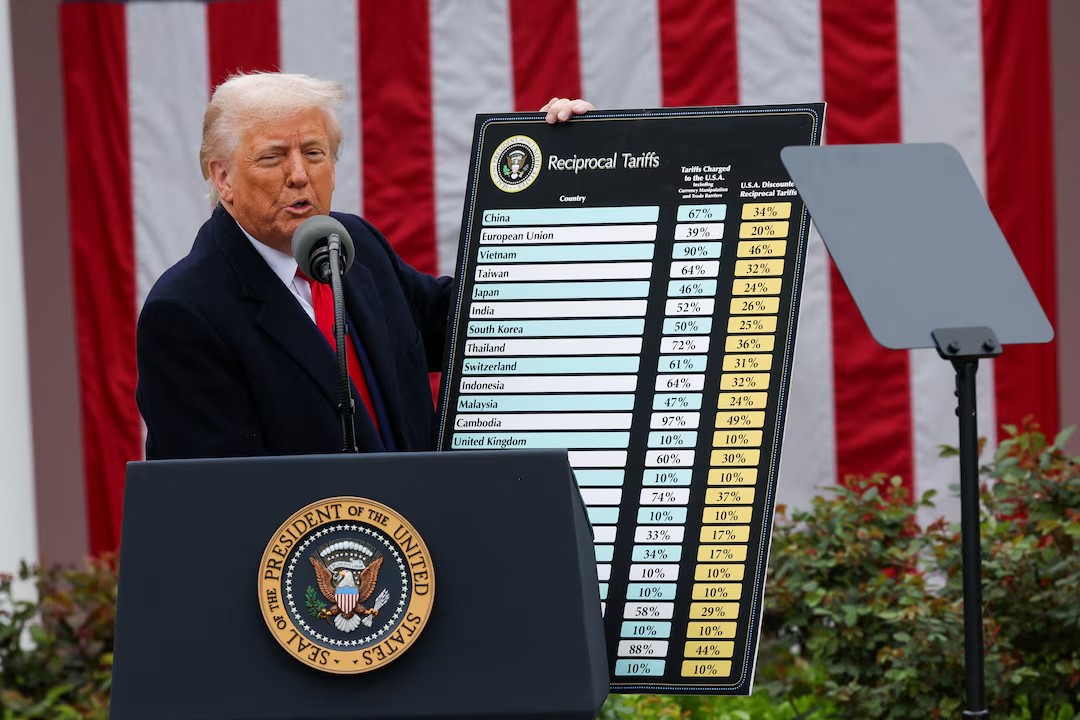
On 7 July 2025, US President Donald Trump announced a three-week extension to his reciprocal tariff deadline, now set for 1 August, while issuing letters to 14 countries, including Japan, South Korea, and Indonesia, outlining new tariff rates ranging from 25% to 40%. The move, aimed at addressing trade imbalances, has sparked mixed reactions globally, with markets bracing for potential impacts as negotiations continue.
The tariff policy, initially introduced on 2 April 2025, saw a 90-day suspension to allow trade negotiations, which was due to expire on 9 July. Trump’s latest executive order extends this pause, giving countries like Japan and South Korea, facing 25% tariffs, and others like Bangladesh (35%) and Thailand (36%) more time to secure deals. The White House stated that dozens of nations have offered to lower their tariffs or eliminate non-tariff barriers since April, with potential agreements nearing for the UK, China, and India. Trump’s letters, shared on Truth Social, warned of higher duties for nations retaliating with their own tariffs, escalating tensions in some regions.
Asian markets reacted cautiously, with Japan’s Nikkei 225 up 0.3% but showing restraint due to Prime Minister Ishiba’s criticism of the tariffs as “regrettable.” South Korea vowed to intensify trade talks, while Malaysia and Thailand expressed confidence in negotiating competitive rates. The MSCI Asia Pacific Index dipped 0.3%, reflecting uncertainty, though tech and semiconductor sectors provided some support. Posts on X noted the US dollar’s weakness, down 10.8% since January 2025, as a factor cushioning oil prices despite tariff concerns.

European markets, opening at 8:00 AM GMT, are expected to remain cautious. The STOXX Europe 600 may see limited movement, with focus on defensive stocks as the EU signals its willingness to accept a 10% universal tariff but seeks exemptions for key sectors. The UK, negotiating to protect its steel industry, faces uncertainty, which could weigh on the FTSE 100. In the US, the S&P 500 and NASDAQ, opening at 9:30 AM ET, may face volatility after recent losses, with traders monitoring pre-market signals from 4:00 AM ET. Investors are wary of higher consumer prices, with a Reuters/Ipsos poll indicating widespread concern over cost increases due to tariffs.
Trump’s strategy includes an additional 10% tariff on BRICS-aligned nations, such as Brazil and Russia, citing their “anti-American” policies, a move that has drawn criticism from the bloc. While some see the deadline extension as a chance for diplomacy, others, including analysts, warn of prolonged uncertainty disrupting global trade. With more letters expected this week, the global economic landscape remains on edge, awaiting clarity on Trump’s trade war trajectory.
REFH – newshub finance
Recent Comments