
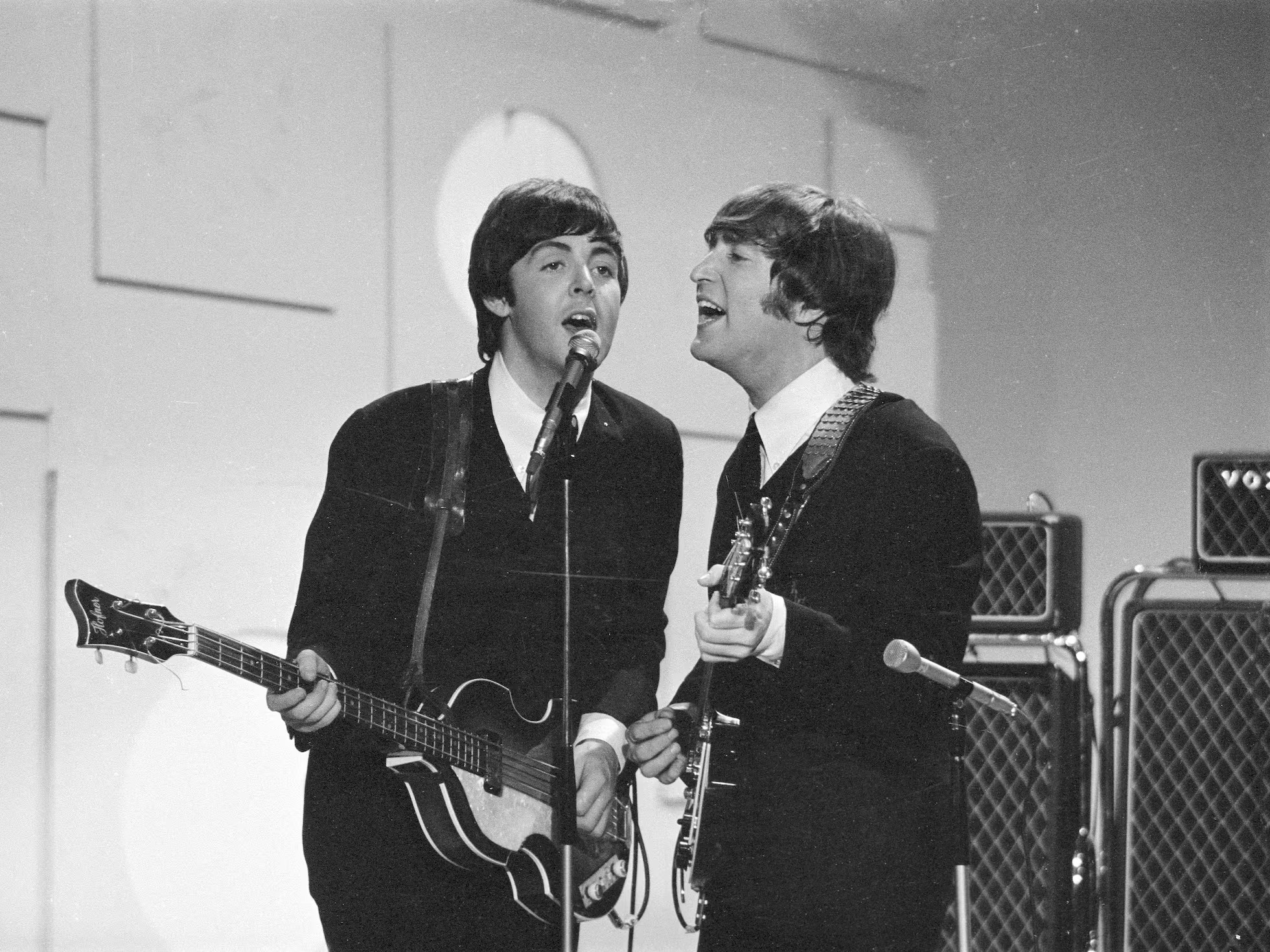
On a warm summer’s day in Liverpool, 6 July 1957, a 15-year-old Paul McCartney was introduced to a 16-year-old John Lennon at a church fête in Woolton. What followed was not only the birth of one of music’s most iconic friendships but the quiet spark of a revolution that would change popular culture forever.
The setting was the garden of St Peter’s Church, where John Lennon’s skiffle band, The Quarrymen, was scheduled to perform on a makeshift stage. Dressed in a checked shirt and strumming his guitar with teenage swagger, Lennon was already cultivating the rebel image that would become his trademark. Watching from the crowd was McCartney, who had come along with a mutual friend, Ivan Vaughan.
McCartney, already a gifted guitarist and pianist, impressed Lennon almost immediately. After the band’s performance, the two were introduced in the church hall. Paul, keen to show off his skills, picked up a guitar and played Eddie Cochran’s “Twenty Flight Rock” from memory — lyrics, chords and all. He followed with a few more rock ’n’ roll numbers, and even tuned Lennon’s guitar, which had been a bit out of key. Lennon, never one to admire easily, was intrigued.

Though Lennon was the older of the two and the established frontman of The Quarrymen, he recognised something in McCartney that matched his own intensity: confidence, talent, and an instinctive grasp of music. There was also a sense of mutual challenge — McCartney’s polish versus Lennon’s raw energy — and that early tension would later feed into the creative dynamism that defined The Beatles.
Still, the decision to invite McCartney into the band wasn’t immediate. Lennon reportedly hesitated. He understood that letting in someone as musically competent as McCartney could change the group’s dynamic — perhaps even threaten his own leadership. But after a few days of thought, he chose ambition over comfort and invited Paul to join.
The rest is now etched into musical history. From that casual summer meeting came a partnership that crafted some of the 20th century’s greatest songs, from “Yesterday” and “Let It Be” to “Strawberry Fields Forever” and “Hey Jude.” Their collaboration transformed not only the Beatles, but also songwriting as an art form.
In later interviews, both McCartney and Lennon would often look back on that day with a sense of destiny. It was ordinary in its circumstances, yet extraordinary in its outcome. Two boys in their teens, crossing paths at a parish garden party, unknowingly set into motion a cultural shift that would echo far beyond Merseyside.
The first handshake between Lennon and McCartney remains one of music’s most storied moments. It was not just the beginning of a band — it was the foundation of a creative force whose impact is still felt today.
REFH – newshub finance
Recent Comments