
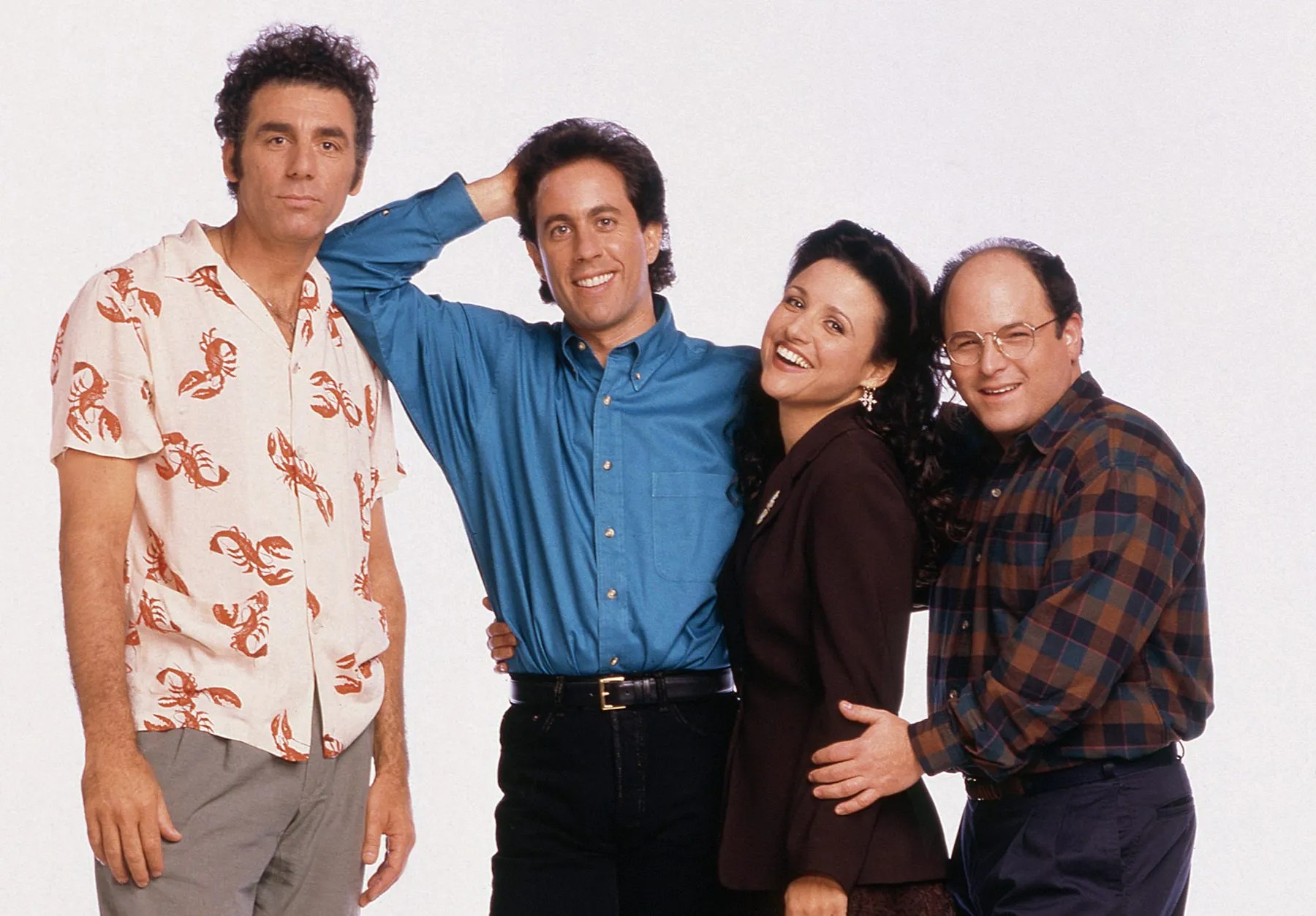
On 5 July 1989, American television quietly changed forever when NBC aired the first episode of The Seinfeld Chronicles, later known simply as Seinfeld. The pilot, which featured four relatively unknown comedians discussing buttons, cereal and laundry, would grow to become one of the most influential and lucrative sitcoms in television history.
What began as a low-risk summer experiment eventually turned into a cultural juggernaut, but its debut gave little hint of that future. Created by comedian Jerry Seinfeld and writer-producer Larry David, The Seinfeld Chronicles introduced viewers to a fictionalised version of Seinfeld himself, alongside his ex-girlfriend Elaine (played by Julia Louis-Dreyfus), neighbour Kramer (Michael Richards), and best friend George Costanza (Jason Alexander, loosely based on David).
The pilot was met with modest ratings and a muted reception. NBC executives were initially unsure whether to proceed with a full season. Some test audiences found the show aimless. There was, after all, no obvious premise—no family dynamic, workplace setting or romantic tension driving the plot. It was, as the creators themselves later described it, “a show about nothing”. But this very simplicity proved radical.

By 1990, after four episodes aired and proved steadily successful, NBC ordered a full first season. Over the course of nine seasons and 180 episodes, Seinfeld redefined what sitcoms could be. It broke conventional storytelling rules, often eschewing sentiment or resolution. Episodes centred on mundane grievances: waiting for a table, dealing with bad dates, returning a jacket. Yet the humour was sharp, the dialogue quotable, and the tone uniquely cynical.
Financially, Seinfeld became a powerhouse. By its final episode in 1998, it had earned NBC more than $3 billion. Jerry Seinfeld famously turned down a tenth season despite being offered $5 million per episode—the highest in television history at the time. Today, the show continues to generate massive syndication revenues and remains a fixture on streaming platforms globally.
Its impact on American comedy is impossible to overstate. Larry David would go on to create Curb Your Enthusiasm, maintaining the same tone of neurotic realism. Countless sitcoms, from Friends to The Office, owe narrative or stylistic debts to Seinfeld. And its legacy lives on not only in reruns but in the way modern writers approach the art of observational humour.
From a half-hour experiment tucked into a slow summer schedule, The Seinfeld Chronicles became an unlikely template for comedy excellence. Thirty-six years on, its first episode is a reminder that sometimes the most groundbreaking things begin quietly, with no grand design—just a few friends talking about buttons.
REFH – newshub finance
Recent Comments