
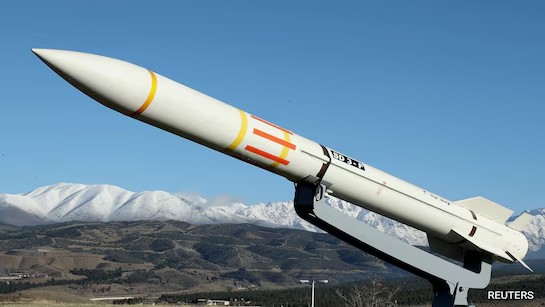
Iran has launched a major retaliatory strike against Israel, deploying long-range missiles and unmanned aerial vehicles in a dramatic escalation of hostilities following the US bombing of its nuclear facilities. The attack, confirmed by both Tehran and Israeli defence forces, marks one of the most serious military confrontations between the two countries in decades.
According to early reports from Israel’s Ministry of Defence, dozens of missiles and so-called “suicide drones” crossed into Israeli airspace in the early hours of Sunday morning. Most were intercepted by Israel’s Iron Dome and David’s Sling missile defence systems, but several projectiles reportedly caused structural damage in the cities of Be’er Sheva and Dimona, the latter being home to Israel’s own nuclear facility. Casualties are said to be limited, though emergency services continue to assess the situation.
Iran’s Revolutionary Guard confirmed the attack through state media, calling it “Operation Martyr Soleimani” in reference to the late general killed in a US drone strike in 2020. A spokesman said the barrage was “a legitimate response to aggression against Iranian sovereignty and nuclear deterrence.” In addition to missile launches, Iranian officials boasted of deploying AI-guided drones—believed to be developed with Chinese and Russian assistance—capable of evading traditional radar systems.

Israeli Prime Minister Benjamin Netanyahu convened an emergency security cabinet meeting within hours of the attack, declaring that Israel “will respond with overwhelming force if necessary.” Defence Minister Yoav Gallant described the assault as “a declaration of war by proxy,” pointing the finger not only at Iran but also at Hezbollah and Iranian-backed militias operating near Israel’s northern border.
US President Donald Trump has reiterated American support for Israel, stating that the strike “proves exactly why our action against Iran’s nuclear threat was necessary.” Trump promised additional military assistance to Tel Aviv and warned Tehran that “any further escalation will be met with devastating consequences.”
The situation has placed tremendous pressure on global leaders to intervene diplomatically, though efforts are already showing signs of strain. The UN Secretary-General António Guterres called for an immediate cessation of hostilities and urged both nations to “step back from the brink of all-out war.” Meanwhile, oil markets responded with alarm, as prices surged past $100 a barrel amid fears of broader regional disruption.
Tensions have also spilled into public discourse, with mass rallies held in Tehran, Beirut, and Baghdad supporting Iran’s move, while solidarity vigils in Tel Aviv and Jerusalem expressed fears of further bloodshed. Analysts now warn that the region stands at the edge of a multi-front conflict, potentially drawing in the United States, Gulf States, and even NATO partners.
Military analysts have pointed to the unprecedented use of artificial intelligence and autonomous targeting systems by Iran as a turning point in modern warfare. The successful deployment of robotic drones suggests a troubling new chapter in regional conflict—one where decisions can be made and executed by machines in real time.
As both sides prepare for what may come next, the international community is left scrambling to avoid a spiral into a broader and more devastating war.
newshub finance
Iran has launched a major retaliatory strike against Israel, deploying long-range missiles and unmanned aerial vehicles in a dramatic escalation of hostilities following the US bombing of its nuclear facilities. The attack, confirmed by both Tehran and Israeli defence forces, marks one of the most serious military confrontations between the two countries in decades.
Recent Comments