
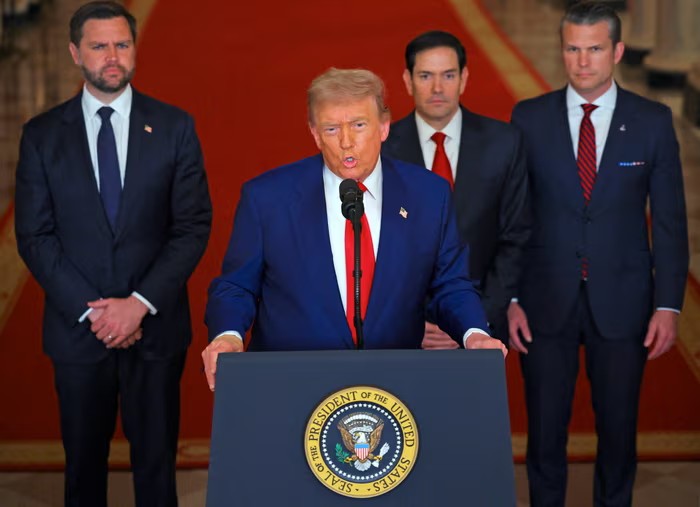
In a dramatic escalation of Middle Eastern tensions, the United States has launched targeted airstrikes against key Iranian nuclear facilities, citing imminent threats from Tehran’s expanding nuclear programme. The move, confirmed late last night by President Donald Trump, has triggered a wave of international reactions ranging from cautious support to stark condemnation.
The attack, which reportedly involved precision-guided missiles and stealth drones, struck multiple locations, including Natanz and Fordow—two core sites in Iran’s uranium enrichment efforts. According to Pentagon officials, the strikes were designed to “degrade Iran’s nuclear capability without triggering full-scale war.” Initial assessments suggest substantial damage to centrifuge infrastructure, though Iranian authorities have yet to confirm the extent of the impact.
President Trump, addressing the nation from the White House, declared the operation “a necessary step to ensure peace through strength,” and reiterated his administration’s long-held position that Iran must never be allowed to obtain a nuclear weapon. “We will not wait until the threat becomes real,” he said. “We have acted decisively, and we will act again if necessary.”

Iran’s government has condemned the strikes as a blatant act of aggression, vowing swift retaliation. In an emergency session of parliament in Tehran, chants of “Death to America” echoed as lawmakers demanded a formal military response. Supreme Leader Ayatollah Ali Khamenei accused Washington of attempting to destabilise Iran ahead of key regional elections and promised that the Islamic Republic “will not leave this crime unanswered.”
International reaction has been swift and varied. Israel and Saudi Arabia expressed support for the US action, with Israeli Prime Minister Benjamin Netanyahu praising Trump’s “courage and clarity.” European leaders, however, were less approving. French President Emmanuel Macron called the strike “deeply concerning” and warned it risked “an uncontrollable regional conflagration.” Germany and the UK urged restraint on all sides, with British Prime Minister Keir Starmer calling for an emergency UN Security Council session.
In Beijing and Moscow, foreign ministries accused the US of violating international law and bypassing diplomatic channels. Russia’s President Vladimir Putin denounced the attack as “reckless” and called for de-escalation, while China’s leadership warned of global economic repercussions and disruptions to oil markets.
Oil prices surged more than 6% within hours of the announcement, with Brent crude climbing past $94 per barrel as investors braced for potential shipping disruptions in the Strait of Hormuz. Global stock markets reacted with volatility, with sharp declines in Asia and nervous openings across Europe and Wall Street.
While the long-term consequences remain uncertain, analysts agree that the world has entered a new phase of geopolitical instability. The possibility of further strikes or Iranian counterattacks now looms large, placing immense pressure on diplomats to cool tensions before the conflict widens.
newshub finance
Recent Comments