
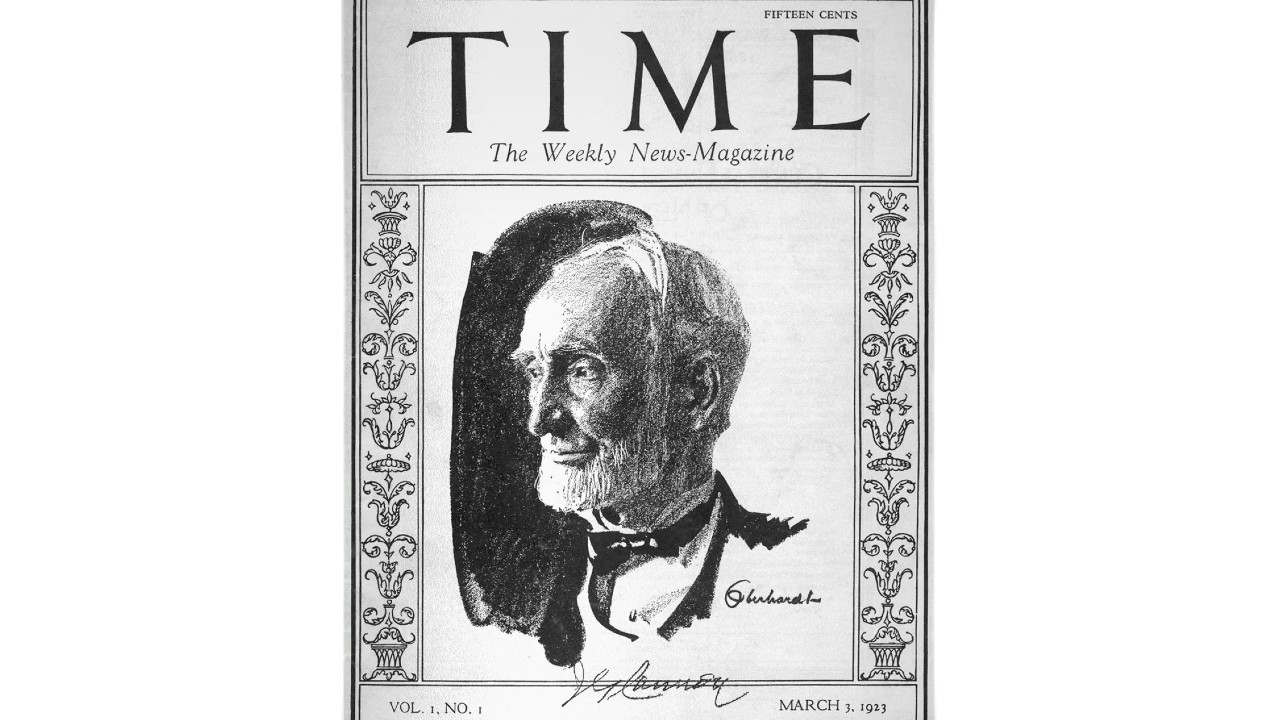
On March 3, 1923, a thin, 32-page publication hit newsstands across America, bearing a simple yet distinguished masthead: TIME. This inaugural issue, featuring former House Speaker Joseph G. Cannon on its cover, marked the birth of what would become one of the most influential media outlets in history.
TIME was the brainchild of two Yale graduates, Henry Luce and Briton Hadden, who envisioned a magazine that could distill the week’s news into concise, accessible articles for busy Americans. Their innovation wasn’t just in content but in concept: TIME introduced a new genre of journalism—the weekly newsmagazine—that would reshape media consumption patterns throughout the 20th century.
The first issue sold for 15 cents and reached approximately 9,000 readers. Its format was revolutionary—compartmentalizing news into clearly defined sections like National Affairs, Foreign News, Business, and Arts—allowing readers to quickly locate topics of interest. The writing style was equally distinctive, featuring TIME’s now-famous “backward” sentence structure and personality-driven coverage.

What truly differentiated TIME was its focus on individuals behind news events. While newspapers reported what happened, TIME explained who made it happen. This person-centred approach culminated in the magazine’s most recognizable feature: the “Man of the Year” (later “Person of the Year”), first awarded in 1927.
TIME’s impact on journalism was profound and far-reaching. It pioneered fact-checking departments, effectively creating a new standard for accuracy in reporting. Its success spawned numerous competitors and sister publications, including Fortune and Life magazines, creating the influential Time Inc. media empire.
Beyond journalism, TIME shaped public discourse and historical understanding. Its coverage influenced which events and figures received national attention, effectively helping to define what constituted “news” for generations of Americans. The magazine’s signature red border became an iconic visual shorthand for authoritative reporting.
In business terms, TIME created a sustainable model for news magazines by targeting affluent, educated readers attractive to advertisers. This approach demonstrated that quality journalism could be both influential and profitable.
Nearly a century after that first issue, TIME continues as a multimedia brand reaching millions worldwide. The legacy of Luce and Hadden’s innovation extends beyond a single publication to encompass an entire approach to news consumption: comprehensive, accessible, and relevant. That thin magazine from 1923 didn’t just report the news—it forever changed how we understand and consume it.
newshub
On March 3, 1923, a thin, 32-page publication hit newsstands across America, bearing a simple yet distinguished masthead: TIME. This inaugural issue, featuring former House Speaker Joseph G. Cannon on its cover, marked the birth of what would become one of the most influential media outlets in history.
Recent Comments