
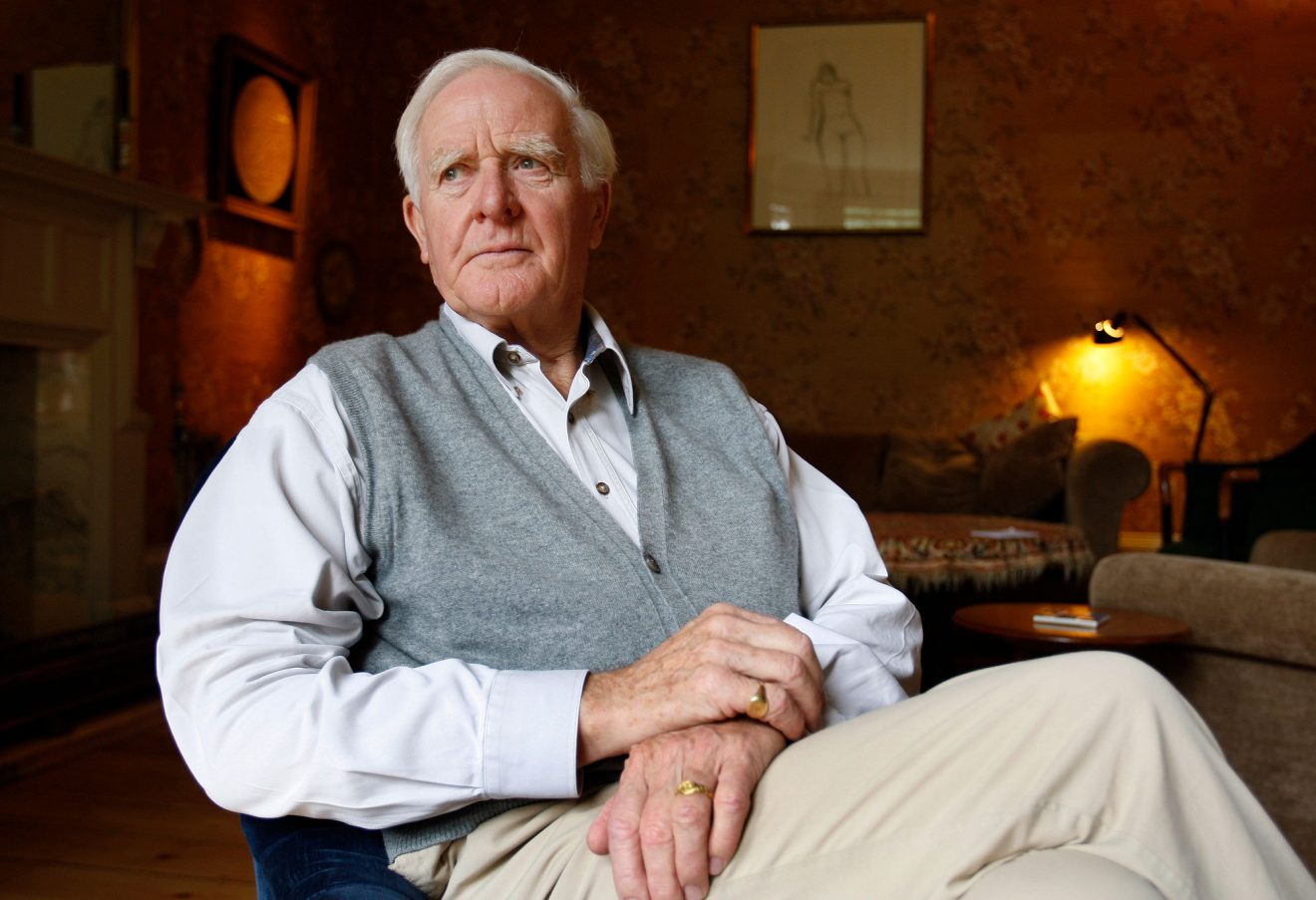
John Le Carré, born David John Moore Cornwell, was a master of espionage fiction who revolutionized the spy novel genre with his nuanced, morally complex narratives. Unlike the glamorous world of James Bond, Le Carré’s novels portrayed intelligence work as a gritty, ethically ambiguous profession marked by bureaucracy, betrayal, and psychological tension.
Born in 1931 in Dorset, England, Le Carré worked for British intelligence services MI5 and MI6 during the Cold War, experiences that profoundly shaped his literary career. His real-life insider knowledge lent unprecedented authenticity to his writing, transforming spy novels from pulp entertainment into serious literary works that explored deep human complexities.
His breakthrough novel, “The Spy Who Came in from the Cold” (1963), was a watershed moment in espionage literature. The book challenged popular perceptions of Cold War espionage, presenting a stark, unglamorous view of intelligence work where moral compromises were routine and individual idealism was often crushed by institutional machinery.

Le Carré’s most iconic character, George Smiley, became the antithesis of the action-hero spy. A tubby, unassuming, and deeply cerebral intelligence officer, Smiley represented a more realistic portrayal of espionage—a world of patience, psychological manipulation, and careful analysis rather than dramatic shootouts and car chases.
Throughout his career, Le Carré consistently used the spy novel as a lens to examine broader social and political issues. His works critiqued Cold War politics, explored post-colonial tensions, and later addressed contemporary global challenges like terrorism, corporate malfeasance, and international arms trading.
Notable works beyond the Smiley novels include “The Constant Gardener,” which examined pharmaceutical industry corruption in Africa, and “A Most Wanted Man,” a post-9/11 narrative exploring the complexities of counterterrorism. These novels demonstrated Le Carré’s remarkable ability to capture the moral ambiguities of contemporary geopolitics.
Despite leaving intelligence work, Le Carré maintained close connections with his former world. His insights were so respected that he was reportedly consulted by intelligence agencies and politicians seeking nuanced perspectives on global conflicts.
Le Carré passed away in December 2020, leaving behind a remarkable literary legacy. He transformed spy fiction from mere entertainment into a sophisticated genre capable of profound social commentary, earning recognition not just as a genre writer, but as a significant literary figure of the 20th and early 21st centuries.
His novels continue to be celebrated for their psychological depth, moral complexity, and unflinching examination of institutional power and human nature.
newshub
Recent Comments