
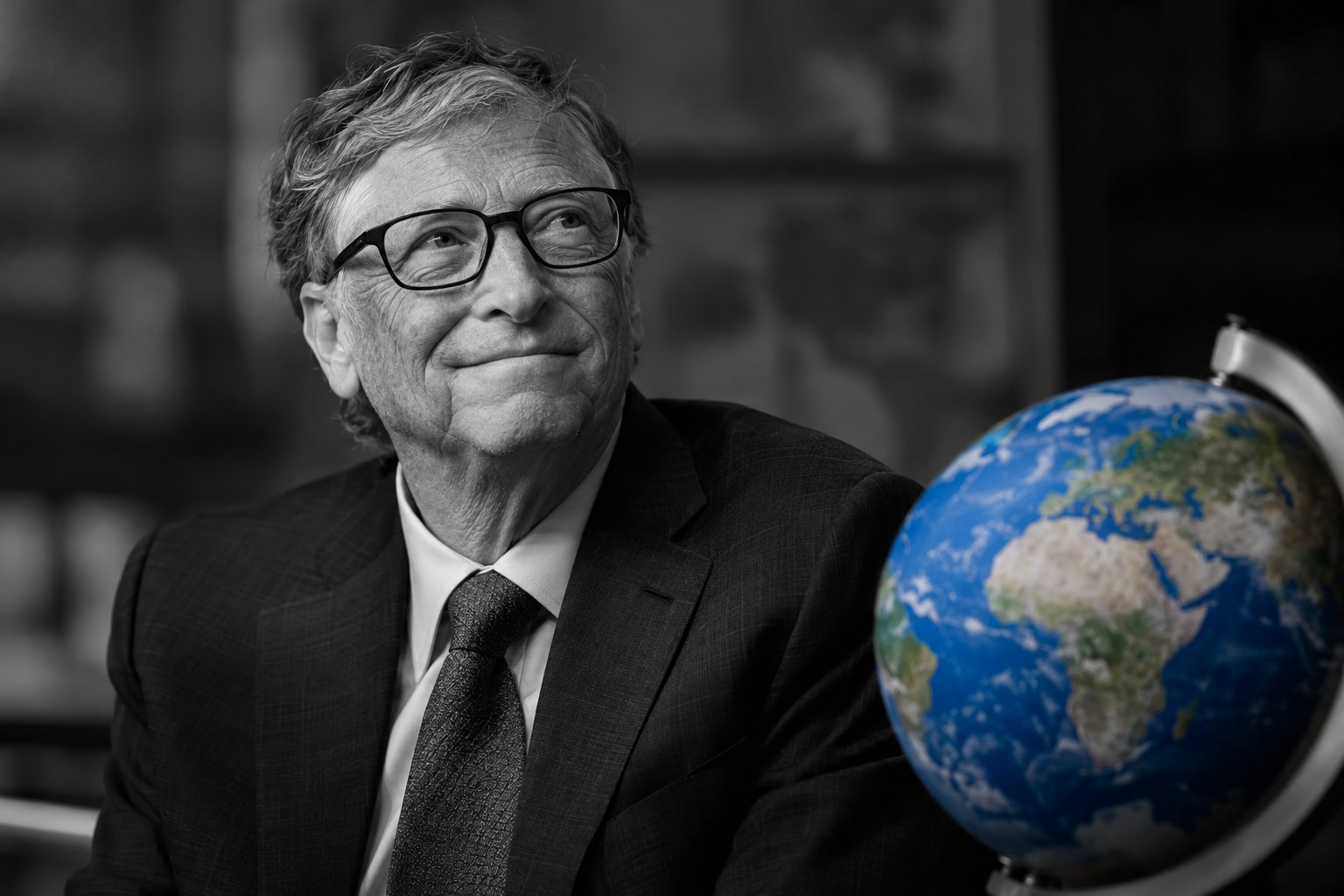
Bill Gates turns 71 today, marking another milestone in a life that has helped reshape modern technology, global business and international philanthropy. The Microsoft co-founder, once synonymous with the personal computer revolution, is now focused on deploying his vast fortune to combat poverty, disease and inequality while confronting the opportunities and dangers of artificial intelligence.
The man who transformed computing
Born in Seattle on 28 October 1955, Gates co-founded Microsoft with Paul Allen in 1975. Their ambition was to put computing power within reach of ordinary people, an idea that helped transform the global technology industry.


Microsoft’s operating systems and software became essential infrastructure for businesses and households worldwide, turning Gates into one of history’s wealthiest entrepreneurs.
Yet his influence now extends far beyond the company he helped create.
A $200 billion philanthropic commitment
In 2025, Gates announced plans for the Gates Foundation to spend more than $200 billion by 2045, when the organisation will permanently close.
The initiative represents an extraordinary acceleration of charitable spending, concentrating resources on preventing childhood deaths, fighting infectious diseases and reducing extreme poverty.
Having already distributed more than $100 billion during its first 25 years, the foundation faces the challenge of translating unprecedented financial resources into measurable improvements in human welfare.
Artificial intelligence and the next technological revolution
Gates has increasingly positioned artificial intelligence at the centre of his vision for global development.
In September 2026, the Gates Foundation committed at least $1 billion over two years to expanding equitable access to AI, particularly in healthcare, education and agriculture.
However, Gates has also warned that governments remain inadequately prepared for technological disruption, including employment displacement, cybersecurity threats and potentially dangerous applications.
His central argument is that AI must benefit poorer countries rather than simply reinforce the advantages of wealthy economies.
An extraordinary legacy still being written
Gates remains a controversial figure. His extraordinary financial influence raises questions about the accountability of private philanthropy and the power wealthy individuals exercise over public priorities.
Nevertheless, few entrepreneurs have shaped both the digital economy and global charitable investment on a comparable scale.
At 71, Gates is attempting something arguably more ambitious than building Microsoft: ensuring that much of the wealth generated by the technology revolution produces lasting benefits for humanity.
NewsHub Finance | Technology & Philanthropy | 28 October 2026
Bill Gates turns 71 today, marking another milestone in a life that has helped reshape modern technology, global business and international philanthropy. The Microsoft co-founder, once synonymous with the personal computer revolution, is now focused on deploying his vast fortune to combat poverty, disease and inequality while confronting the opportunities and dangers of artificial intelligence.
Recent Comments