
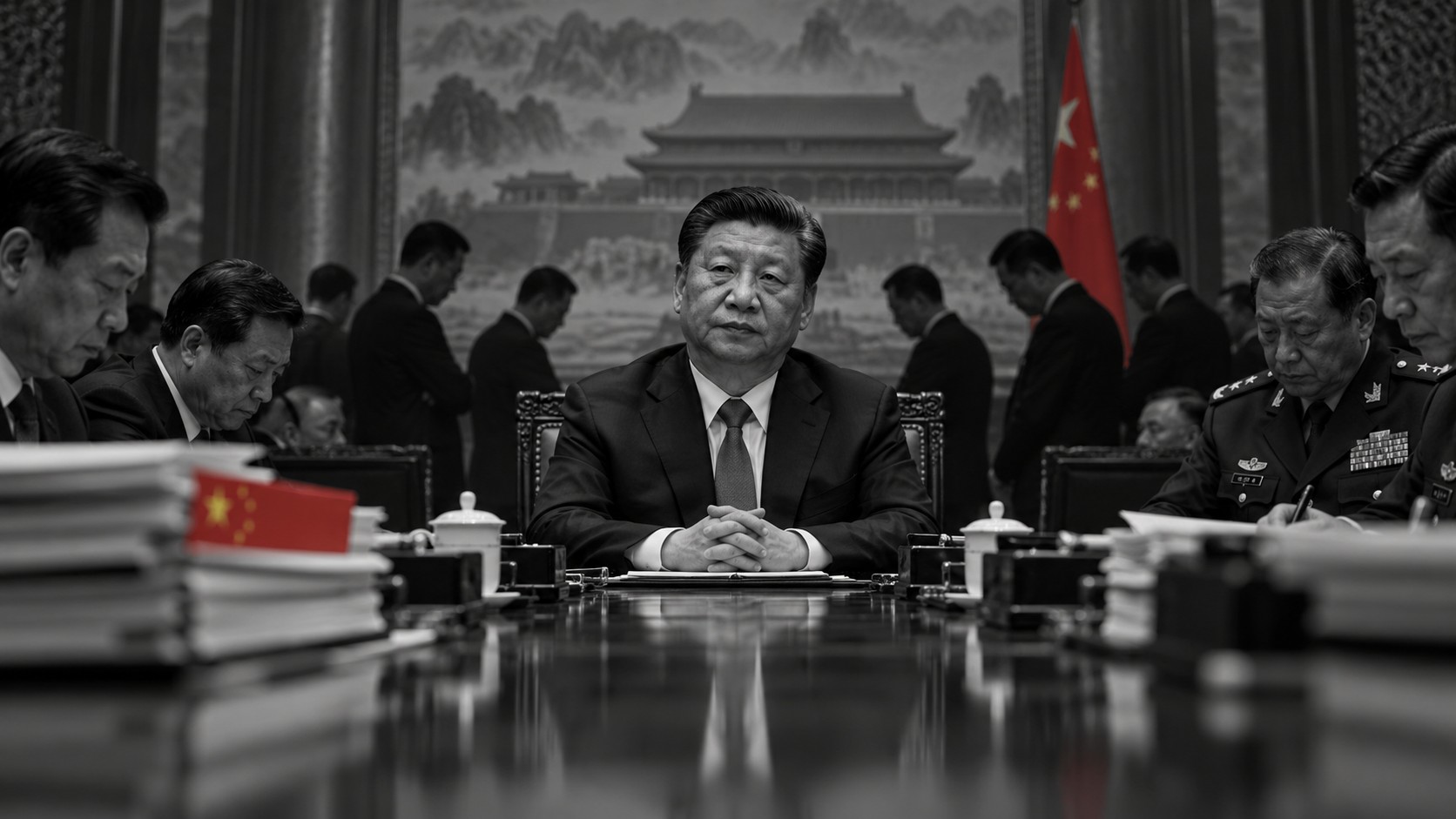
China’s President Xi Jinping faces renewed scrutiny over his sweeping anti-corruption campaign as the Communist Party opens its fifth plenum in Beijing. Years of investigations, dismissals and military purges have raised a fundamental question among political analysts: is Xi primarily fighting corruption, or eliminating officials whose loyalty he cannot guarantee?
A decisive meeting in Beijing
The fifth plenum of the Communist Party’s 20th Central Committee opened on 26 October and will continue until 29 October. Hundreds of senior officials are gathering behind closed doors to discuss party discipline, governance and the future direction of China’s political leadership.
The meeting comes ahead of the 21st Party Congress in 2027, when Xi is widely expected to secure a fourth five-year term as Communist Party leader.


Unlike previous plenums that concentrated heavily on economic development, this gathering is focused on strengthening internal controls and ensuring that officials follow the party leadership’s decisions.
A campaign that has transformed Chinese politics
Since assuming power in 2012, Xi has made fighting corruption one of the defining features of his presidency. Investigations have reached almost every level of the Communist Party, from local administrators to provincial leaders and senior military commanders.
Chinese authorities maintain that the campaign is necessary to eliminate bribery, abuse of office and misconduct that undermine public confidence in the party.
Critics, however, argue that the investigations have also become a powerful instrument for consolidating Xi’s personal authority.
The removal of officials once considered close allies has intensified questions about whether political loyalty is increasingly inseparable from accusations of corruption.
Military purges expose deeper tensions
The People’s Liberation Army has experienced particularly extensive upheaval.
China’s Central Military Commission, the country’s highest military command body, has been reduced from seven members at the beginning of Xi’s third term to just two, including Xi himself.
The extraordinary turnover has raised concerns about continuity, institutional stability and the military’s operational readiness.
For Xi, however, establishing unquestioned political control over the armed forces remains a central priority.
Corruption or political disloyalty?
Analysts increasingly see the campaign as serving two overlapping objectives: addressing genuine corruption while ensuring strict compliance with Xi’s political agenda.
The distinction matters because officials who fear punishment for political mistakes may become reluctant to make independent decisions.
Such caution could complicate Beijing’s efforts to manage slowing economic growth, local government debt and other structural challenges.
Preparing for another five years
The plenum is expected to reinforce Xi’s authority and establish tougher standards for party officials ahead of next year’s leadership reshuffle.
For international investors and governments, the implications extend beyond China’s internal politics. The degree to which officials can make predictable decisions will influence economic policymaking and confidence in the world’s second-largest economy.
The central question remains whether Xi’s continuing purges will produce a more effective governing system or one increasingly dependent on personal loyalty to its leader.
NewsHub Finance | China & Politics | 26 October 2026
China’s President Xi Jinping faces renewed scrutiny over his sweeping anti-corruption campaign as the Communist Party opens its fifth plenum in Beijing. Years of investigations, dismissals and military purges have raised a fundamental question among political analysts: is Xi primarily fighting corruption, or eliminating officials whose loyalty he cannot guarantee?
Recent Comments