
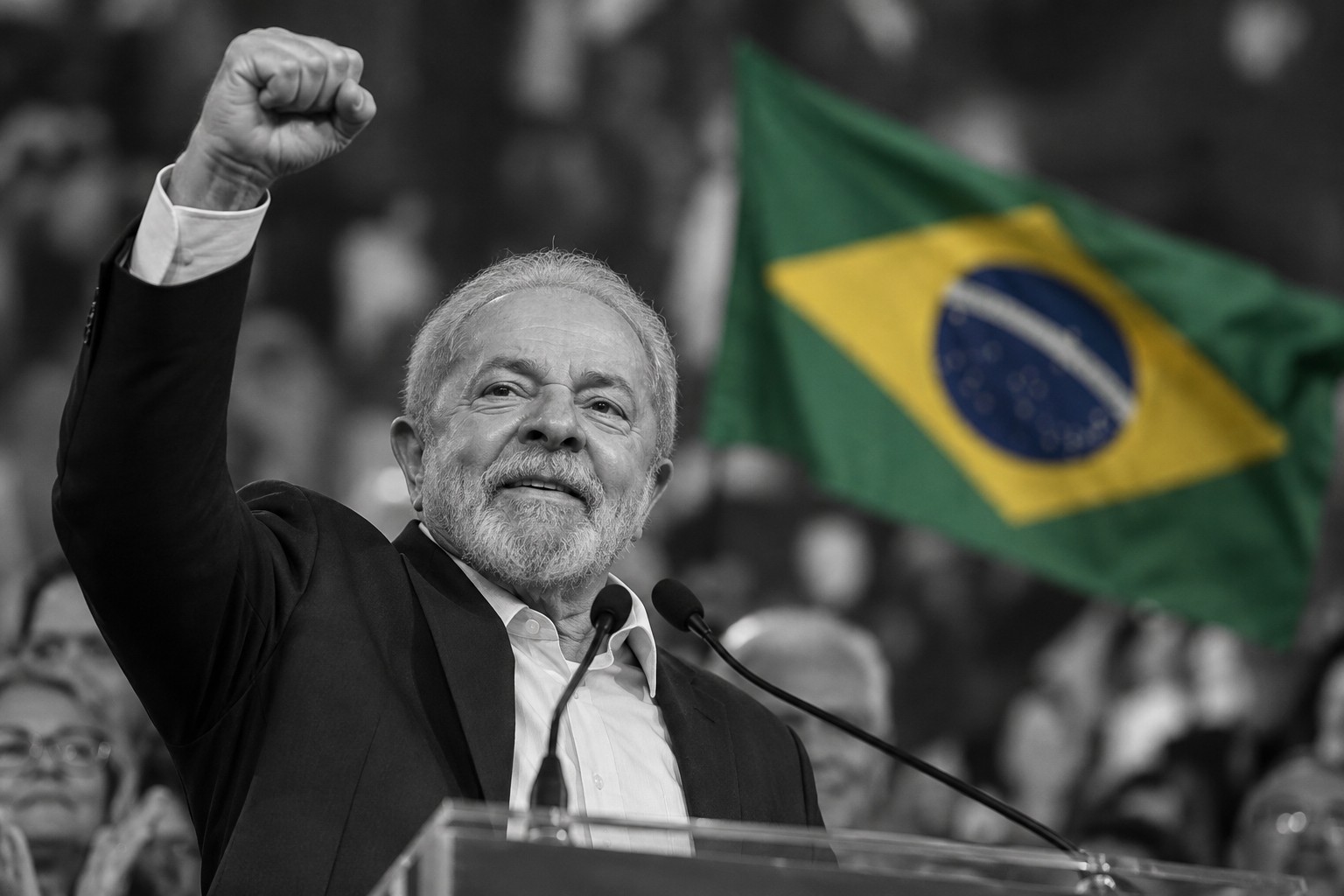
Brazilian President Luiz Inácio Lula da Silva has secured an unprecedented fourth term after defeating right-wing Senator Flávio Bolsonaro in Sunday’s presidential runoff. The closely contested election on 25 October 2026 delivered a remarkable political comeback for the 80-year-old leader, but allegations of electoral irregularities and Bolsonaro’s refusal to concede have raised concerns about further political instability.
A narrow but decisive victory
According to Brazil’s Superior Electoral Court, Lula received 51.79% of valid votes, compared with 48.21% for Bolsonaro. The final margin exceeded 4.4 million votes, with approximately 128 million Brazilians participating in the election.
The result represented a dramatic reversal from the first round on 4 October, when Bolsonaro finished ahead of the incumbent.


Lula’s victory was strengthened by support in Brazil’s northeastern states, traditionally strongholds of his Workers’ Party, and increased voter participation.
Bolsonaro challenges the result
Flávio Bolsonaro, son of former President Jair Bolsonaro, refused to acknowledge defeat and announced plans to challenge the election.
His campaign questioned a controversial decision to extend voting hours following reports of flooding, transport disruption and difficulties reaching polling stations.
Electoral authorities maintained that the voting extension did not alter the outcome. Nevertheless, the dispute threatens to deepen political divisions in Latin America’s largest democracy.
Economic uncertainty ahead
Lula’s victory presents both opportunities and challenges for Brazil’s economy.
The president has pledged to strengthen social welfare programmes, reduce inequality and protect employment. However, his administration faces substantial fiscal pressures, high interest rates and mounting public debt.
Government debt exceeds 80% of GDP, while economic growth is projected to slow to approximately 2.3% in 2027.
Financial markets are also assessing the implications of continued interventionist economic policies and the possibility of political confrontation in Congress.
Conservative parties retain considerable parliamentary influence, potentially restricting Lula’s ability to implement his legislative agenda.
International implications
The election represents a setback for political forces aligned with US President Donald Trump, whose administration has maintained close relations with the Bolsonaro family.
Lula has emphasised Brazilian sovereignty, stronger cooperation with emerging economies and an independent foreign policy.
His re-election is expected to reinforce Brazil’s engagement with BRICS while maintaining its importance in international agricultural, energy and commodity markets.
A divided nation enters a new chapter
Lula is scheduled to begin his fourth presidential term on 5 January 2027.
Although his electoral victory is confirmed, the narrow margin and opposition challenges underline Brazil’s persistent political polarisation.
For investors, international partners and ordinary Brazilians, the coming months will test whether the president can reconcile economic stability, social reform and political divisions.
NewsHub Finance | Politics & Latin America | 26 October 2026
Brazilian President Luiz Inácio Lula da Silva has secured an unprecedented fourth term after defeating right-wing Senator Flávio Bolsonaro in Sunday's presidential runoff. The closely contested election on 25 October 2026 delivered a remarkable political comeback for the 80-year-old leader, but allegations of electoral irregularities and Bolsonaro's refusal to concede have raised concerns about further political instability.
Recent Comments