
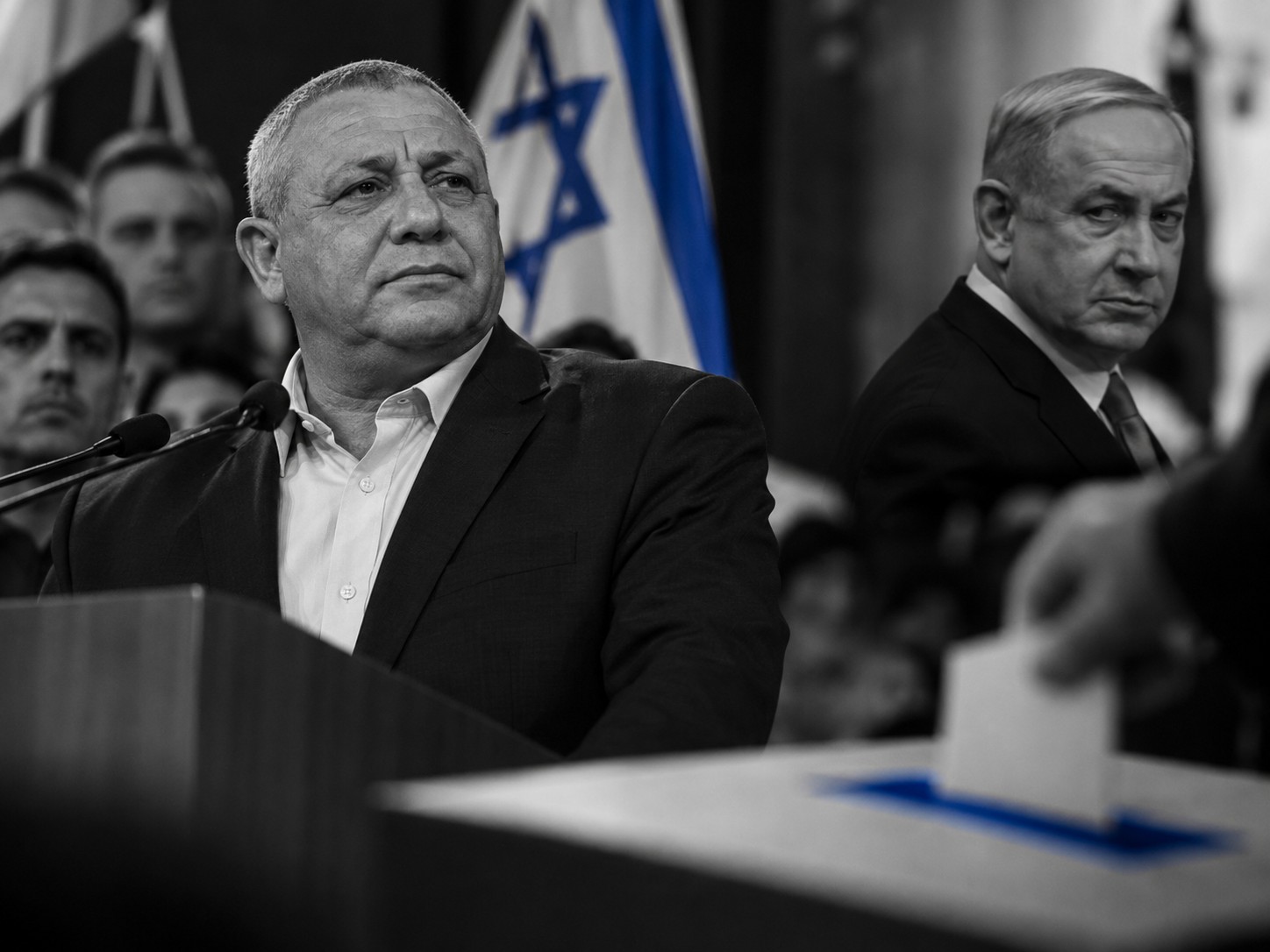
Israel faces one of its most consequential elections in decades on Tuesday, 27 October, as former military chief Gadi Eisenkot challenges Prime Minister Benjamin Netanyahu. With opinion polls suggesting a closely fought contest, the election is increasingly being viewed as a referendum on Netanyahu’s leadership, Israel’s security failures and the country’s political future.
A very different kind of leader
Gadi Eisenkot, the 66-year-old former chief of staff of the Israeli military, is hardly a conventional political showman. Reserved, disciplined and often described as lacking charisma, he presents a striking contrast to Netanyahu, whose political career has been defined by powerful rhetoric and formidable political instincts.


Eisenkot leads the newly established centrist Yashar party, whose name translates roughly as “straight” or “honest”. His campaign promises to restore public confidence in Israel’s institutions and repair relationships with international allies.
Recent opinion polls have frequently placed Yashar ahead of Netanyahu’s Likud, although the balance between the competing political blocs remains uncertain.
A soldier, but no peace dove
Despite his more moderate political image, Eisenkot is no pacifist. He supports continued military action against threats from Gaza, Lebanon and Iran, while advocating a greater role for diplomacy.
His political position is also deeply personal. In December 2023, his youngest son was killed while serving in the Israeli military during the Gaza war.
Eisenkot has demanded an independent state investigation into the intelligence and security failures surrounding Hamas’s attacks on 7 October 2023. He has also called for action against escalating Israeli settler violence towards Palestinians in the occupied West Bank.
Military experience versus ‘Mr Security’
For years, Netanyahu cultivated his reputation as the leader best equipped to protect Israel. However, the October attacks and subsequent regional wars have weakened that image among many voters.
Eisenkot’s military background allows him to challenge Netanyahu on national security without appearing inexperienced or politically naïve.
Yet his greatest obstacle may be parliamentary arithmetic rather than public popularity.
Winning the election is not enough
Israel’s 120-seat Knesset requires a majority of 61 seats to establish a government. Even if Yashar becomes the largest party, Eisenkot could struggle to assemble a coalition from Israel’s fragmented opposition.
Netanyahu, meanwhile, retains experienced political allies and a reputation for surviving seemingly impossible electoral situations.
Tuesday’s vote may therefore determine more than Israel’s next prime minister. It could reveal whether voters favour a dramatic political transformation or continued leadership under one of the country’s most enduring and divisive figures.
NewsHub Finance | Politics & Middle East | 25 October 2026
Israel faces one of its most consequential elections in decades on Tuesday, 27 October, as former military chief Gadi Eisenkot challenges Prime Minister Benjamin Netanyahu. With opinion polls suggesting a closely fought contest, the election is increasingly being viewed as a referendum on Netanyahu’s leadership, Israel’s security failures and the country's political future.
Recent Comments