
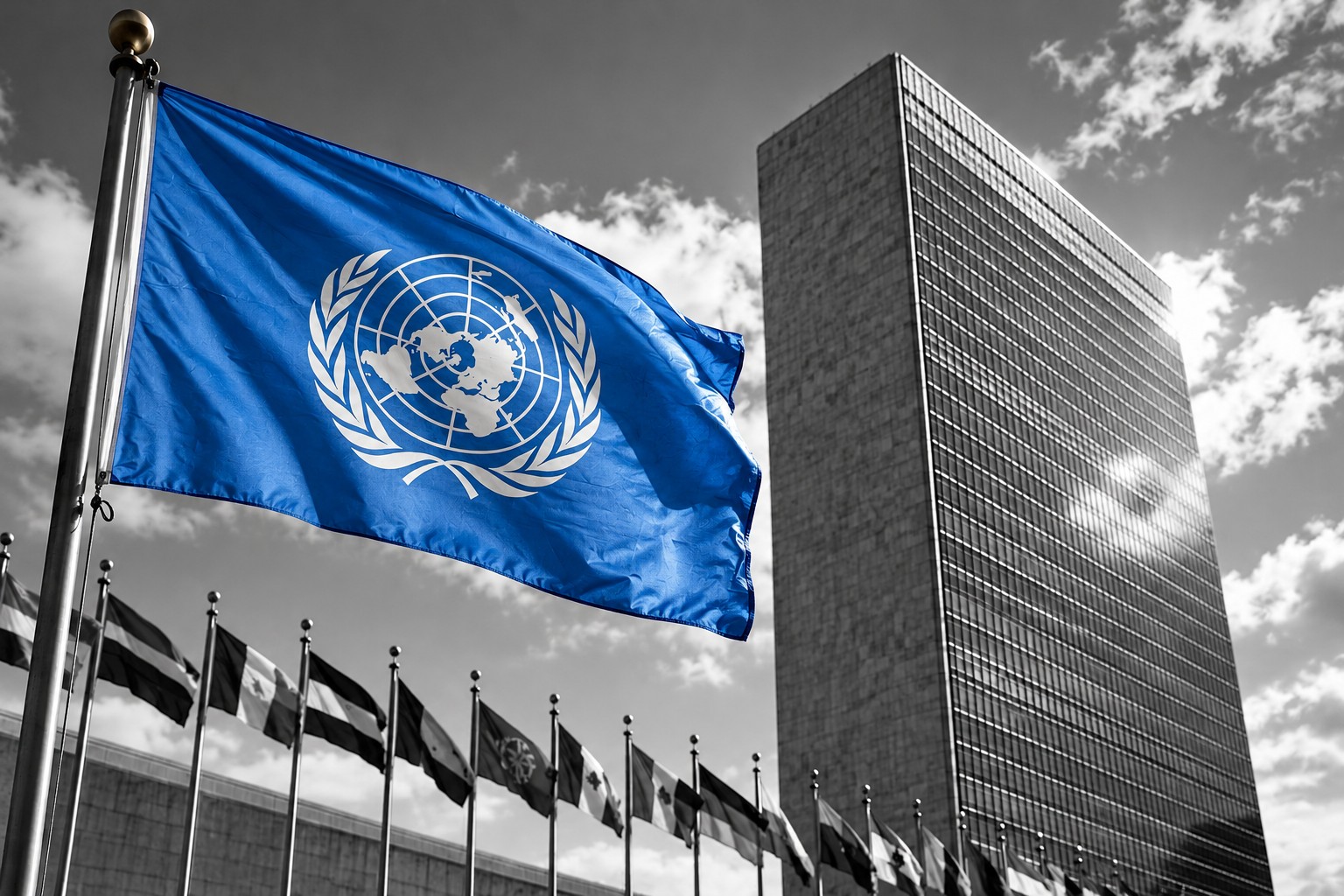
On 24 October 1945, the United Nations officially came into existence, marking a historic attempt to establish lasting international peace following the devastation of the Second World War. Eighty-one years later, the organisation remains central to global diplomacy, humanitarian assistance and international cooperation, despite growing challenges to its authority and effectiveness.
A new beginning after global devastation
The establishment of the United Nations followed two world wars that had claimed tens of millions of lives and left much of Europe and Asia in ruins. World leaders recognised the need for an international institution capable of preventing another catastrophic conflict.


Between April and June 1945, representatives from 50 countries gathered in San Francisco to draft the United Nations Charter. The document was signed on 26 June, establishing the legal framework for a new global organisation.
On 24 October, following ratification by the five permanent members of the Security Council and a majority of other signatories, the Charter entered into force. The United Nations was officially established with 51 founding member states.
Building an international framework for peace
The organisation was created to maintain international peace and security, promote human rights, encourage economic and social development, and strengthen cooperation between nations.
Its principal institutions included the General Assembly, Security Council, Economic and Social Council and International Court of Justice.
Unlike its predecessor, the League of Nations, the UN incorporated the world’s leading powers into a permanent security structure, although the veto powers granted to five countries would later become a source of controversy.
From 51 nations to 193
Over the following decades, decolonisation transformed the organisation as newly independent countries across Africa, Asia and the Caribbean joined.
Membership eventually expanded to 193 countries, giving developing economies a stronger voice in international discussions.
The United Nations also became an important institution for development finance, humanitarian relief, public health and education, working alongside specialised agencies and international financial institutions.
Its influence extended beyond conflict prevention, helping establish international standards for human rights, economic cooperation and sustainable development.
An institution facing renewed challenges
Eighty-one years after its creation, the United Nations faces questions about its effectiveness in resolving armed conflicts, addressing humanitarian emergencies and maintaining international consensus.
Disagreements among major powers, particularly within the Security Council, frequently restrict its ability to respond decisively.
Nevertheless, the organisation remains a unique diplomatic forum where countries of vastly different political systems and economic circumstances can negotiate common solutions.
The anniversary of 24 October serves as a reminder of the ambition behind its creation: replacing global confrontation with international cooperation.
The central question remains whether the international community can preserve that founding commitment in an increasingly divided world.
NewsHub Finance | History | 24 October 2026
On 24 October 1945, the United Nations officially came into existence, marking a historic attempt to establish lasting international peace following the devastation of the Second World War. Eighty-one years later, the organisation remains central to global diplomacy, humanitarian assistance and international cooperation, despite growing challenges to its authority and effectiveness.
Recent Comments