
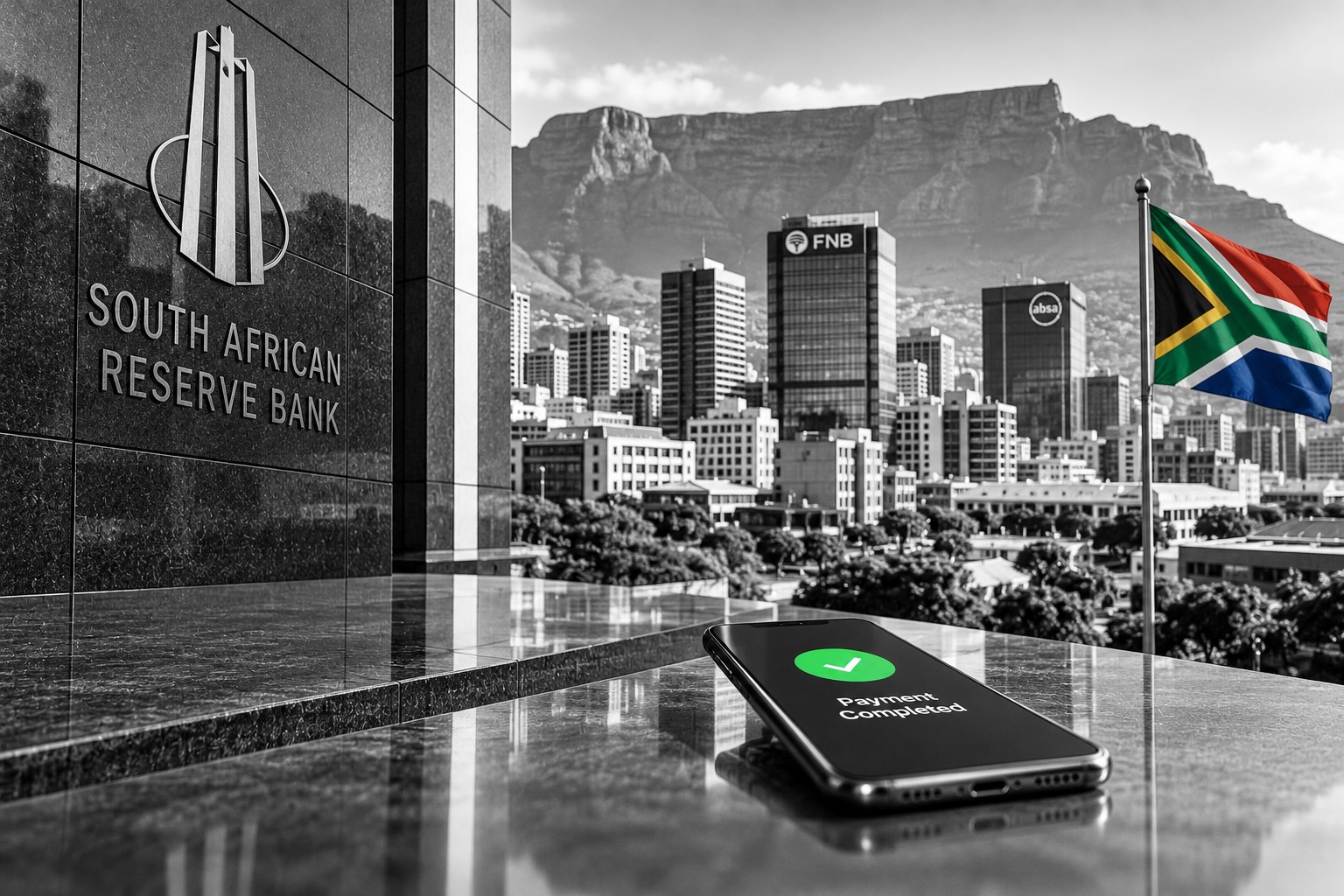
South Africa is preparing one of its most significant financial reforms in decades, with the central bank announcing plans to allow fintech companies, telecommunications operators and major retailers direct access to the country’s national payment infrastructure from 2027. The move could challenge the traditional dominance of commercial banks while expanding digital financial services to millions of consumers and small businesses.
The South African Reserve Bank (SARB) outlined the plans on 16 October as part of its Payments Ecosystem Modernisation programme, designed to transform how money moves through Africa’s most industrialised economy.
The initiative aims to increase competition, reduce transaction costs and accelerate financial inclusion.


Breaking the banks’ traditional dominance
Currently, access to South Africa’s core payment infrastructure is largely controlled by established banking institutions.
Under the proposed reforms, authorised non-bank payment providers would be permitted to connect directly to the national system.
This could allow fintech companies to develop payment services without relying as heavily on traditional banks for access to the underlying infrastructure.
The central bank expects to publish regulatory requirements and exemption rules by November 2026.
Initial participation could begin in March 2027, ahead of broader implementation around the middle of the year.
Financial inclusion at the centre
South Africa has a relatively sophisticated banking industry, but cash remains important for many lower-income households and informal businesses.
Payment fees, limited access to financial infrastructure and the cost of banking services continue to present obstacles.
By opening the payments ecosystem to additional participants, regulators hope to encourage cheaper transactions and more accessible digital financial products.
Telecommunications operators and retailers could play a particularly important role because of their existing relationships with customers outside traditional banking channels.
Modernising digital payments
The programme also includes improvements to national payment infrastructure and further development of PayShap, South Africa’s instant-payment platform.
Security, digital identity verification and fraud prevention will be important elements of the modernisation effort.
At the same time, the central bank is exploring shared ATM infrastructure to preserve access to cash, particularly in underserved communities.
A potential model for African fintech
South Africa’s initiative reflects a broader continental shift towards open payment systems and greater cooperation between banks and technology companies.
Countries including Ghana, Kenya and Nigeria have already demonstrated how mobile money and digital payments can expand access to financial services.
However, the success of South Africa’s reforms will depend on licensing requirements, technical integration and the willingness of established financial institutions to support competition.
If implemented successfully, the changes could provide a model for other African economies seeking to modernise payments while reducing financial exclusion.
NewsHub Finance | Africa Fintech | 22 October 2026
South Africa is preparing one of its most significant financial reforms in decades, with the central bank announcing plans to allow fintech companies, telecommunications operators and major retailers direct access to the country's national payment infrastructure from 2027. The move could challenge the traditional dominance of commercial banks while expanding digital financial services to millions of consumers and small businesses.
Recent Comments