
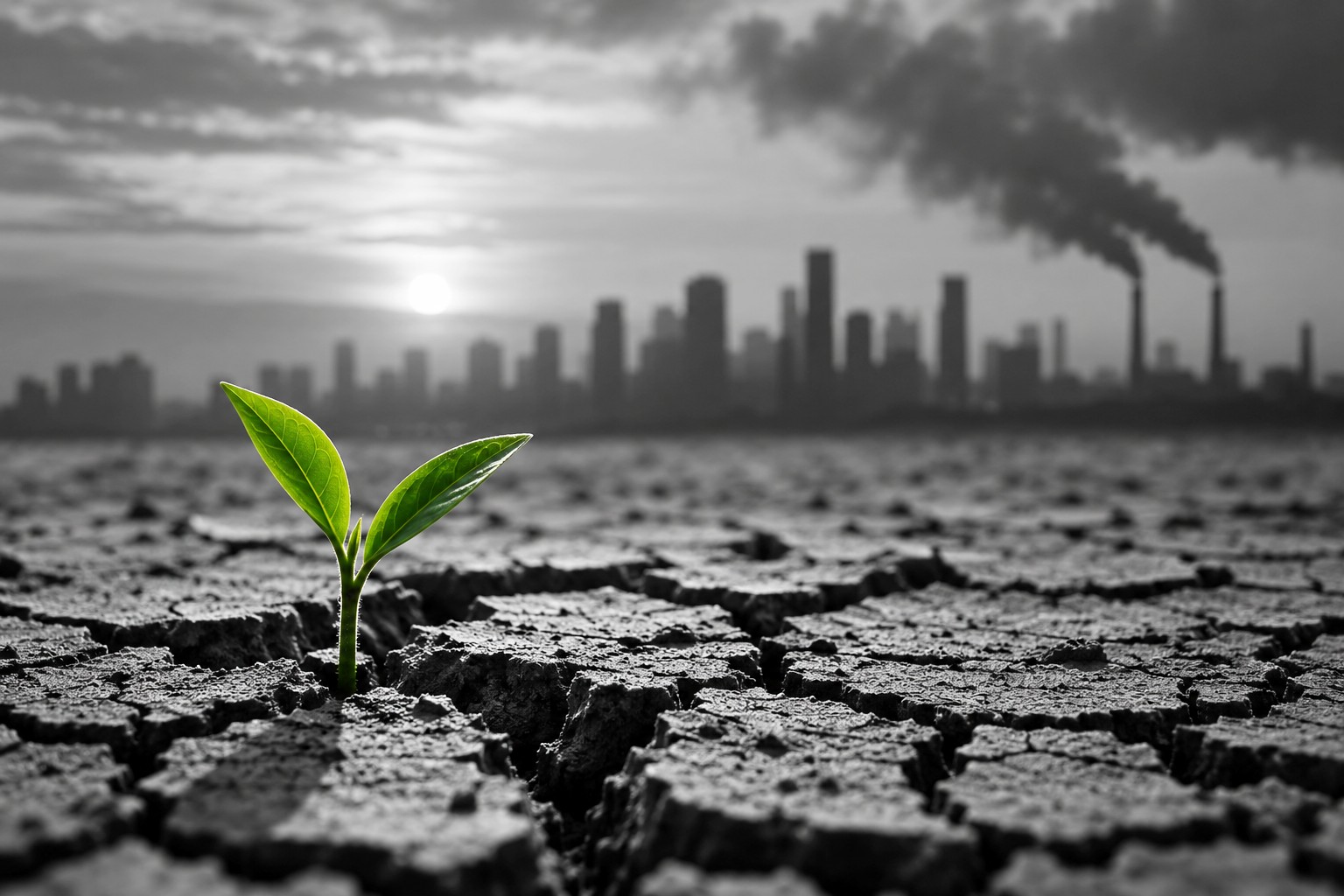
The United Nations has delivered its starkest climate warning yet, acknowledging that the world can no longer prevent global temperatures from exceeding the Paris Agreement’s 1.5°C threshold. Its Emissions Gap Report 2026, presented on Wednesday, 21 October, warns that temperatures could rise to at least 1.7°C–1.8°C above pre-industrial levels even under ambitious climate action, placing governments under renewed pressure to accelerate emissions reductions.
A historic admission
For the first time, the UN Environment Programme (UNEP) has explicitly concluded that avoiding an overshoot of 1.5°C is no longer achievable.
The landmark Paris Agreement, adopted in 2015, committed countries to holding global warming well below 2°C while pursuing efforts to limit it to 1.5°C.


The new assessment represents a significant turning point in international climate policy. Rather than preventing the threshold from being crossed, governments must now focus on limiting how far temperatures rise and how quickly they can be brought down.
Current policies point towards 2.8°C
The report warns that existing government policies put the planet on a trajectory towards approximately 2.8°C of warming this century.
Even full implementation of current national climate commitments would leave temperatures rising by around 2.6°C.
Such outcomes would substantially increase the risks of extreme heat, drought, flooding, agricultural disruption and damage to vulnerable ecosystems.
The difference between 1.5°C, 1.8°C and 2.8°C is scientifically significant. Every additional fraction of a degree increases the probability and severity of climate-related damage.
Carbon removal becomes increasingly important
UNEP argues that aggressive emissions reductions, alongside large-scale removal of carbon dioxide from the atmosphere, could eventually return global temperatures towards 1.5°C.
However, carbon capture and removal technologies remain expensive, energy-intensive and insufficiently developed for deployment at the required scale.
The report therefore emphasises that technological solutions cannot replace immediate reductions in fossil fuel emissions.
An economic and political challenge
The findings carry profound implications for governments, investors and financial institutions.
Energy infrastructure, agriculture, insurance markets and international trade are increasingly exposed to physical climate risks and the economic costs of adaptation.
Rapid expansion of renewable energy, improved efficiency and reductions in methane emissions remain among the available measures.
The UN’s conclusion does not mean climate action has become pointless. It means the margin for avoiding dangerous consequences has narrowed dramatically.
The central question is no longer whether the world will exceed 1.5°C, but how much further temperatures will rise — and whether governments can reverse that trajectory before the damage becomes irreversible.
NewsHub Finance | Climate & Environment | 21 October 2026
The United Nations has delivered its starkest climate warning yet, acknowledging that the world can no longer prevent global temperatures from exceeding the Paris Agreement's 1.5°C threshold. Its Emissions Gap Report 2026, presented on Wednesday, 21 October, warns that temperatures could rise to at least 1.7°C–1.8°C above pre-industrial levels even under ambitious climate action, placing governments under renewed pressure to accelerate emissions reductions.
Recent Comments