
Indonesia is stepping up efforts to expand financial inclusion through digital banking, alternative credit assessment and financial technology partnerships. New figures from the country’s Financial Services Authority (OJK) reveal that digital financial service aggregators have reached 19.7 million users, highlighting the growing importance of technology in extending financial services across Southeast Asia’s largest economy.
Digital finance reaches 19.7 million users
According to OJK’s October 2026 report, Indonesia’s registered financial service aggregators served 19.7 million users in August, facilitating approved transactions worth approximately 2.27 trillion rupiah.
These platforms help consumers compare and access financial products, potentially reducing barriers to banking, insurance and credit.


The regulator also reported 24 registered financial technology innovation operators, including eight alternative credit rating providers and 16 financial service aggregators.
New opportunities for underserved borrowers
Alternative credit assessment is becoming increasingly important for Indonesians without traditional banking histories.
OJK reported 28.71 million credit-scoring enquiries during August, illustrating the growing role of financial data in lending decisions.
Such technologies could help banks and fintech companies assess borrowers who lack conventional credit records, including informal workers, microentrepreneurs and rural households.
However, the effectiveness of these systems depends on reliable data, responsible lending practices and consumer protection.
Financial inclusion reaches record levels
Indonesia’s latest national financial literacy and inclusion survey, published in August, recorded a financial inclusion index of 93.61%, compared with 92.74% in 2025.
Financial literacy also improved, reaching 69.57%.
The difference between these figures highlights an important challenge: access to financial services is expanding considerably faster than people’s understanding of financial products and associated risks.
Digital payments transform everyday commerce
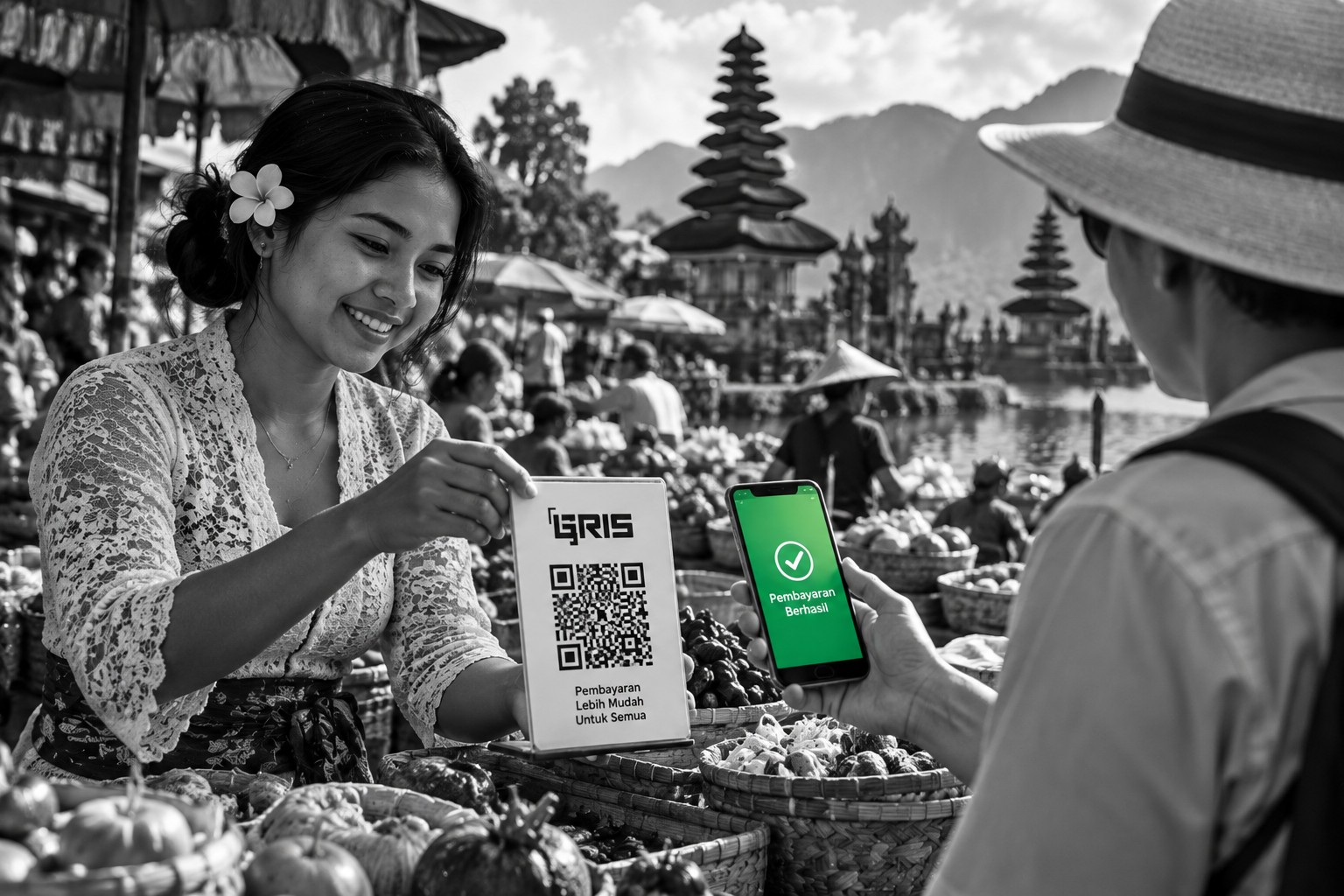
Bank Indonesia has reported rapid growth in digital payments, with QRIS transactions doubling year-on-year during the second quarter of 2026.
The national QR payment system enables merchants to accept digital payments through participating banks and electronic wallets.
For small businesses, particularly those operating outside major cities, QR payments can reduce dependence on cash and make electronic transactions more accessible.
The next challenge is meaningful inclusion
Despite significant progress, Indonesia’s authorities acknowledge that digital access must translate into economic opportunity.
OJK is prioritising consumer protection, cybersecurity and financing for micro, small and medium-sized enterprises.
The country’s financial institutions also face pressure to ensure that credit expansion remains sustainable.
For Indonesia, the next stage of financial inclusion will be measured not simply by the number of digital accounts or transactions, but by whether affordable financial services improve household resilience, support entrepreneurship and create opportunities for communities previously underserved by conventional banks.
NewsHub Finance | Asia & Financial Inclusion | 20 October 2026
Indonesia is stepping up efforts to expand financial inclusion through digital banking, alternative credit assessment and financial technology partnerships. New figures from the country's Financial Services Authority (OJK) reveal that digital financial service aggregators have reached 19.7 million users, highlighting the growing importance of technology in extending financial services across Southeast Asia's largest economy.
Recent Comments