
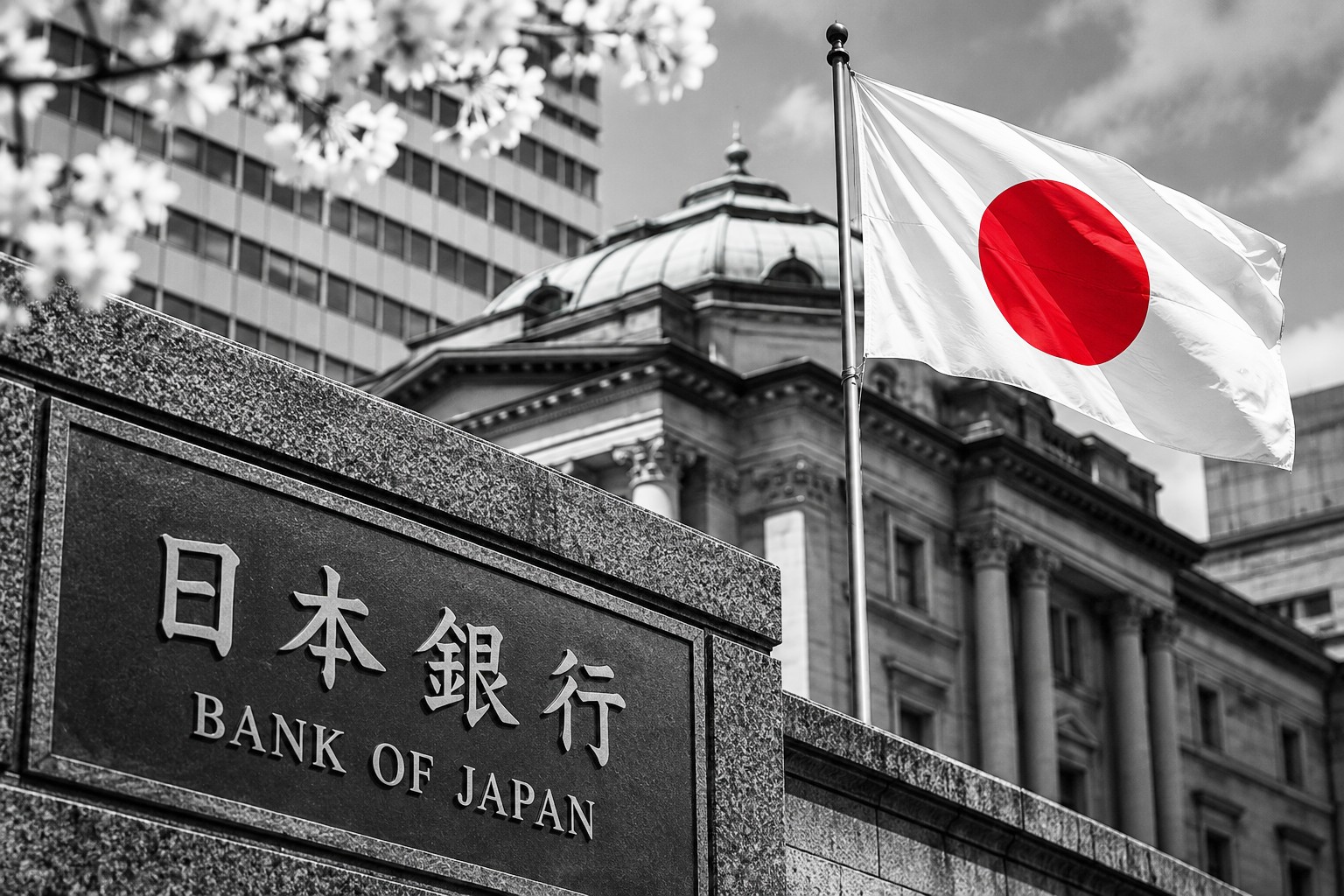
Japan’s central bank has signalled that further interest rate increases remain possible as underlying inflation approaches its 2% target. The announcement comes amid growing concerns over government borrowing, elevated energy prices and the sustainability of Japan’s economic recovery, placing the world’s fourth-largest economy at a critical monetary policy crossroads.
Inflation moves closer to target
Bank of Japan Governor Kazuo Ueda said on Monday, 19 October, that underlying inflation was now approaching the central bank’s long-standing target of 2%.
The assessment reflects improving domestic demand, persistent labour shortages and stronger wage pressures, alongside increased costs associated with international energy markets.


Japan has spent decades attempting to escape weak inflation and stagnant economic growth. The latest developments suggest that its transition towards a more conventional monetary policy environment is continuing.
However, the central bank remains cautious about tightening financial conditions too aggressively.
Interest rates could rise again
The Bank of Japan raised its policy rate to 1.25% in September, marking another step away from the ultra-low borrowing costs that characterised Japanese monetary policy for years.
Economists generally expect the central bank to maintain rates at its next policy meeting on 30 October, although another increase in December remains a possibility.
Higher interest rates would affect household mortgages, corporate financing and government debt-servicing costs.
They could also strengthen the Japanese yen, influencing exporters and international investment flows.
Government debt creates additional pressure
Japan’s substantial public debt complicates the central bank’s efforts to normalise monetary policy.
Prime Minister Sanae Takaichi’s plans for increased government expenditure have raised concerns among bond investors about future borrowing requirements.
Higher government bond yields would increase financing costs and potentially place additional pressure on public finances.
The International Monetary Fund has encouraged Japan to continue normalising interest rates while maintaining fiscal discipline.
Energy and technology shape the outlook
Global demand for artificial intelligence infrastructure continues to support sections of Japan’s technology and manufacturing industries.
However, elevated energy prices resulting from the Middle East conflict threaten production costs and household purchasing power.
Japan remains heavily dependent on imported energy, making fluctuations in international oil and gas prices particularly significant.
A delicate balancing act
The central bank must now balance three competing priorities: controlling inflation, protecting economic growth and preventing financial instability.
Further rate increases could demonstrate confidence in Japan’s recovery, but moving too quickly risks weakening consumption and investment.
For international financial markets, the next Bank of Japan decision could influence currencies, government bonds and capital flows across Asia.
Japan’s monetary policy has become an increasingly important indicator of how Asian economies are adapting to a world of higher borrowing costs and persistent geopolitical uncertainty.
NewsHub Finance | Asian Finance & Monetary Policy | 19 October 2026
Japan's central bank has signalled that further interest rate increases remain possible as underlying inflation approaches its 2% target. The announcement comes amid growing concerns over government borrowing, elevated energy prices and the sustainability of Japan's economic recovery, placing the world's fourth-largest economy at a critical monetary policy crossroads.
Recent Comments