
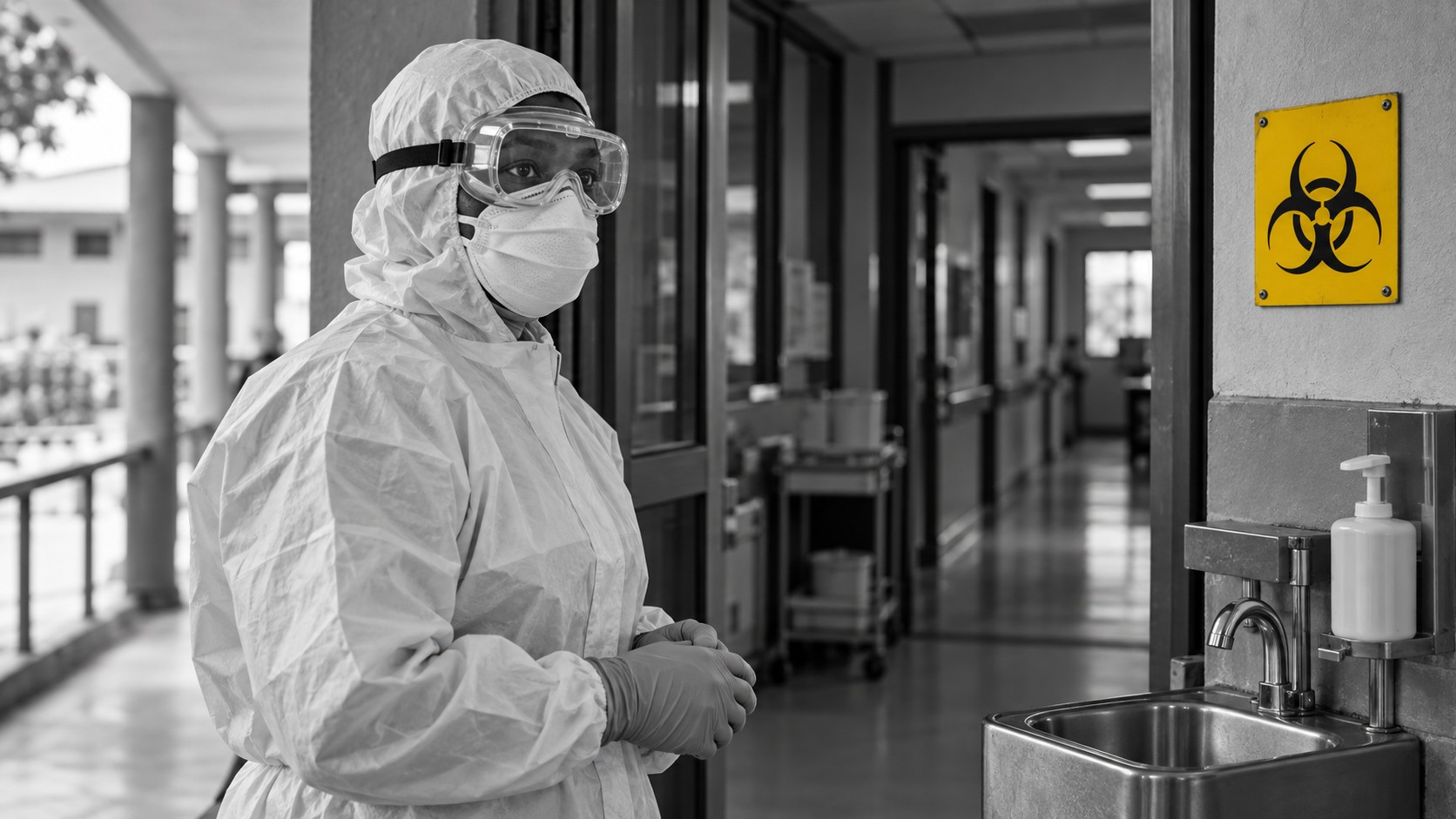
Kenya has confirmed its first Ebola case after a Kenyan citizen who travelled from the Democratic Republic of Congo died in Nairobi. The announcement comes as infections spread rapidly in eastern Congo, where conflict, population displacement and overstretched health services are complicating efforts to contain the outbreak.
Contact tracing expands
Health minister Aden Duale announced the case on Tuesday, initially identifying 28 contacts, including relatives and healthcare workers. The patient arrived in Nairobi on Saturday, 3 October, and died on Monday.
By Wednesday, Kenyan authorities had expanded the contact list to 57 people, with 10 in quarantine. Investigators were examining the man’s journey through Uganda and the screening procedures he passed before reaching hospital.


The case has raised questions about the effectiveness of border checks, particularly when symptoms are difficult to identify or may be masked by medication.
Kenya strengthens its response
Authorities have increased surveillance at entry points and established a hotline for reporting suspected symptoms. Five health facilities, providing a combined 241 isolation beds, have been designated to manage patients.
Contact-tracing teams are also examining possible exposure among airline passengers, crew and aircraft cleaning staff. Kenyan officials are coordinating with counterparts in Congo and Uganda, alongside Africa CDC, to reconstruct the patient’s movements.
North Kivu faces growing pressure
In Congo, North Kivu now accounts for approximately 40% of newly confirmed cases, compared with 24% at the end of August, according to reporting citing outbreak officials.
The country has recorded more than 8,500 cases and over 4,000 deaths. Treatment centres face shortages of personnel and supplies, while insecurity and mistrust continue to hamper containment.
Africa CDC has called for stronger involvement by village leaders and communities in identifying contacts, organising safe burials and supporting isolation.
Treatment research continues
The outbreak involves Bundibugyo virus, for which no vaccine or treatment has yet been approved specifically.
Researchers in Congo are testing the antiviral obeldesivir as a preventive treatment for people exposed to infected patients. The study monitors participants for 21 days and aims to determine whether early intervention can prevent illness.
For health authorities across the region, rapidly identifying cases and following up exposed people remain central to the response.
Newshub Editorial in Africa – 8 October 2026
Kenya has confirmed its first Ebola case after a Kenyan citizen who travelled from the Democratic Republic of Congo died in Nairobi. The announcement comes as infections spread rapidly in eastern Congo, where conflict, population displacement and overstretched health services are complicating efforts to contain the outbreak.
Recent Comments