
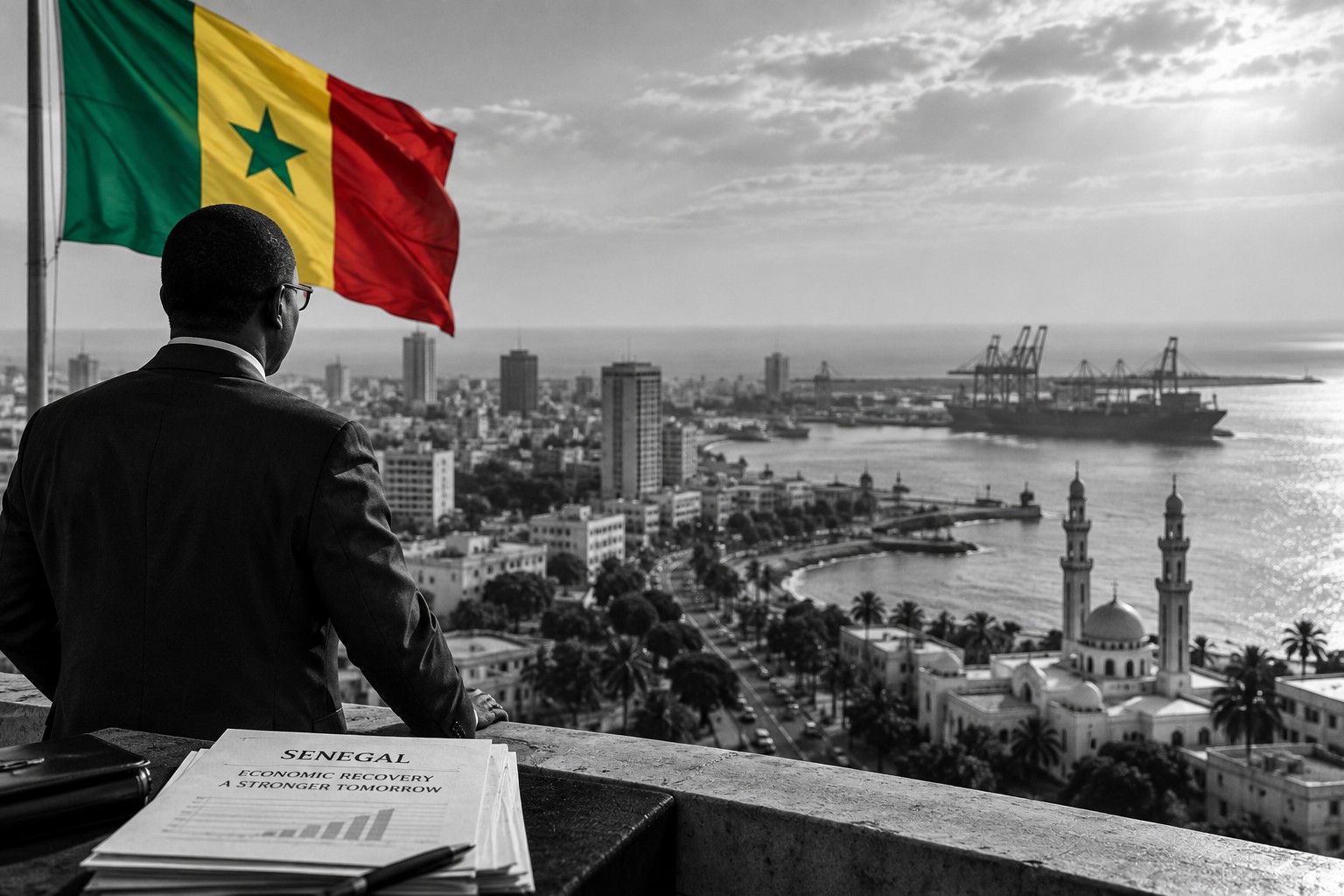
Senegal is confronting one of West Africa’s most closely watched sovereign-debt crises, with the government revealing that approximately $3.5 billion in payment arrears must be cleared as Dakar attempts to restore confidence, protect economic activity and secure a new $2.2 billion programme with the International Monetary Fund.
Government chooses reprofiling
Prime Minister Ahmadou Al Aminou Lo said Senegal does not intend to pursue a conventional debt restructuring. Instead, the government plans to reprofile its obligations by extending maturities and renegotiating interest rates.
The distinction is politically and financially important. Senegal wants to reduce immediate repayment pressure while avoiding the more disruptive consequences normally associated with sovereign restructuring.

Investors, however, may regard changes to maturities and interest payments as effectively altering the original terms of the debt.
Billions in unpaid obligations
Senegal’s payment arrears stood at CFA1.956 trillion – approximately $3.5 billion – as of March 2025.
The government has warned that failure to address the backlog could restrict economic activity and ultimately threaten employment.
The financial problems became considerably more serious after the new administration discovered billions of dollars in previously unreported government debt accumulated under its predecessor.
Senegal’s total sovereign debt was calculated at CFA23.67 trillion at the end of 2024, equivalent to approximately 119 per cent of GDP before liabilities from state companies and arrears were included.
IMF returns to Dakar
The IMF and Senegal have now reached a staff-level agreement for a new three-year programme worth approximately $2.2 billion.
A previous IMF programme was suspended in 2024 following the discovery that government debt had been misreported.
The new agreement therefore represents an important attempt to rebuild Senegal’s credibility with international financial institutions and investors.
International creditors face uncertainty
Senegal intends to exclude CFA franc-denominated domestic debt from its debt treatment, placing greater attention on obligations to international creditors.
The country has more than $7 billion in international bonds, while rating agencies have already reacted sharply. S&P recently lowered Senegal’s long-term foreign-currency rating to CC, indicating an extremely high level of credit risk.
A test for West African finance
The consequences extend beyond Senegal.
Regional banks, investors and governments will be watching closely because Senegal operates inside the West African Economic and Monetary Union and shares the CFA franc with seven other countries.
A successful financial recovery could demonstrate how a West African economy can manage severe sovereign-debt pressure without destabilising its domestic financial system.
Failure, however, could make international financing more expensive not only for Senegal, but potentially for other frontier economies across the region.
Newshub Editorial in Africa – 9 September 2026

Ask NF GPT
If you have an account with ChatGPT you get deeper explanations,
background and context related to what you are reading.
Senegal is confronting one of West Africa’s most closely watched sovereign-debt crises, with the government revealing that approximately $3.5 billion in payment arrears must be cleared as Dakar attempts to restore confidence, protect economic activity and secure a new $2.2 billion programme with the International Monetary Fund.
Recent Comments