
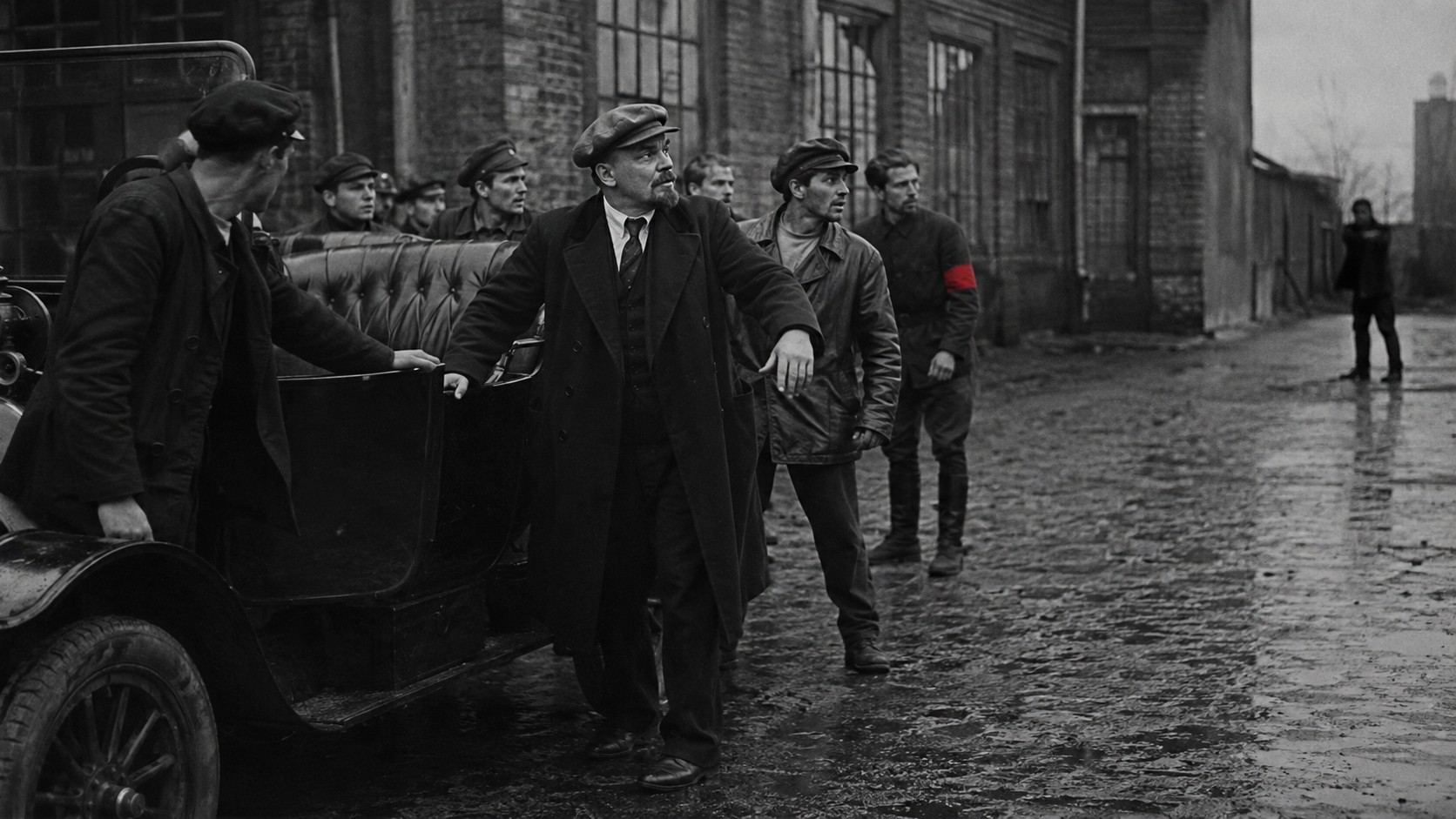
On 30 August 1918, Vladimir Lenin was struck by two bullets in an unsuccessful assassination attempt outside a Moscow factory. He survived, but the attack helped trigger one of the most brutal periods of repression during the Russian Revolution.
The attack in Moscow
Lenin had just addressed workers at the Michelson factory when three shots were fired as he approached his car. One bullet passed through his clothing, while two struck him in the shoulder and neck.

Seriously wounded, Lenin was taken to the Kremlin, where doctors treated him. He refused to go to hospital, reportedly fearing that further assassins might be waiting for him.
Fanny Kaplan arrested
Fanny Kaplan, a 28-year-old member of the Socialist Revolutionary Party, was arrested and accused of the attack. Kaplan opposed the Bolsheviks and believed Lenin had betrayed the revolution by establishing one-party rule and suppressing political rivals.
She reportedly confessed but refused to identify any accomplices. Kaplan was executed without trial four days later. Some historians have since questioned whether she was responsible, pointing to conflicting witness accounts and her severely impaired eyesight.
The beginning of the Red Terror
The attack occurred on the same day that Moisei Uritsky, a senior Bolshevik security official, was assassinated in Petrograd.
The Bolshevik government responded with arrests, executions and organised violence against suspected opponents. The campaign became known as the Red Terror and strengthened the power of the Cheka, the new regime’s secret police.
Lenin recovered and continued leading Soviet Russia, although his health later deteriorated. He suffered several strokes before dying in 1924. The extent to which the gunshot wounds contributed to his decline remains uncertain.
Newshub Editorial in Europe – 30 August 2026

Ask NF GPT
If you have an account with ChatGPT you get deeper explanations,
background and context related to what you are reading.
On 30 August 1918, Vladimir Lenin was struck by two bullets in an unsuccessful assassination attempt outside a Moscow factory. He survived, but the attack helped trigger one of the most brutal periods of repression during the Russian Revolution.
Recent Comments