
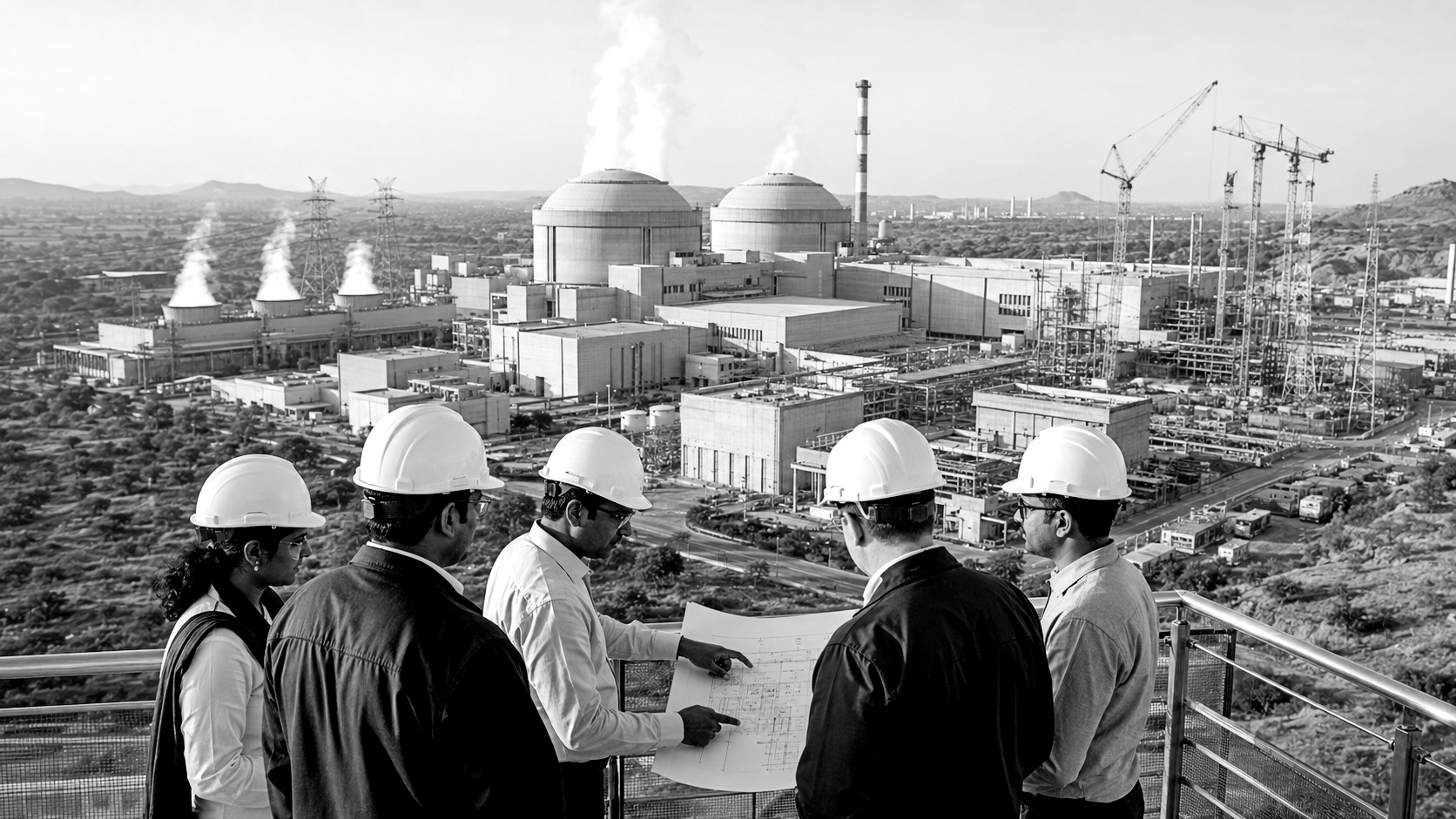
India has proposed a tightly controlled regulatory framework that would allow private companies to build and operate nuclear power plants using approved domestic or foreign technologies. The draft rules represent the clearest step yet towards opening a sector that has historically remained under government control.
Private capital enters a strategic industry
Under the proposed regulations, companies would first apply for approval in principle. This would allow them to select technology suppliers, secure land and begin preliminary development before receiving a formal licence to construct and operate a nuclear facility.
Projects would then be examined at every major stage, including reactor design, site selection, construction, commissioning and commercial operation. Regulators would retain the authority to suspend work if developers failed to meet safety, security or technical requirements.


India amended its nuclear energy legislation in 2025 to permit private companies to build and operate nuclear projects. However, the government retained control over licensing, sensitive technologies and strategic nuclear materials.
Foreign technology gains a route into India
The draft framework would permit reactor designs that have established operating records in overseas markets. Developers would need to provide evidence of licensing, safety performance and operational experience in the technology’s home country.
The change could revive interest from international reactor suppliers including General Electric, Westinghouse Electric and France’s EDF. Previous investment discussions were complicated by concerns over India’s nuclear liability regime, particularly the potential responsibility of equipment suppliers following an accident.
Recent legal amendments have capped supplier liability, removing one of the main obstacles raised by foreign companies. Developers would nevertheless be required to maintain financial protection covering accident liabilities, decommissioning expenses and radioactive waste management.
Major Indian groups assess opportunities
The government has already approached prominent domestic conglomerates, including Adani Green Energy, Tata Power and Reliance Industries, about potential investment in nuclear generation.
India plans to increase its nuclear capacity twelvefold to 100 gigawatts over the next two decades. Reaching that target would require substantial private capital, foreign technical expertise and a much larger domestic supply chain for specialist equipment, engineering and construction.
Nuclear power is expected to support India’s growing electricity demand while providing reliable low-carbon generation alongside solar and wind power. The country remains heavily dependent on coal and is the world’s third-largest emitter of greenhouse gases.
Strict oversight remains central
Opening the market does not represent a complete withdrawal of the state. Nuclear projects involve long construction periods, high initial costs and responsibilities that continue for decades after a plant closes. Waste storage, decommissioning and public confidence will therefore remain central considerations.
The regulations have been circulated for public consultation before final approval. Their eventual implementation could create one of the world’s largest emerging nuclear investment markets, but progress will depend on regulatory clarity, financing conditions and the ability of private developers to meet demanding safety standards.
If successfully implemented, the reforms could reshape India’s energy industry while creating opportunities for international technology providers, engineering companies and domestic manufacturers.
Newshub Editorial in Asia – 15 August 2026

Ask NF GPT
If you have an account with ChatGPT you get deeper explanations,
background and context related to what you are reading.
India has proposed a tightly controlled regulatory framework that would allow private companies to build and operate nuclear power plants using approved domestic or foreign technologies. The draft rules represent the clearest step yet towards opening a sector that has historically remained under government control.
Recent Comments