
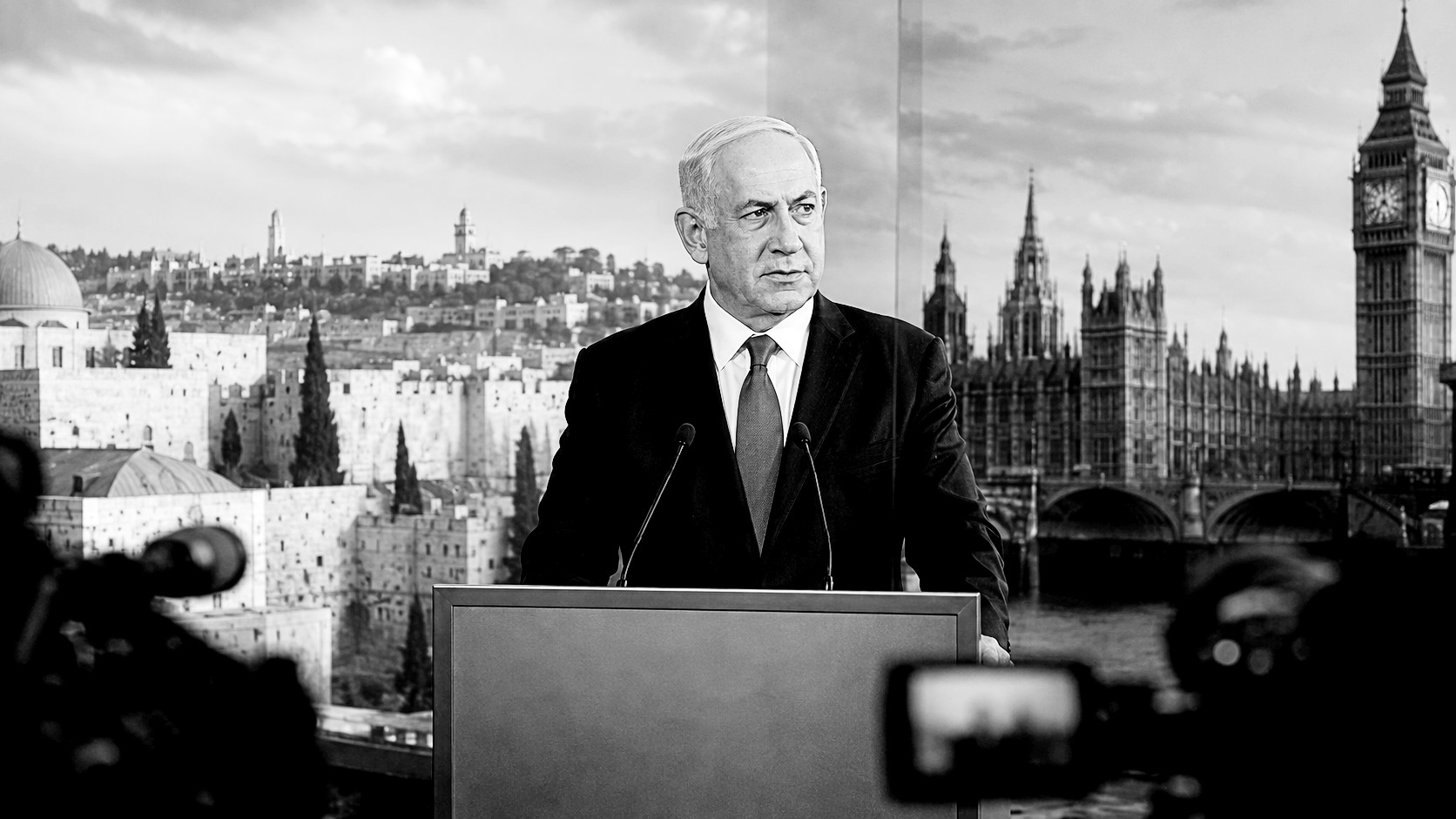
Israeli Prime Minister Benjamin Netanyahu has described the United Kingdom as the “Islamic Republic of Britain” and repeated a suggestion that it could become an Islamic republic armed with nuclear weapons. The remarks, delivered during an Israeli podcast interview, have been condemned as inflammatory and factually misleading, while an Israeli political opponent accused Netanyahu of damaging relations with an important international ally.
Remarks made during podcast
Netanyahu made the comments while discussing historical British attitudes towards Israel. He praised Randolph Churchill, the journalist and son of former British prime minister Winston Churchill, for reporting positively on Israel during the Six-Day War in 1967. Netanyahu then contrasted that coverage with modern Britain, telling listeners they would struggle to find similar reporting in what he called the “Islamic Republic of Britain”.
When the presenter asked whether Netanyahu believed the same description applied to Europe more broadly, the Israeli leader repeated a warning previously associated with US Vice-President JD Vance. Netanyahu said someone had suggested that Britain would become the first Islamic republic to possess nuclear weapons.


Claim conflicts with established facts
The United Kingdom is a constitutional monarchy and has been a nuclear-armed state since the 1950s. Muslims represent approximately 6 per cent of the population of Great Britain, according to the most recent census figures, while Britain has no state religion based on Islam and remains governed through a parliamentary democratic system.
The nuclear claim is also incorrect when interpreted literally. Pakistan, officially called the Islamic Republic of Pakistan, conducted nuclear weapons tests in 1998 and has maintained a nuclear arsenal for nearly three decades.
Israeli rival condemns diplomatic failure
Avi Dabush, who is standing for the Knesset with Israel’s opposition Democrats party, criticised Netanyahu for publicly mocking Britain at a time when Israel is facing growing diplomatic pressure.
Dabush described the remarks as the consequence of a “horrific diplomatic failure” and accused Netanyahu’s government of being unable to mobilise international support for Israeli interests. His criticism reflects wider concerns among Israeli opposition figures that hostile rhetoric towards established allies could further isolate the country.
Relations already under pressure
Relations between Britain and Israel have deteriorated over disagreements concerning Gaza, Israeli settlement expansion and violence in the occupied West Bank. British Prime Minister Andy Burnham, who entered Downing Street in July, has signalled a tougher approach towards Netanyahu’s government.
Burnham has supported increased diplomatic pressure, further sanctions against individuals and organisations connected to settler violence, and consideration of restrictions on goods produced in Israeli settlements. Britain nevertheless remains an important security, intelligence and commercial partner for Israel.
No immediate official clarification
Neither Netanyahu’s office nor Britain’s Foreign, Commonwealth and Development Office had issued an immediate formal response to the controversy at the time of publication. It also remained unclear whether Netanyahu’s description represented an official Israeli government position or a rhetorical attack made during the interview.
The episode risks further weakening relations between two longstanding partners. It may also intensify concerns over political language directed towards British Muslims at a time when community organisations have reported increasing hostility and anti-Muslim abuse.
Newshub Editorial in Europe – 14 August 2026

Ask NF GPT
If you have an account with ChatGPT you get deeper explanations,
background and context related to what you are reading.
Israeli Prime Minister Benjamin Netanyahu has described the United Kingdom as the “Islamic Republic of Britain” and repeated a suggestion that it could become an Islamic republic armed with nuclear weapons. The remarks, delivered during an Israeli podcast interview, have been condemned as inflammatory and factually misleading, while an Israeli political opponent accused Netanyahu of damaging relations with an important international ally.
Recent Comments