
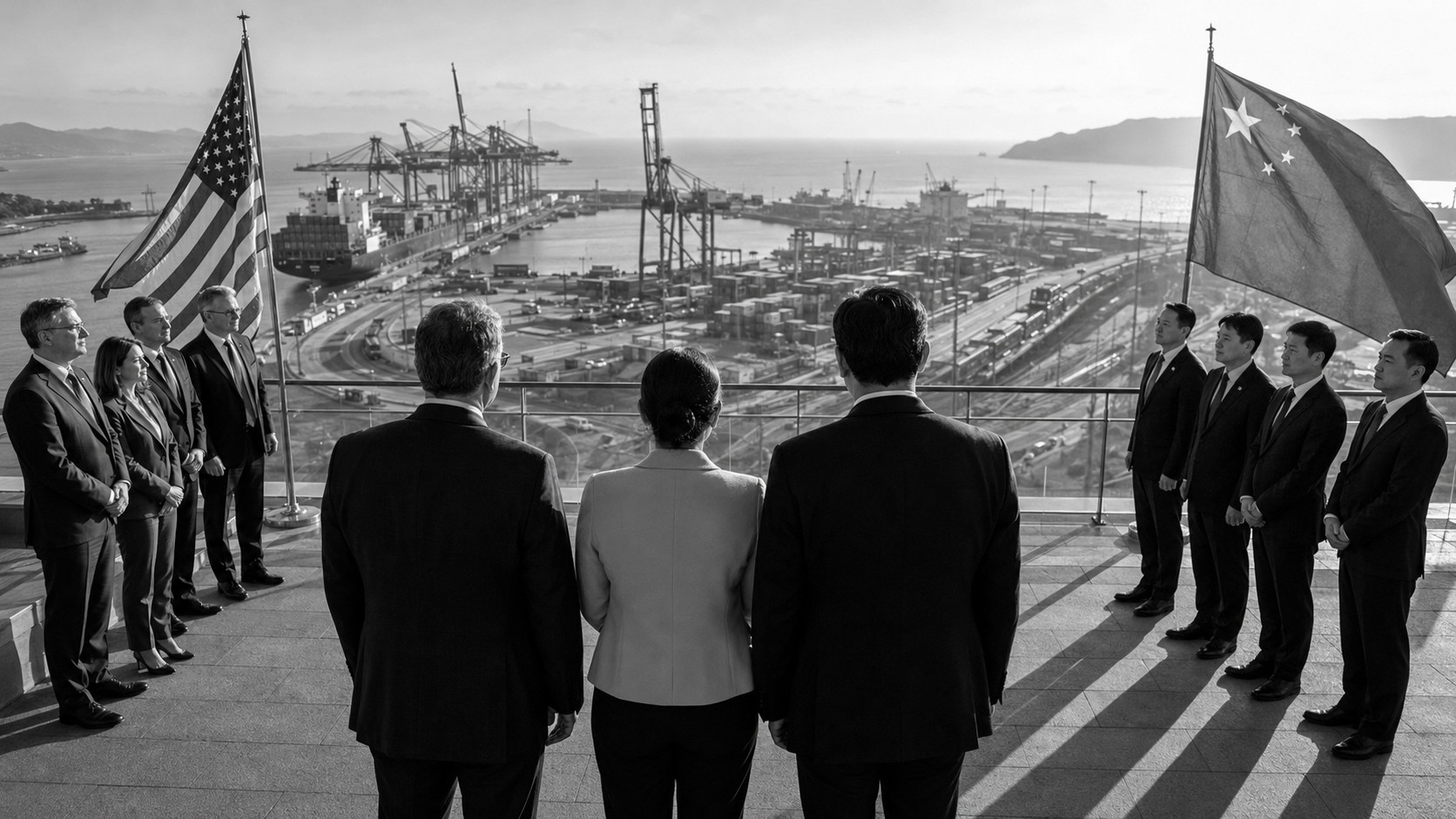
Latin America has become an increasingly important arena in the strategic competition between the United States and China, with both powers seeking access to the region’s markets, infrastructure, natural resources and political support. For regional governments, the opportunity is considerable—but so is the danger of replacing one form of dependence with another.
The United States remains Latin America’s most influential economic and security partner, particularly in Mexico, Central America and the Caribbean. Geographic proximity, migration, financial connections and established trade agreements have created relationships that Beijing cannot easily displace.
China, however, has transformed its position over the past two decades. Trade with Latin America increased from approximately $12bn in 2000 to a record $518.5bn in 2024. China is now the largest trading partner of several South American economies, including Brazil, Chile and Peru.


Infrastructure changes the balance
Chinese companies and financial institutions have supported ports, railways, electricity networks, telecommunications systems and mining operations across the region. Peru’s Chinese-backed Chancay port has demonstrated how such projects can alter trade routes by creating a direct maritime connection between South America and Asia.
Washington increasingly regards Chinese participation in ports, digital networks and energy systems as a strategic concern rather than a purely commercial matter. Competition surrounding port operations near the Panama Canal has shown how infrastructure ownership can become entangled with national security and geopolitical rivalry.
The United States is responding with greater attention to regional supply chains, nearshoring and investment. It is also seeking partnerships involving critical minerals, clean energy and advanced technology.
Resources become strategic assets
Latin America possesses some of the world’s most important reserves of copper and lithium, alongside significant deposits of rare earths and other minerals required for electric vehicles, renewable energy, electronics and defence production.
China has established a strong position as a buyer, investor and processor of these materials. The United States is now attempting to reduce its dependence on Chinese-controlled supply chains by encouraging partnerships with mineral-producing countries such as Argentina, Chile, Brazil and Peru.
This creates bargaining power for Latin American governments. Competition between Washington and Beijing can improve access to investment, export markets and technology. However, exporting unprocessed commodities while importing higher-value manufactured products could reinforce the region’s historic dependence on raw materials.
Avoiding a forced choice
Latin America is not a single political or economic bloc. Mexico’s integration with the American economy gives it limited room to move away from Washington, while Brazil has greater freedom to balance relations between the two powers. Smaller countries may welcome Chinese finance but remain dependent on the United States for trade, remittances and security cooperation.
The greatest risk is that governments are pressured to choose sides. Excessive reliance on China could expose countries to concentrated export markets, opaque financing or technological dependence. Overdependence on the United States could leave economies vulnerable to sudden changes in tariffs, sanctions or political priorities.
The most effective strategy is therefore one of pragmatic diversification. Governments can demand competitive tendering, local employment, environmental safeguards, technology transfers and domestic processing from investors representing either power.
Latin America’s objective should not be to help Washington contain Beijing or to assist China in challenging American influence. It should be to convert geopolitical competition into long-term productive capacity, stronger institutions and greater economic independence.
Newshub Editorial in Latin America – 3 August 2026

Ask NF GPT
If you have an account with ChatGPT you get deeper explanations,
background and context related to what you are reading.
Latin America has become an increasingly important arena in the strategic competition between the United States and China, with both powers seeking access to the region’s markets, infrastructure, natural resources and political support. For regional governments, the opportunity is considerable—but so is the danger of replacing one form of dependence with another.
Recent Comments