
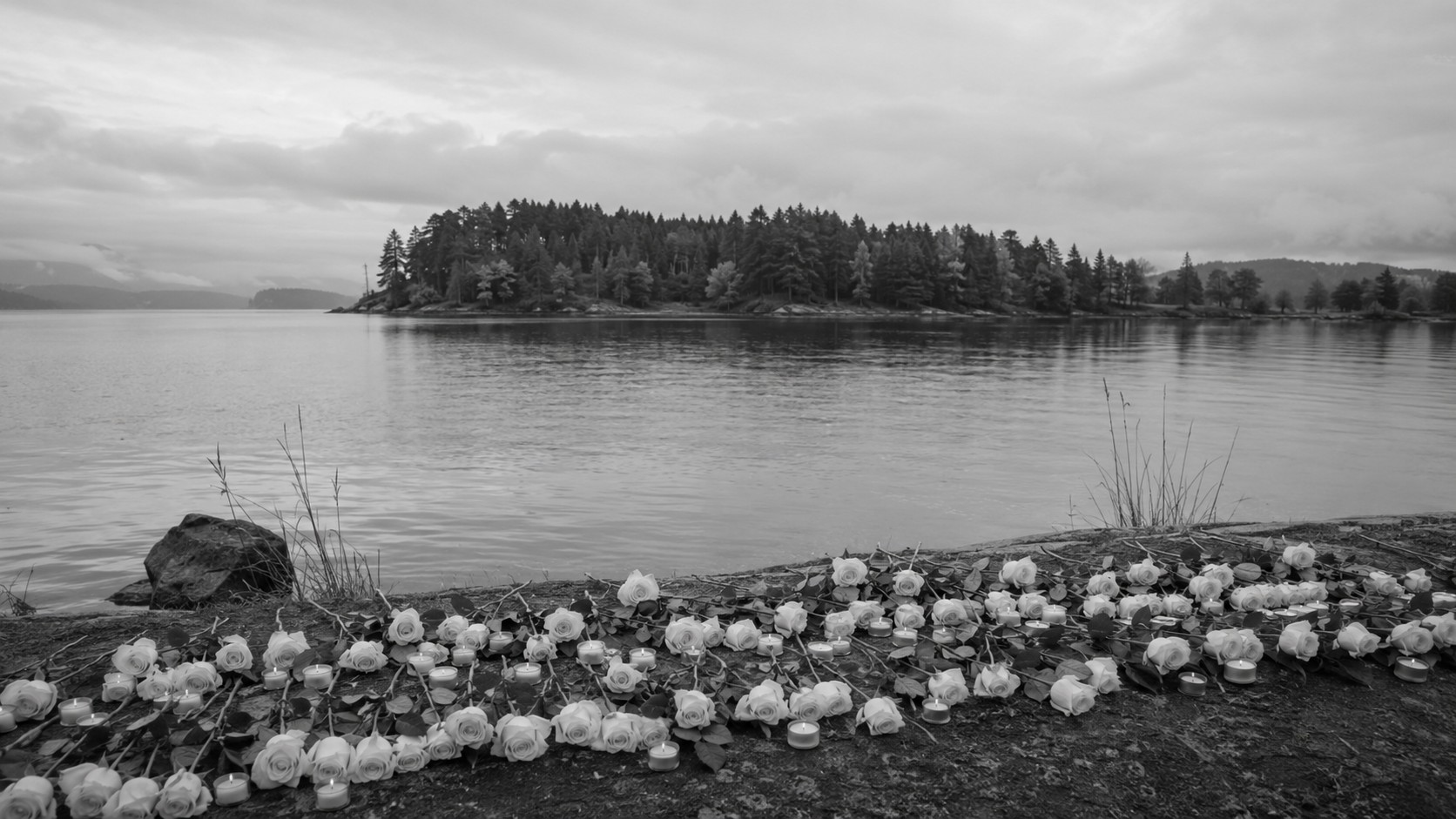
On 22 July 2011, Norway suffered the deadliest acts of violence on its soil since the Second World War when a far-right extremist carried out two coordinated terrorist attacks in Oslo and on the island of Utøya. Seventy-seven people were killed, most of them young participants at a political summer camp, in an assault that profoundly changed the country.
A bomb in the heart of Oslo
The attacks began at approximately 15:25 local time when a powerful vehicle bomb exploded in Oslo’s government quarter. The device had been placed near buildings housing the office of the prime minister and several government ministries.
The explosion killed eight people, injured many others and caused extensive damage to surrounding buildings. Windows were shattered across the district, while smoke and debris filled streets normally occupied by government employees and members of the public.

Then-prime minister Jens Stoltenberg was not in his office when the bomb detonated. Norwegian authorities initially concentrated their emergency response on the capital, unaware that the attacker had already begun travelling towards a second target.
Mass shooting on Utøya
Around two hours after the Oslo explosion, the perpetrator arrived on Utøya, a small island northwest of the capital. The island was hosting the annual summer camp of the Workers’ Youth League, the youth organisation affiliated with Norway’s Labour Party.
Disguised as a police officer, the attacker told those present that he had come to conduct a security inspection following the bombing in Oslo. He then opened fire on camp participants and staff.
Young people attempted to hide inside buildings, among trees and along the island’s rocky shoreline. Others entered the cold water and tried to swim towards the mainland. Sixty-nine people were killed on Utøya, including many teenagers. The youngest victim was 14 years old.
The shooting continued for more than an hour before police reached the island and arrested the attacker. In total, the bombing and shooting killed 77 people and injured hundreds.
A far-right terrorist motive
The perpetrator, Anders Behring Breivik, described the attacks as politically motivated. He held extremist anti-Muslim views and claimed that the Labour Party had contributed to multiculturalism and immigration in Norway.
In 2012, he was convicted of terrorism and premeditated murder. He received Norway’s maximum sentence of 21 years of preventive detention, a measure that can be extended repeatedly if a court determines that he continues to pose a danger to society.
The attacks forced Norway and other European countries to reassess the threat posed by far-right extremism, including individuals who become radicalised outside established organisations.
A national commitment to memory
Norway responded to the atrocities with public gatherings, flowers and a determined defence of democratic values. Stoltenberg declared that the country’s answer would be “more democracy, more openness and more humanity”, while insisting that these principles should never be confused with weakness.
Utøya has since returned to its role as a centre for political education and youth participation. Memorials in Oslo and on the island honour those who were murdered, while survivors and bereaved families continue to work against political violence and extremism.
Fifteen years later, 22 July remains a day of national mourning and reflection. The victims are remembered not simply as a number, but as individuals whose lives, ambitions and futures were taken by an act of calculated hatred.
Newshub Editorial in Europe – 22 July 2026

Ask NF GPT
If you have an account with ChatGPT you get deeper explanations,
background and context related to what you are reading.
Recent Comments