
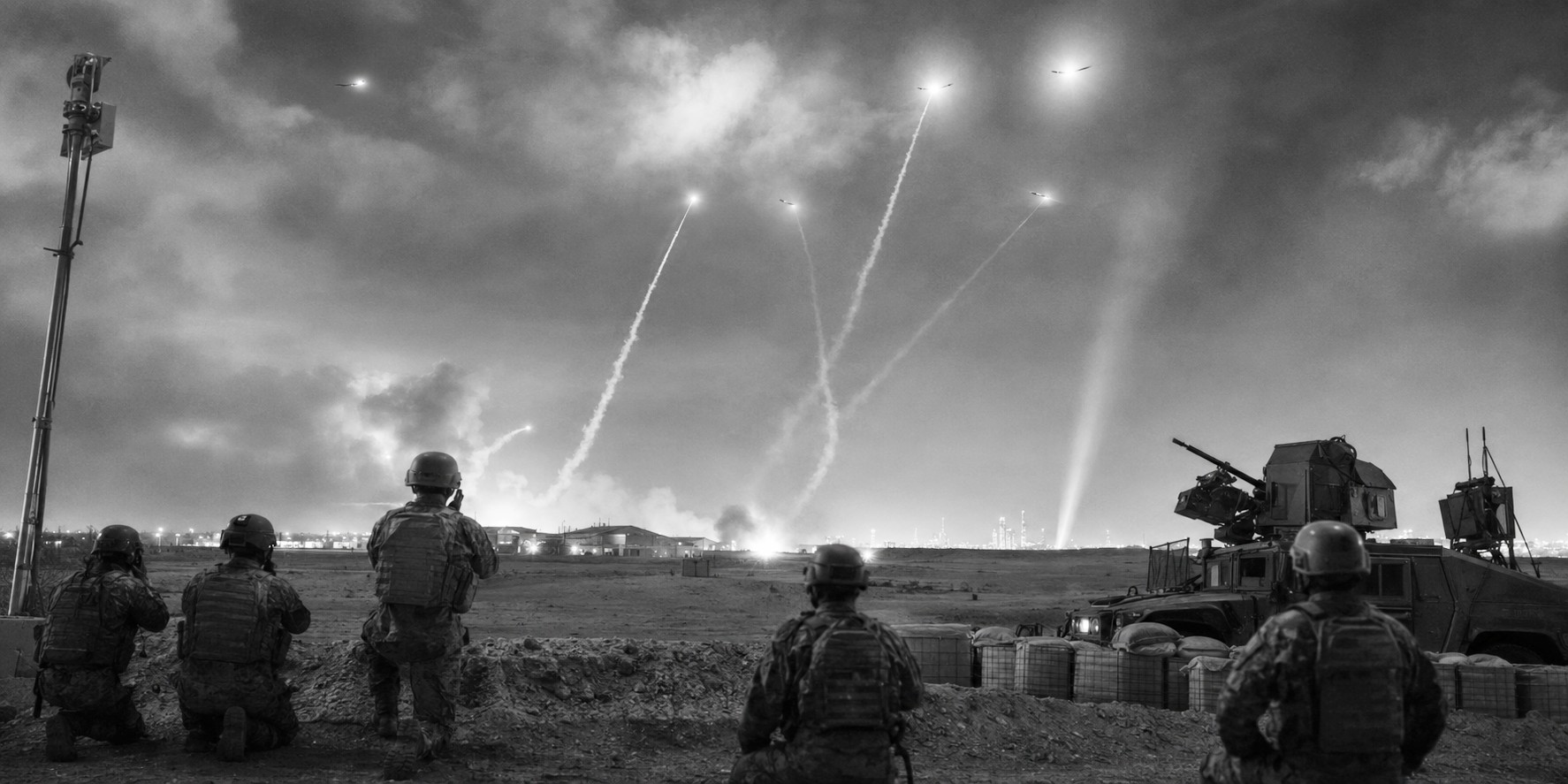
Two American military personnel have been killed and another remains missing following an Iranian missile and drone attack against US and allied forces in Jordan. The deaths came as Iran expanded its campaign across the Gulf, triggering warning sirens in Bahrain and accusations from Kuwait that Tehran was deliberately targeting civilian infrastructure.
Deadly attack against forces in Jordan
The United States Central Command said the two service members were killed on Friday while defending against an Iranian attack involving missiles and drones. A third member of the US military was reported missing, while four injured personnel received hospital treatment and were subsequently discharged.
The identities of those killed were not immediately released, pending notification of their families. The attack represents a serious escalation in the renewed confrontation between Washington and Tehran and brings the number of American military deaths during the wider conflict to 16.

Jordan said its air defences had intercepted several incoming threats. The country hosts US forces and has repeatedly found itself exposed to missiles and drones passing through or entering its airspace during regional confrontations.
Iran targets American allies
Iranian forces also launched attacks towards Kuwait and Bahrain, where warning sirens sounded and residents were advised to seek shelter. Air defences were activated across several Gulf states as governments monitored further airborne threats.
Kuwait accused Iran of striking vital civilian installations, including energy and desalination infrastructure. The attacks reportedly caused injuries and interrupted water and electricity services in some areas. Kuwaiti authorities temporarily restricted airspace as emergency services assessed the damage.
Tehran has claimed that its operations are directed against American military facilities and countries assisting the US campaign. Gulf governments, however, maintain that civilian sites have been struck and that the attacks represent a serious violation of international law.
The Gulf Cooperation Council condemned the targeting of civilian infrastructure and warned that further attacks could produce a wider regional emergency.
Washington launches retaliatory strikes
The US responded with another wave of air strikes against Iranian military targets. American officials said the operation struck facilities associated with the Islamic Revolutionary Guard Corps, including missile storage sites, surveillance systems and air-defence positions.
President Donald Trump authorised the strikes to punish those responsible for the deaths in Jordan and to weaken Iran’s ability to threaten regional shipping. US forces have now conducted repeated operations against Iran following the collapse of an interim ceasefire agreement.
Iran said the latest American attacks had caused casualties and damage but insisted that its military capacity remained intact. Tehran warned that continued US action would lead to broader retaliation against American interests and regional partners.
Conflict threatens regional stability
The renewed escalation has increased fears that the confrontation could develop into a prolonged regional war. Saudi Arabia, the United Arab Emirates, Jordan, Bahrain and Kuwait have all strengthened their defensive readiness as Iranian missiles and drones threaten targets beyond Iran’s immediate borders.
The conflict also places additional pressure on shipping through the Strait of Hormuz, one of the world’s most important energy routes. Any prolonged disruption could restrict oil and liquefied natural gas exports, increase global energy prices and intensify inflationary pressure.
Diplomatic efforts remain stalled, while both Washington and Tehran accuse the other of destroying the ceasefire. The deaths in Jordan and attacks against Gulf infrastructure have now made a rapid return to negotiations significantly more difficult.
Newshub Editorial in the Middle East – 19 July 2026

Ask NF GPT
If you have an account with ChatGPT you get deeper explanations,
background and context related to what you are reading.
Recent Comments