
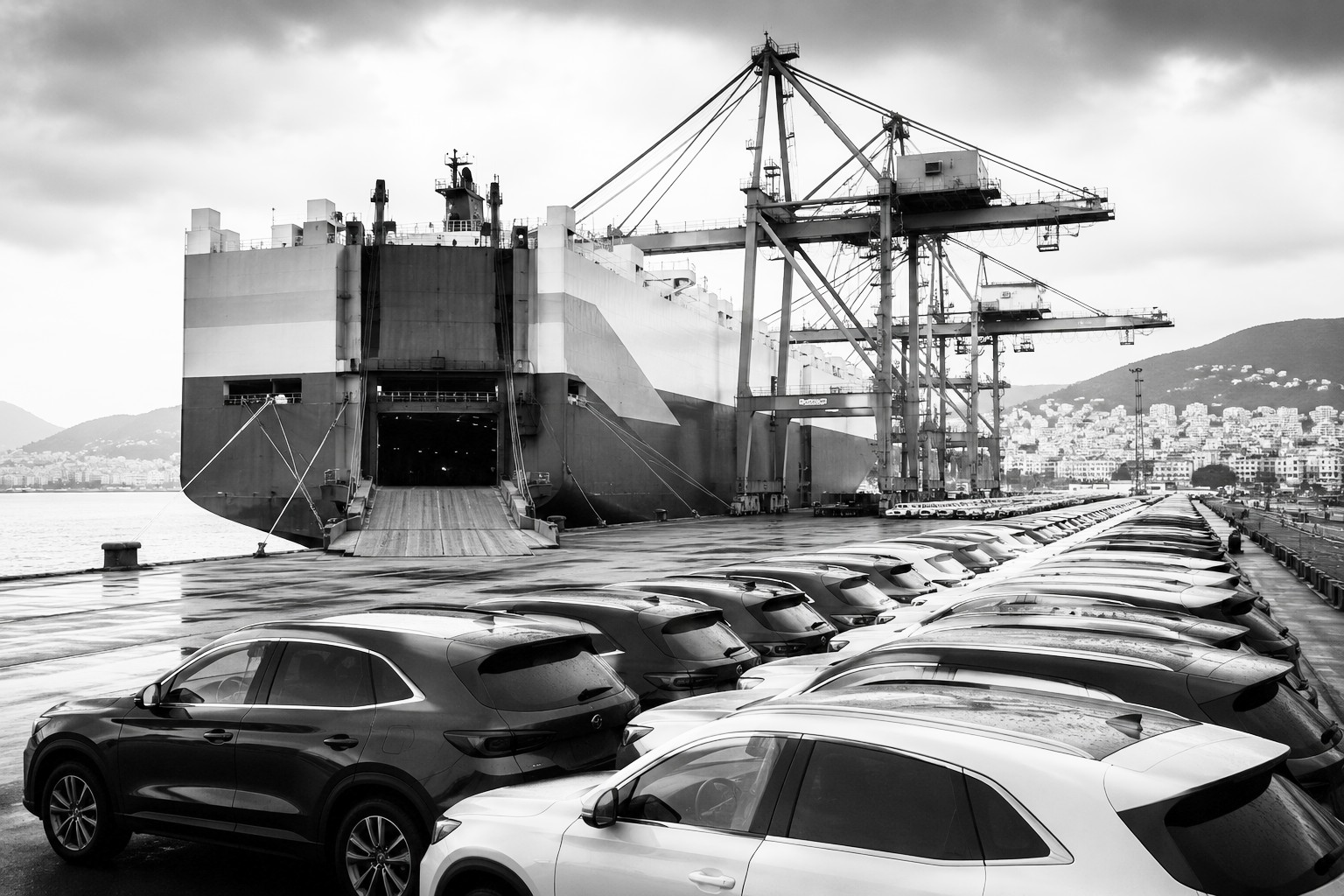
Morocco’s fast-growing industrial partnership with China is drawing new scrutiny in Europe, where officials fear Rabat could become a route for Chinese electric vehicles, batteries and components to reach the European market while avoiding tariffs aimed at Beijing’s subsidised car industry.
A strategic bridge
Morocco has spent years building itself into one of Africa’s most important automotive manufacturing hubs. Its ports, free zones, trade agreements and proximity to Europe have made it attractive to global carmakers, including Renault and Stellantis, while Chinese companies are now accelerating investment in batteries, components and electric vehicle supply chains.
For Rabat, this is industrial policy working as intended. The country wants to move higher up the manufacturing chain, create jobs, attract technology and position itself as a bridge between Europe, Africa and Asia. Chinese capital helps Morocco strengthen that ambition.

Europe’s tariff concern
For Brussels, however, the picture is more complicated. The EU has imposed heavy tariffs on Chinese electric vehicles after concluding that state subsidies gave Chinese producers an unfair advantage. European officials now fear that Chinese companies could use Morocco’s trade access to Europe to soften the impact of those tariffs.
The concern is not simply that Chinese firms are investing in Morocco. It is whether some products could receive limited processing there before being exported to Europe as Moroccan-origin goods. That would turn Morocco from an industrial partner into a sensitive test case for Europe’s trade defences.
Morocco rejects the loophole argument
Moroccan officials reject the idea that the country is being used as a loophole. They argue that Morocco has strict rules of origin, a mature automotive ecosystem and genuine local value creation. From Rabat’s perspective, Chinese investment is not a disguise for tariff avoidance, but part of a broader national strategy to become a competitive manufacturing platform.
That argument carries weight. Morocco already has a strong car export base and is deeply integrated into European supply chains. Treating every Chinese-backed factory as suspicious would risk damaging a relationship Europe itself has helped build.
A wider industrial battle
The dispute reflects a larger struggle over electric vehicles, batteries and the future of industrial power. China dominates much of the green technology supply chain. Europe wants to protect its own manufacturers while still needing affordable components, clean technology and reliable partners near its borders.
Morocco now sits directly inside that tension. Its success has made it valuable, but also politically exposed.
The road ahead
The Morocco-China partnership is likely to keep expanding. Europe’s response will determine whether Rabat is treated as a trusted manufacturing partner or as a new front in the EU’s trade conflict with Beijing.
For Morocco, the challenge will be to prove that its automotive rise is based on real industrial value. For Europe, the challenge will be to defend its market without pushing one of its most important southern partners closer to China.
Newshub Editorial in Africa – 7 July 2026

Ask NF GPT
If you have an account with ChatGPT you get deeper explanations,
background and context related to what you are reading.
Open an account:
Recent Comments