
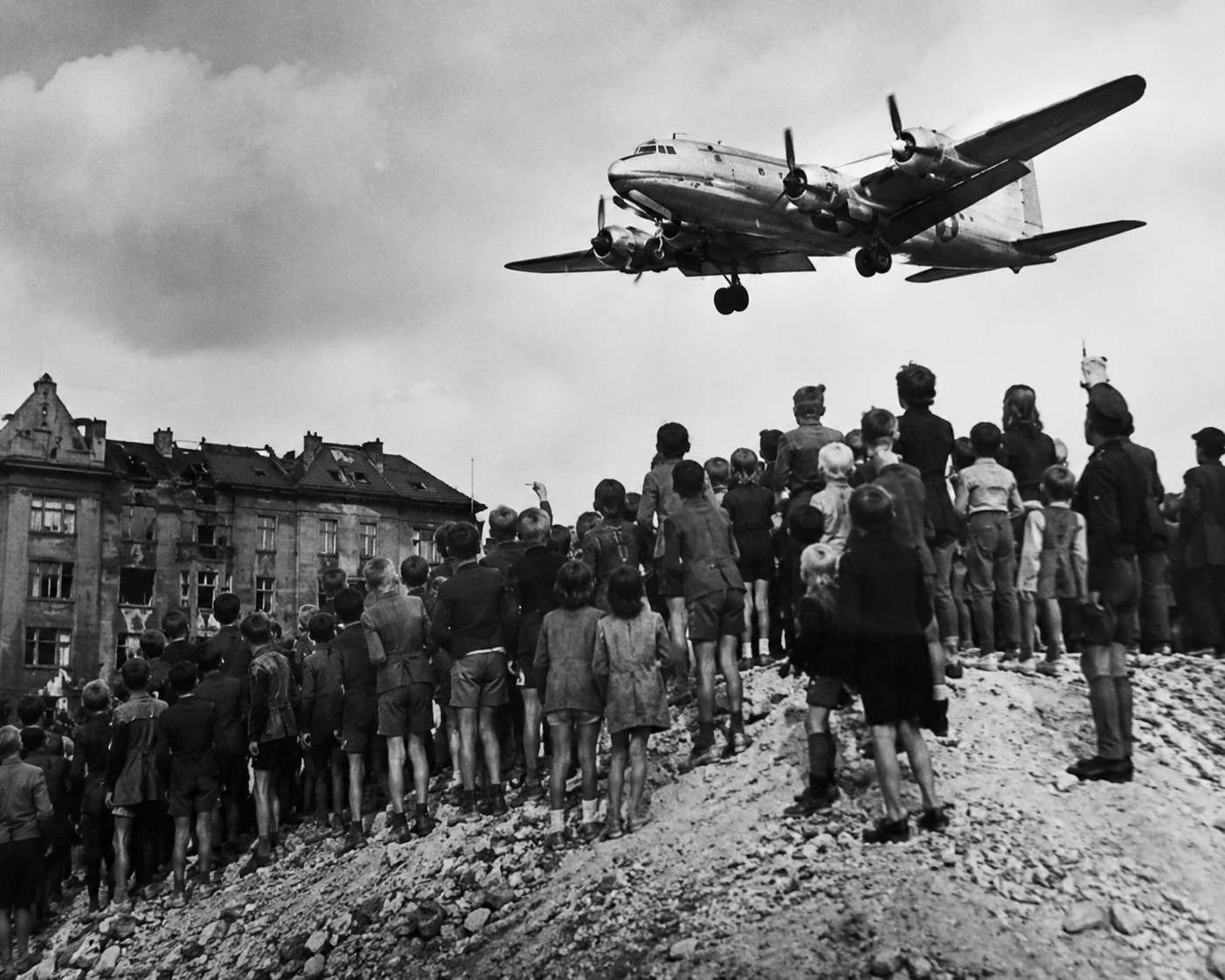
On 24 June 1948, the Soviet Union began the Berlin Blockade, one of the defining moments of the early Cold War. By cutting off all road, rail and water access to West Berlin, Moscow attempted to force the Western Allies out of the divided city. Instead, the confrontation triggered one of the most remarkable logistical operations in modern history and helped shape the post-war world for decades to come.
A city divided
At the end of the Second World War, Germany and its capital, Berlin, were divided into occupation zones controlled by the Soviet Union, the United States, the United Kingdom and France. Although Berlin lay deep inside the Soviet occupation zone, the Western Allies retained control of sectors in the city.
Tensions between the former wartime allies grew rapidly as political and economic differences widened. The introduction of a new currency in the Western zones of Germany in June 1948 further intensified the dispute and became the immediate catalyst for the crisis.

The blockade begins
On 24 June 1948, Soviet authorities halted rail, road and canal traffic into West Berlin. Electricity supplies were also disrupted. More than two million residents suddenly found themselves isolated within Soviet-controlled territory. The move was intended to pressure the Western powers into abandoning the city and accepting Soviet influence over all of Berlin.
The blockade represented the first major international crisis of the Cold War and raised fears that the confrontation could escalate into a direct military conflict between East and West.
The airlift that changed history
Rather than withdraw, the United States, the United Kingdom and their allies launched the Berlin Airlift. Beginning just days after the blockade started, aircraft flew around the clock delivering food, fuel, medicine and other essential supplies to West Berlin.
At the height of the operation, planes landed every few minutes, creating a continuous aerial supply chain. Over the course of the airlift, hundreds of thousands of flights delivered the resources needed to sustain the city’s population. The operation became a powerful demonstration of Western resolve and technical capability.
A turning point in world affairs
The Soviet Union eventually lifted the blockade in May 1949 after it became clear that the airlift had succeeded. West Berlin remained under Allied control, while the crisis accelerated the political division of Germany and strengthened support for Western security cooperation, ultimately contributing to the creation of NATO.
Today, the Berlin Blockade is remembered not only as a geopolitical confrontation but also as a demonstration of resilience. Faced with isolation and uncertainty, the people of Berlin endured a year-long siege that became one of the defining stories of the twentieth century.
Newshub Editorial in Europe – 24 June 2026
Recent Comments