
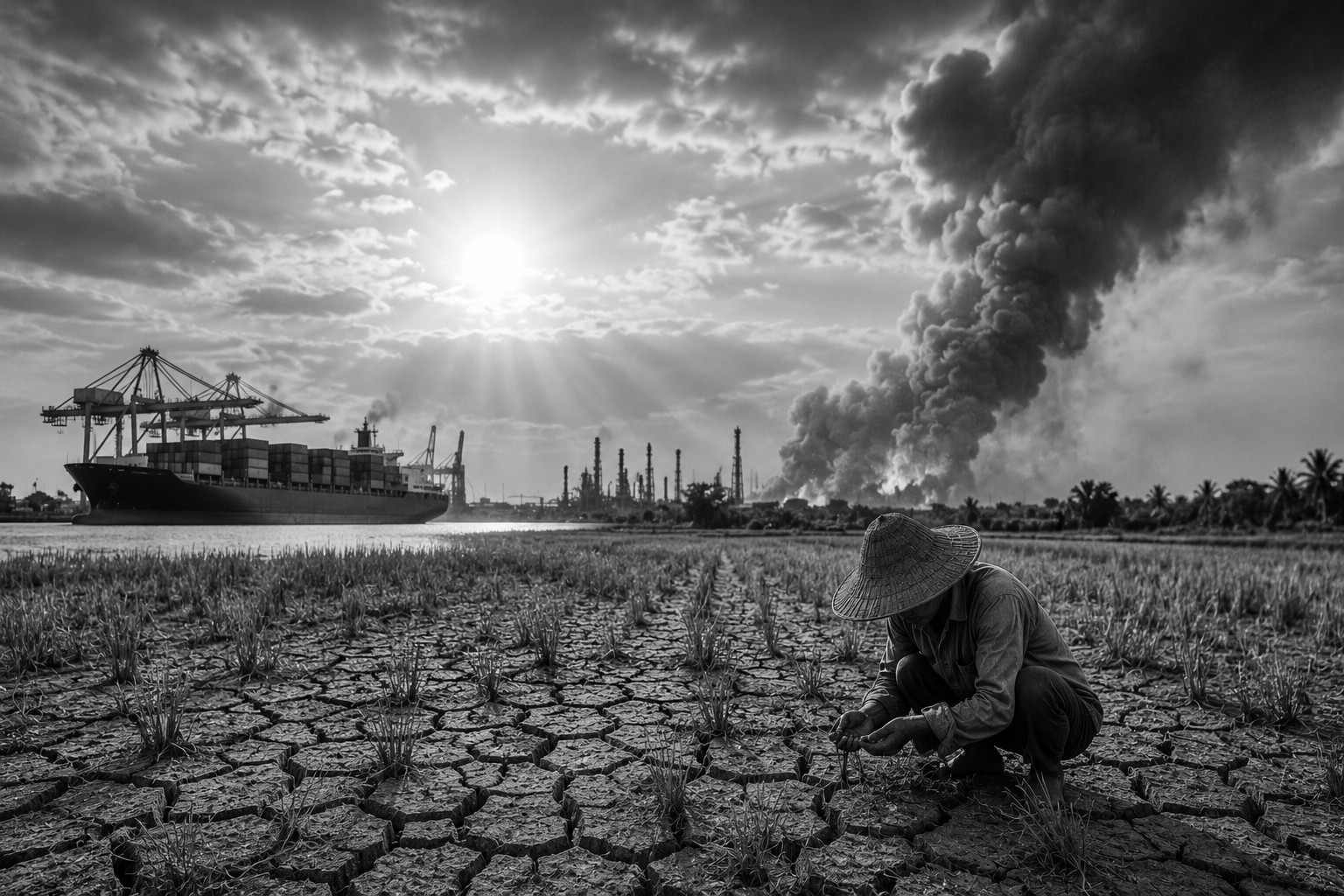
South-east Asia faces a potentially severe food-security challenge as geopolitical tensions in the Middle East converge with growing concerns over a powerful El Niño weather event. Analysts warn that the combination of disruption risks in the Strait of Hormuz and the prospect of a “Godzilla-strength” El Niño could create a compound shock capable of reducing food production, increasing prices and threatening millions of livelihoods across the region.
A critical shipping route under scrutiny
The Strait of Hormuz remains one of the world’s most important maritime chokepoints, carrying a significant share of global oil and liquefied natural gas exports. Any disruption to shipping through the narrow waterway could rapidly increase energy costs worldwide.
For South-east Asia, higher fuel and fertiliser prices would directly affect agricultural production. Farmers depend heavily on fuel for machinery, irrigation and transportation, while fertiliser costs play a crucial role in determining crop yields. A prolonged period of elevated energy prices could therefore increase food production costs throughout the region.

Countries such as Indonesia, Malaysia, Thailand, Vietnam and the Philippines would be particularly exposed to rising import costs and supply-chain disruptions.
The return of El Niño
At the same time, meteorologists are warning about the possibility of an exceptionally strong El Niño event. The climate phenomenon typically brings hotter and drier conditions to large parts of South-east Asia, reducing rainfall and increasing the risk of drought.
Rice-producing regions are especially vulnerable. Reduced water availability can significantly lower harvests, while prolonged heatwaves may damage crops and strain agricultural infrastructure. Fisheries, another critical source of food and employment across the region, can also suffer from changing ocean temperatures and weather patterns.
Scientists warn that an extreme El Niño could affect multiple growing seasons, creating lasting impacts on food supplies.
A dangerous combination
The greatest concern among economists and food-security experts is the interaction between these two crises. Higher energy costs combined with lower agricultural output could create what analysts describe as a “compound shock effect”.
Under such a scenario, food production would decline just as transportation and input costs rise. This combination could push food prices sharply higher, particularly for staple products such as rice, vegetables and cooking oils.
Low-income households would be most vulnerable, as food often accounts for a large proportion of household spending across many developing economies.
Governments prepare for uncertainty
Regional governments are already monitoring both risks closely. Authorities are reviewing food reserves, water-management programmes and agricultural support measures to strengthen resilience against potential disruptions.
Many countries have also increased efforts to diversify supply chains and improve domestic food security following lessons learned during previous global crises.
A test for regional resilience
While neither the Middle East crisis nor a severe El Niño guarantees a food emergency, their simultaneous occurrence would present one of the most significant challenges South-east Asia has faced in years. Policymakers, businesses and farmers are therefore preparing for a period of heightened uncertainty as they seek to protect food supplies and economic stability.
The coming months may determine whether the region can successfully navigate a potentially historic convergence of geopolitical and climate-related risks.
Newshub Editorial in Asia – 23 June 2026

If you have an account with ChatGPT you get deeper explanations,
background and context related to what you are reading.
Open an account:
Open an account
Recent Comments