
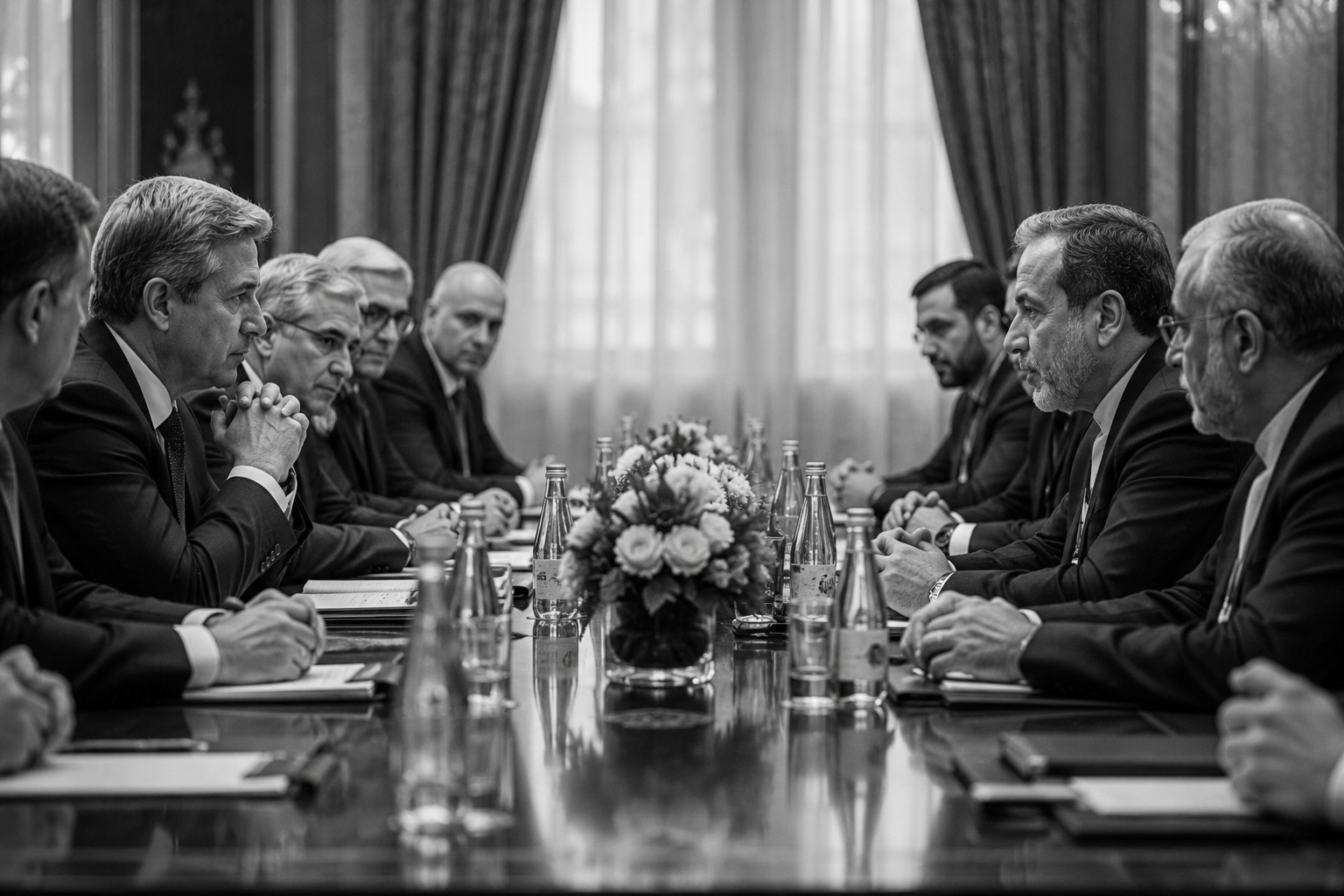
Iran has described the opening day of high-level negotiations with the United States as encouraging despite a difficult start, raising cautious hopes that months of regional tensions could eventually give way to a broader diplomatic settlement. Mediators from Pakistan and Qatar confirmed that the talks will continue throughout the week after both sides agreed to pursue a structured roadmap towards a potential final agreement.
Shaky opening gives way to constructive dialogue
The negotiations, held in Switzerland, initially encountered difficulties following strong public remarks from U.S. President Donald Trump concerning the Strait of Hormuz and Iran’s regional activities. Iranian officials briefly suspended direct engagement before diplomatic backchannels, facilitated by Pakistani and Qatari mediators, succeeded in bringing both delegations back to the negotiating table.
Iranian Foreign Minister Abbas Araghchi later characterised the discussions as productive, while mediators described the atmosphere as constructive despite the early tensions.

Roadmap agreed for further negotiations
Following the first day of talks, Pakistan and Qatar issued a joint statement confirming that negotiations would continue for the remainder of the week. Both sides reportedly agreed to work towards a comprehensive agreement within the coming weeks, with technical working groups expected to address issues including sanctions, maritime security, frozen Iranian assets and the future of Iran’s nuclear programme.
Reports also indicate that negotiators discussed mechanisms aimed at reducing the risk of military escalation, including improved communication channels relating to the Strait of Hormuz and regional security coordination.
Lebanon remains a major obstacle
Despite the diplomatic progress, the continuing conflict in Lebanon remains one of the greatest challenges facing negotiators. Ongoing military operations involving Israel and Hezbollah continue to threaten the fragile political environment surrounding the talks.
One proposal under discussion involves the establishment of a joint “de-confliction” mechanism intended to reduce the risk of further escalation in Lebanon while broader political negotiations continue. However, officials from all sides acknowledge that sustained violence could quickly undermine diplomatic momentum.
Markets cautiously welcome diplomacy
Financial markets reacted positively to news that negotiations would continue, with investors viewing continued dialogue as reducing the immediate risk of further disruption to global energy supplies. Oil prices eased slightly as concerns over shipping through the Strait of Hormuz moderated.
While significant differences remain between Washington and Tehran, the willingness of both sides to continue negotiations represents the strongest diplomatic signal in months. Observers caution that numerous difficult issues remain unresolved, but the first day’s outcome has provided a foundation for further discussions during the week ahead.
Newshub Editorial in Asia – 22 June 2026

If you have an account with ChatGPT you get deeper explanations,
background and context related to what you are reading.
Open an account:
Open an account
Recent Comments