
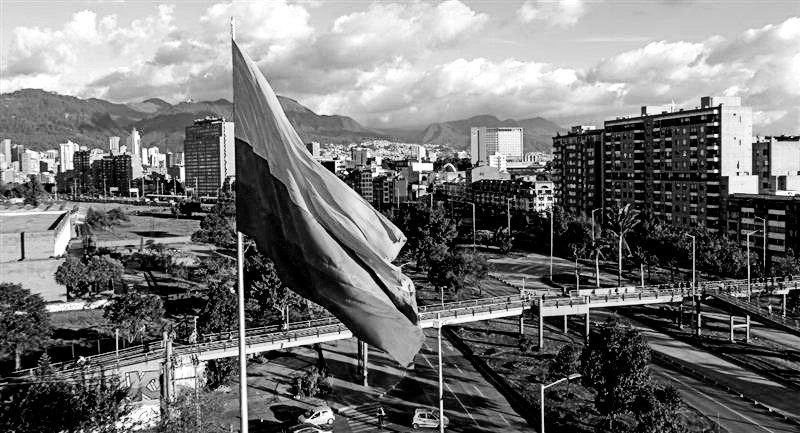
Colombia has elected conservative lawyer Abelardo de la Espriella as its next president following an exceptionally close presidential run-off that highlighted the country’s deep political divisions. Preliminary results show De la Espriella narrowly defeating left-wing candidate Iván Cepeda, marking a dramatic shift in Colombian politics after four years under President Gustavo Petro’s progressive administration.
A razor-thin victory
According to Colombia’s electoral authorities, De la Espriella secured approximately 49.66% of the vote, defeating Cepeda, who received around 48.7%. The margin amounted to fewer than 300,000 votes, making it one of the closest presidential contests in recent Colombian history. While the result gives De la Espriella the mandate to form the next government, Cepeda and members of the outgoing administration have called for a full review of the vote count before formally accepting the outcome.
A shift towards security and free markets
De la Espriella campaigned on restoring public security, strengthening the armed forces and reducing the influence of criminal organisations involved in narcotics trafficking and extortion. Economically, he pledged to reduce the size of government, lower bureaucracy, encourage private investment and expand Colombia’s oil and gas production, including new exploration projects.

His victory represents a significant departure from President Petro’s agenda, particularly regarding negotiations with armed groups and the government’s “Total Peace” strategy.
Political challenges remain
Despite winning the presidency, De la Espriella is expected to face immediate political challenges. His coalition lacks a parliamentary majority, meaning that major reforms will require negotiations with opposition parties and centrist lawmakers. Analysts also expect continued debate over fiscal policy, security spending and Colombia’s international investment climate.
The election campaign itself was marked by sharp ideological divisions, accusations of irregularities and concerns over political violence, reflecting the increasingly polarised nature of Colombian politics.
Regional implications
The election is likely to have implications beyond Colombia. Investors are expected to monitor whether the incoming administration can implement its market-oriented agenda while maintaining fiscal discipline. International partners will also watch closely for changes in Colombia’s security strategy, energy policy and relations with neighbouring countries.
Although some legal challenges to the preliminary count are still expected, De la Espriella is scheduled to take office on 7 August 2026. His administration will inherit an economy facing slower growth, persistent security concerns and the difficult task of uniting a country that remains almost evenly divided politically.
Newshub Editorial in South America – 22 June 2026

If you have an account with ChatGPT you get deeper explanations,
background and context related to what you are reading.
Open an account:
Open an account
Recent Comments