
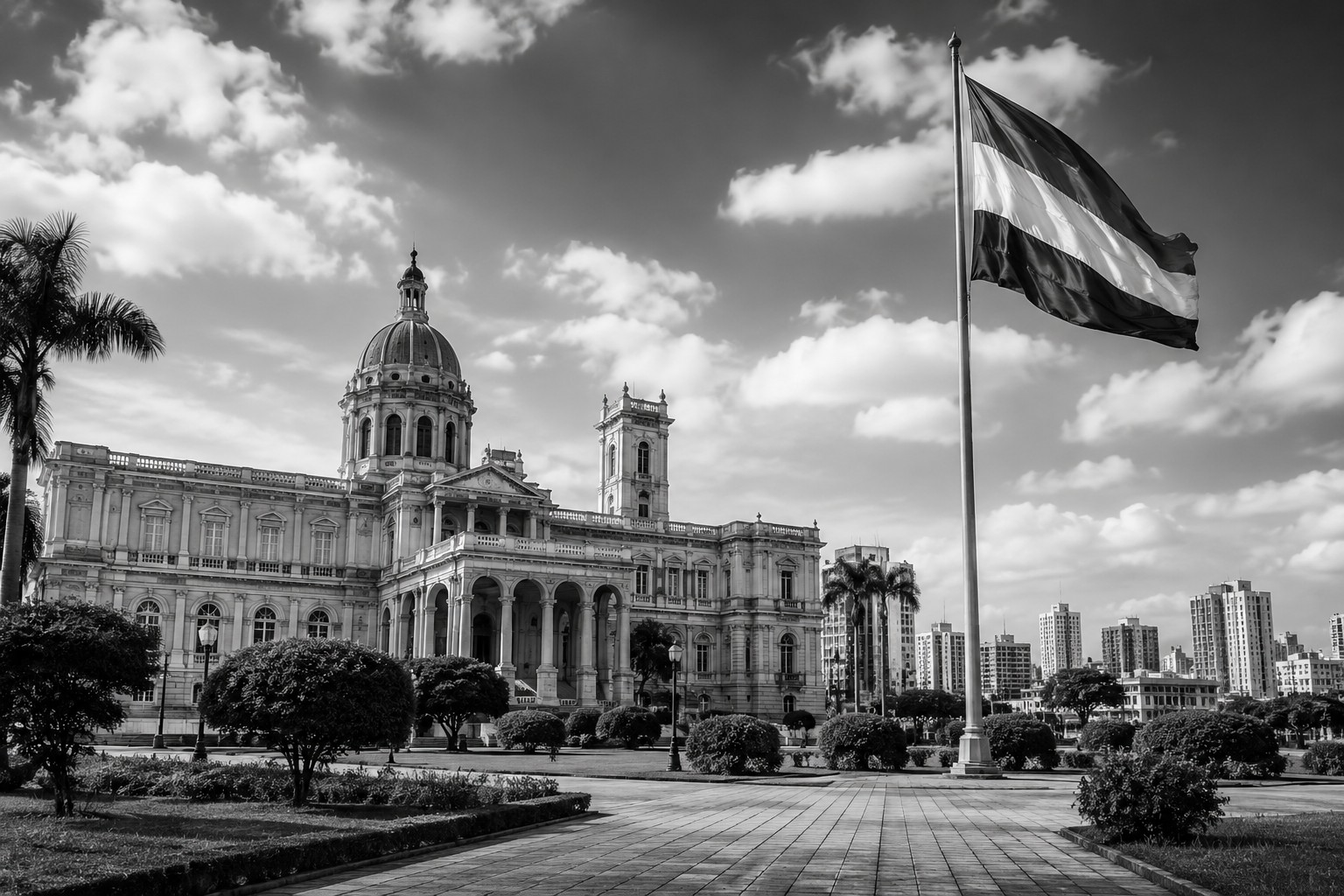
Paraguay entered a new chapter in its political history when a new constitution came into effect, reshaping the country’s democratic institutions and redefining the balance of power after decades of authoritarian rule. The constitutional reform established stronger protections for civil liberties, reinforced the separation of powers and created the legal foundation for a more modern democratic state. The document remains one of the most significant milestones in Paraguay’s contemporary history and continues to influence the country’s political and economic development today.
A turning point after dictatorship
The adoption of Paraguay’s new constitution marked the culmination of a transition away from authoritarian governance following the fall of General Alfredo Stroessner’s regime in 1989. After more than three decades of military-backed rule, political leaders sought to establish a constitutional framework that would prevent the concentration of power and strengthen democratic accountability.
The constitution introduced institutional reforms designed to guarantee political pluralism, independent courts and greater checks on executive authority. It also reinforced electoral processes intended to support free and competitive elections.

Expanding civil and political rights
Among its most important features were expanded guarantees for human rights, freedom of expression, religious liberty and due process under the law. The constitution also recognised broader social and economic rights while increasing legal protections for indigenous communities and vulnerable groups.
The reforms reflected a broader regional trend during the late twentieth century, as several Latin American nations revised their constitutions to strengthen democratic institutions following periods of military or authoritarian government.
Economic implications
Political stability created by constitutional reforms has played an important role in Paraguay’s economic development over subsequent decades. The country has attracted increasing levels of foreign investment, particularly in agriculture, renewable energy and manufacturing.
Hydroelectric generation from the Itaipú and Yacyretá dams has provided Paraguay with abundant electricity, supporting industrial growth while creating export opportunities. Although economic challenges remain, constitutional stability has generally contributed to greater investor confidence.
Challenges remain
Despite the constitutional framework, Paraguay continues to face issues including corruption, inequality and judicial efficiency. Successive governments have pursued reforms aimed at improving transparency, strengthening public institutions and enhancing the rule of law.
Political competition has become more open than during the dictatorship, although debates continue regarding institutional reforms, anti-corruption measures and economic diversification.
A lasting democratic foundation
More than three decades after its adoption, Paraguay’s constitution continues to serve as the country’s highest legal authority and the foundation of its democratic system. While constitutional provisions alone cannot eliminate political and economic challenges, they provide the legal structure through which governments, businesses and citizens operate.
For investors and international partners, the constitutional framework represents an important element of Paraguay’s institutional stability. As the country seeks to expand regional trade, modernise infrastructure and attract new investment, the principles established under its constitution remain central to its long-term development.
Newshub Editorial in South America – June 20, 2026
 Open article chat
Open an account:
Open an account
Recent Comments